

KBEAR Tourbillon Pro Earphones Review
The KeepHiFi store suggested that I write a review of KBEAR Tourbillon Pro earphones. I agreed because KBEAR people are doing their best. Sometimes they make bewitchingly good models, such as KB01; sometimes just really good ones, such as Cepheus. Let me remind you that, in my arrogant opinion, Cepheus are at least the best earphones for competitive games, as I wrote in this review, and I make no freaking bones of this unpopular opinion. Sometimes KBEAR do frankly bad, as it was, for example, with KB02. But I think they’re doing better and better every time.
Today we’ll talk about KBEAR Tourbillon Pro (TB-Pro), beautiful in-ears based on a single dynamic driver. As of December 2025, they cost some $90.
A big thank you goes out to Anna, KeepHiFi manager, for her common sense and patience 🙂
All but the sound
What’s in the box is pretty standard, as is the box.
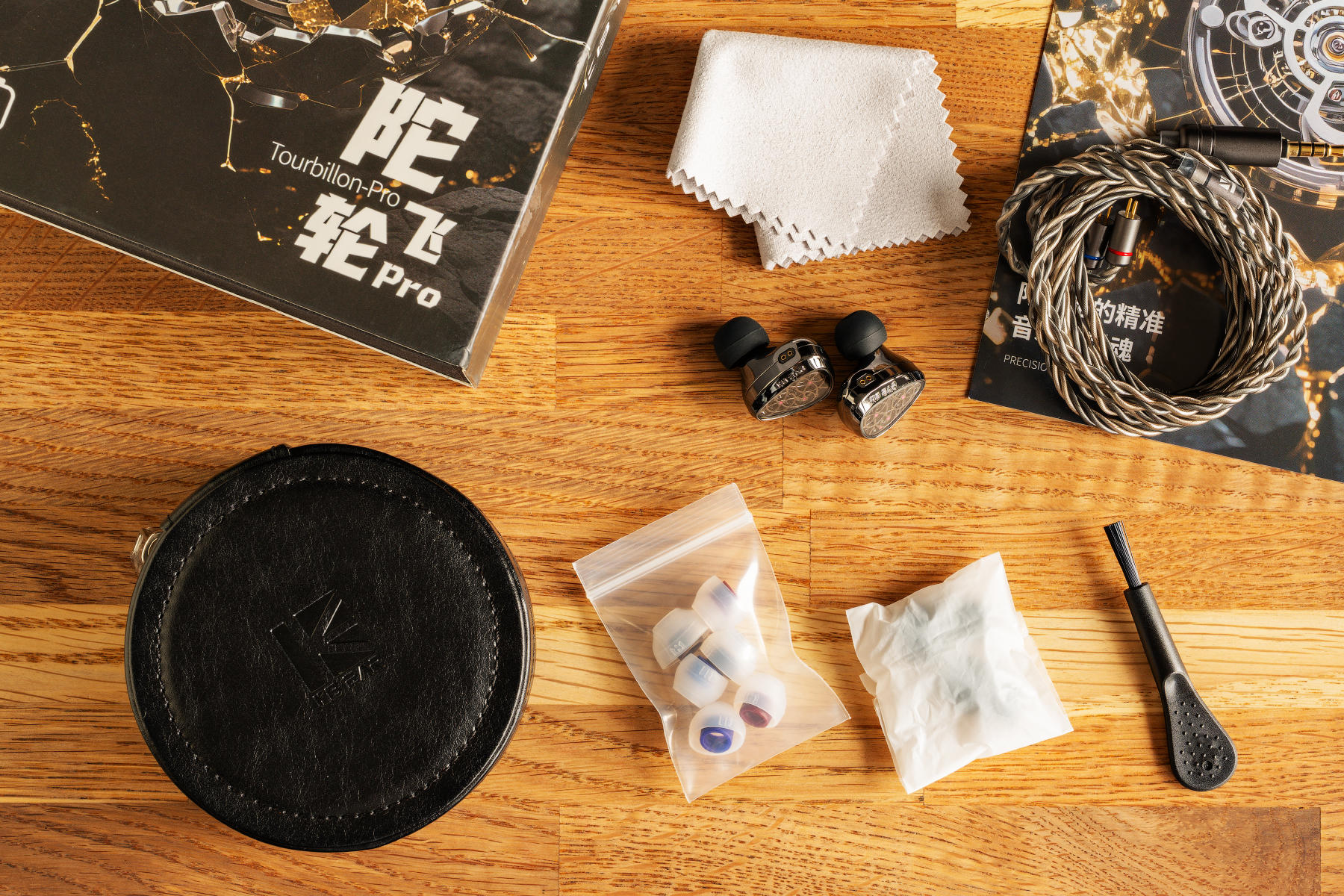
Along with the earphones, we get:
- a thick round zippered case;
- a 3.5mm cable with a microphone (there are also versions with a Type-C connector, with and without a microphone);
- two sets of eartips, with 3 pairs of them in each;
- a cleaning cloth, and there’s plenty to clean here;
- a cleaning brush;
- some papers.
As for the earpads, the first set is classic TRI Clarion. These eartips are widely known, every lover of in-ears should have them, as they have already become the mainstay of the IEM discourse. I wrote about them 2 years ago.

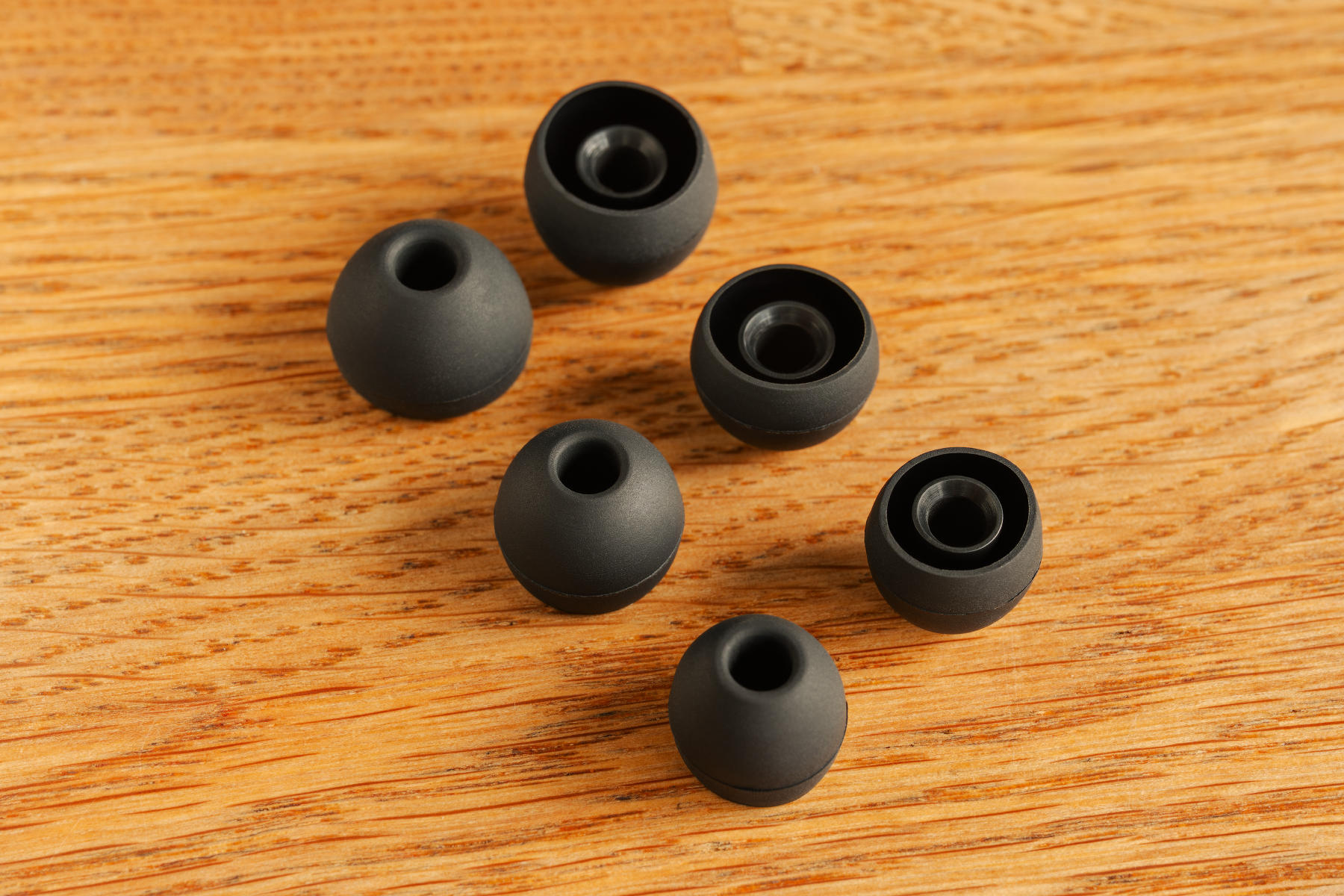
In the second bag, I expected to see something like KBEAR 07, or even 4540, or KT02 (you never can tell!), but there were the simplest black silicone eartips.
The cable is absolutely ordinary, but it’s an absolutely normal, average cable with a microphone. The connector is TRRS, respectively.

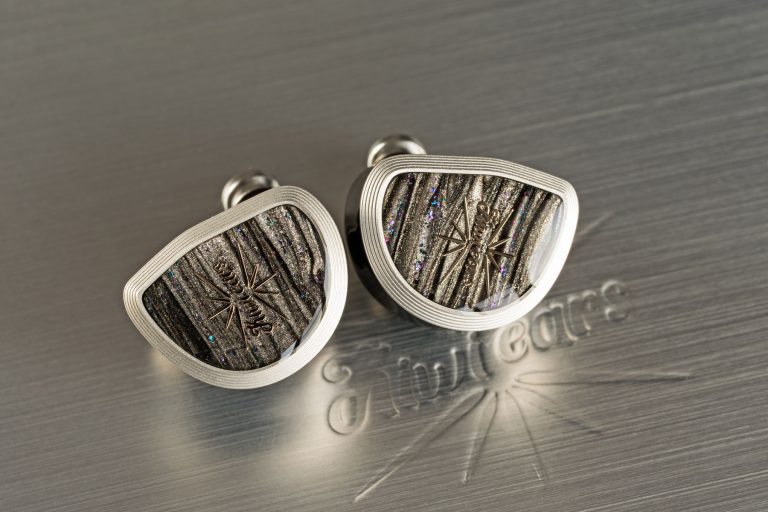
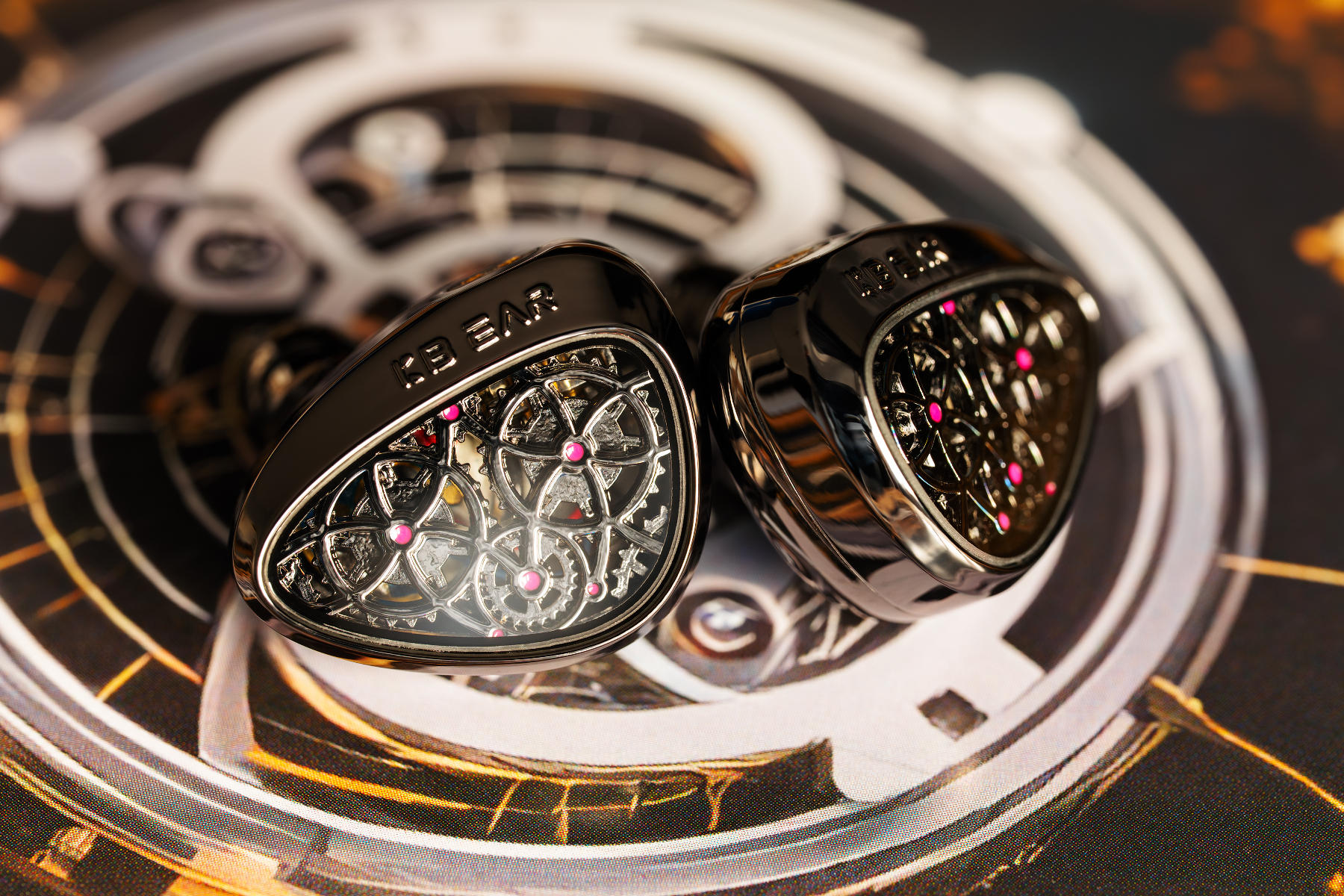
The earphones themselves literally jump on the user with their extra ornamentality, resting upon the clockwork aesthetics, hence the name of the model. The enclosures are metal, covered with zinc alloy on the outside. Imitations of clock gears and jewels can be seen on the exterior panels under the glass.
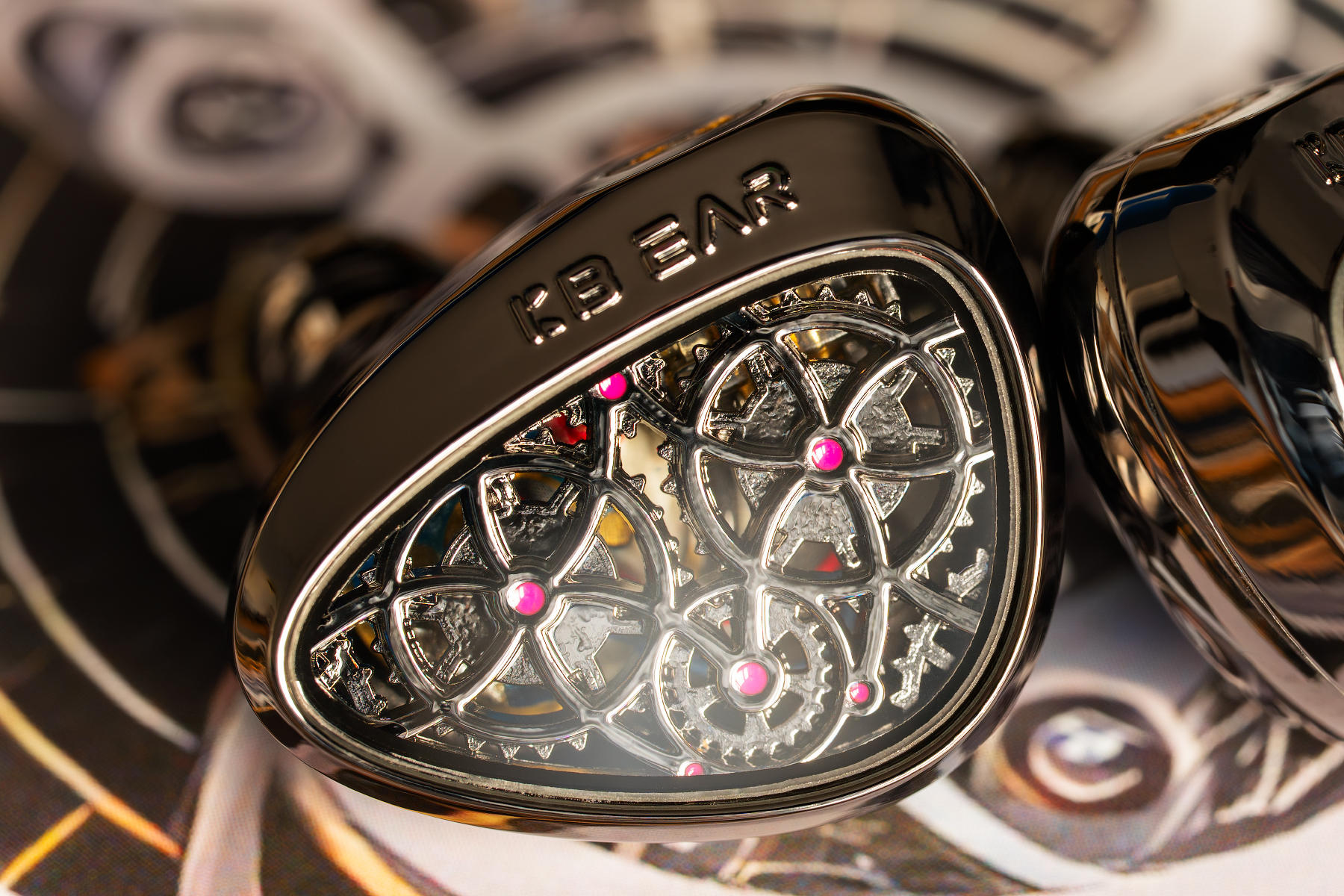
In the pictures, the inners of the earphones can be seen inside the enclosures behind all the bells and whistles – a 10 mm dynamic driver is installed in their bowels. In real life, these inners are not visible.
The cable connection area is flat, not recessed into the depth, and the cable holds tight.
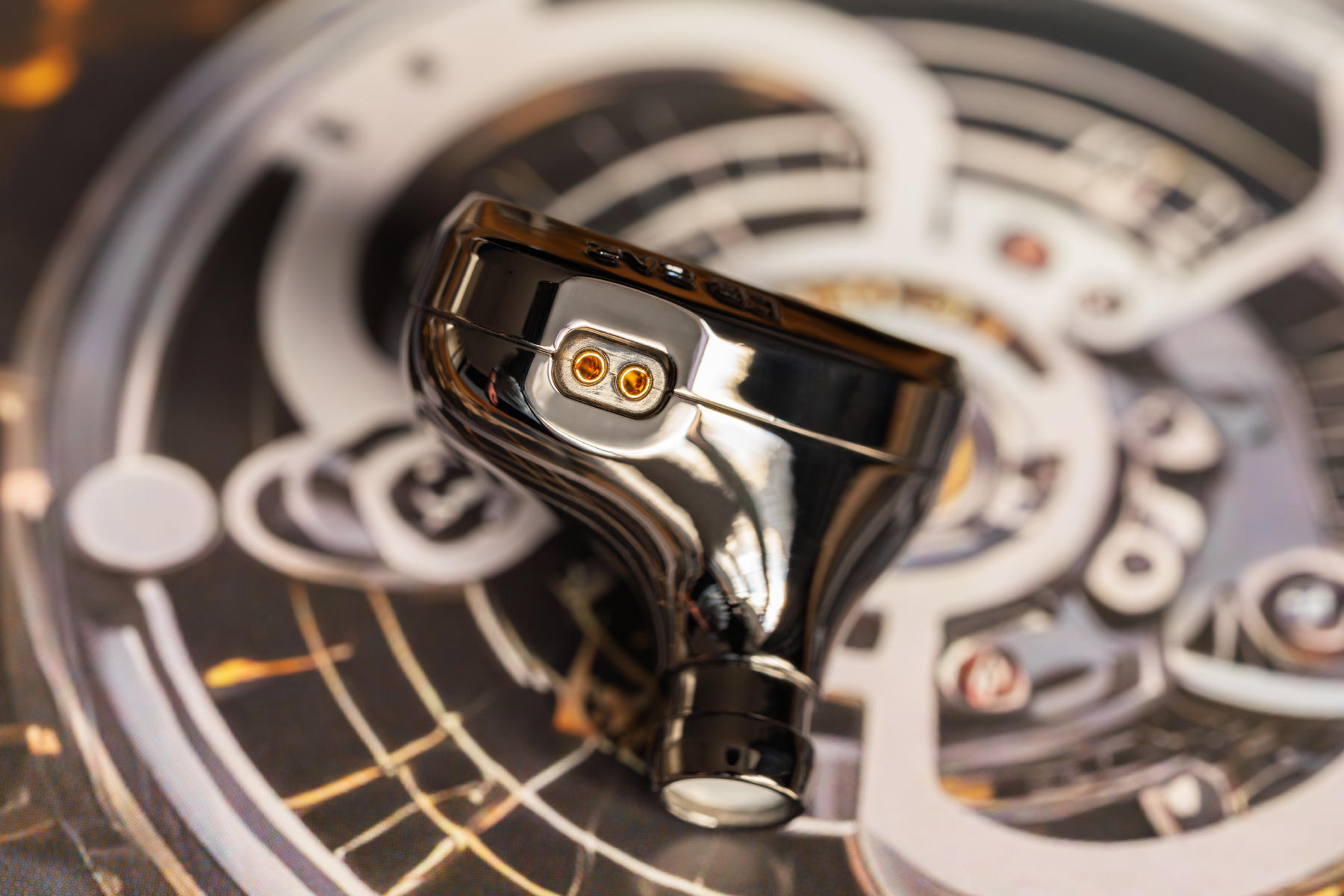
There are two compensation holes on the enclosure.

The sound duct is neatly covered with mesh.
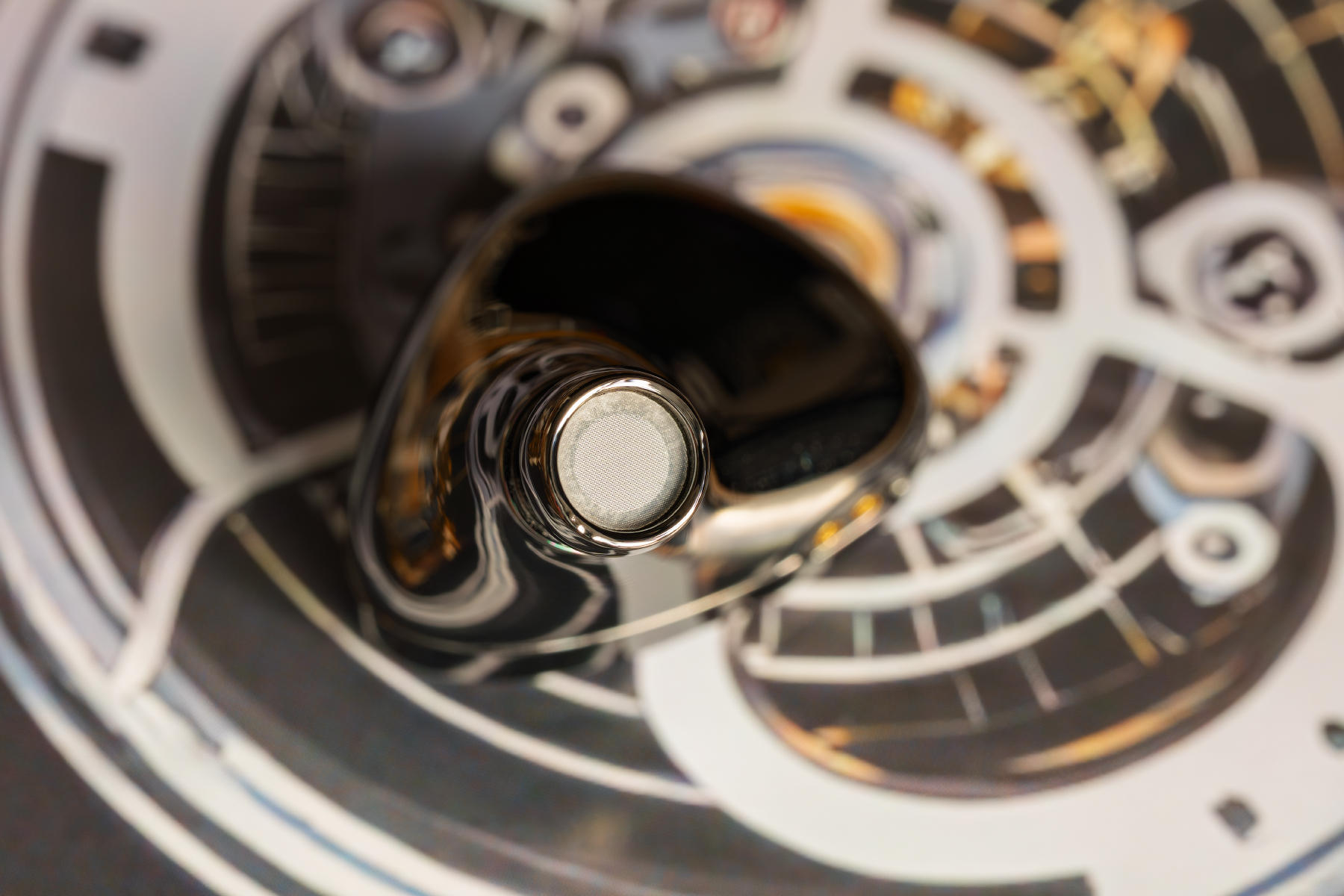
I have no issues with the quality of manufacture and assembly of the earphones themselves. The halves of the enclosures abut against each other without noticeable gaps, the coating is smooth. The clockwork simulation is implemented decently, that is, if you don’t look closely, everything looks beautiful from a distance of 20 cm. Using macro optics allows you to identify many small defects, such as chips on the glass or flashes on the edges of the gears. But, again, this is not visible in real life. The way TB-Pro look never failed to delight everyone to whom I showed them. I’d like to note that the manufacturer doesn’t use photos of the earphones in its marketing materials, but only rendered images, which is not typical for KBEAR (and, actually, not really fair). I assume that the reason is simple – it’s really hard to take a fine picture of this model (even I did it three times longer than usual) simply because of the peculiarities of the materials and the chosen decor of the exterior panels of the enclosures.
In terms of ergonomics, I can only praise TB-Pro – they are designed for a medium-deep fit where the earphone enclosures completely fit into the auricles of (my) medium-sized ears. That is, you can literally sleep on your side in them without fear of injuring your auditory canal, and they’re also comfortable to wear under a tight-fitting hat. Of course, since the enclosures are glossy and shiny, fingerprints appear on them immediately after being removed from the box.
As for the choice of eartips, the user has a free hand here: TRI Clarion, Roseselsa SoundCocoon or SpinFit CP100+ will hold OK on fairly wide sound ducts (6.35 mm) with sizable chamfers. Feel free to play around to your heart’s content!
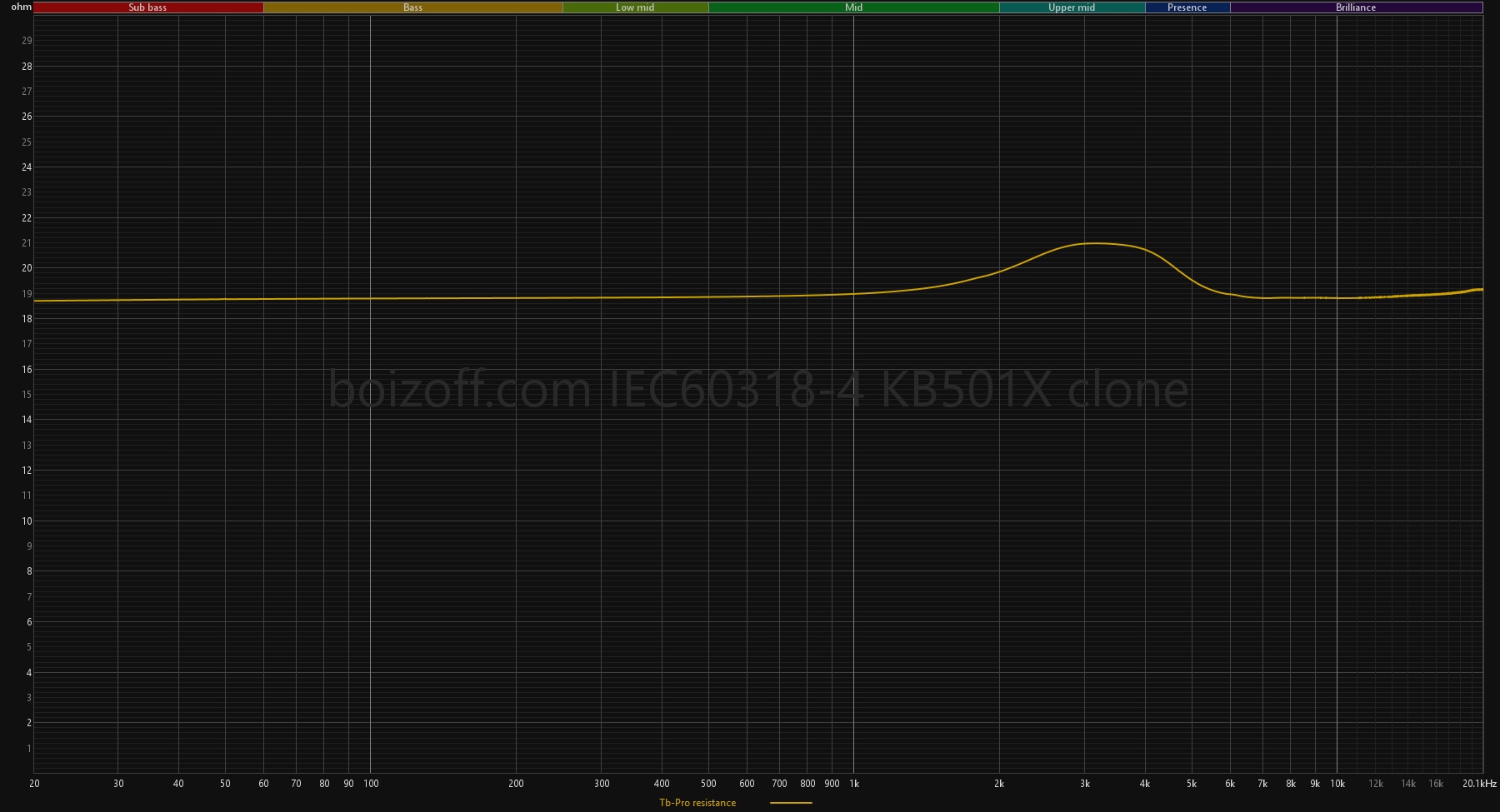
The electrical specs stated by the manufacturer are as follows: 19±2 Ω of impedance and 101±3 dB/mW of sensitivity. I measured the impedance, and it matched:
The sound
Standard links:
- the description of my rig is here;
- the audiogram of my hearing is here;
- articles on measurement theory and the whole shebang are here.
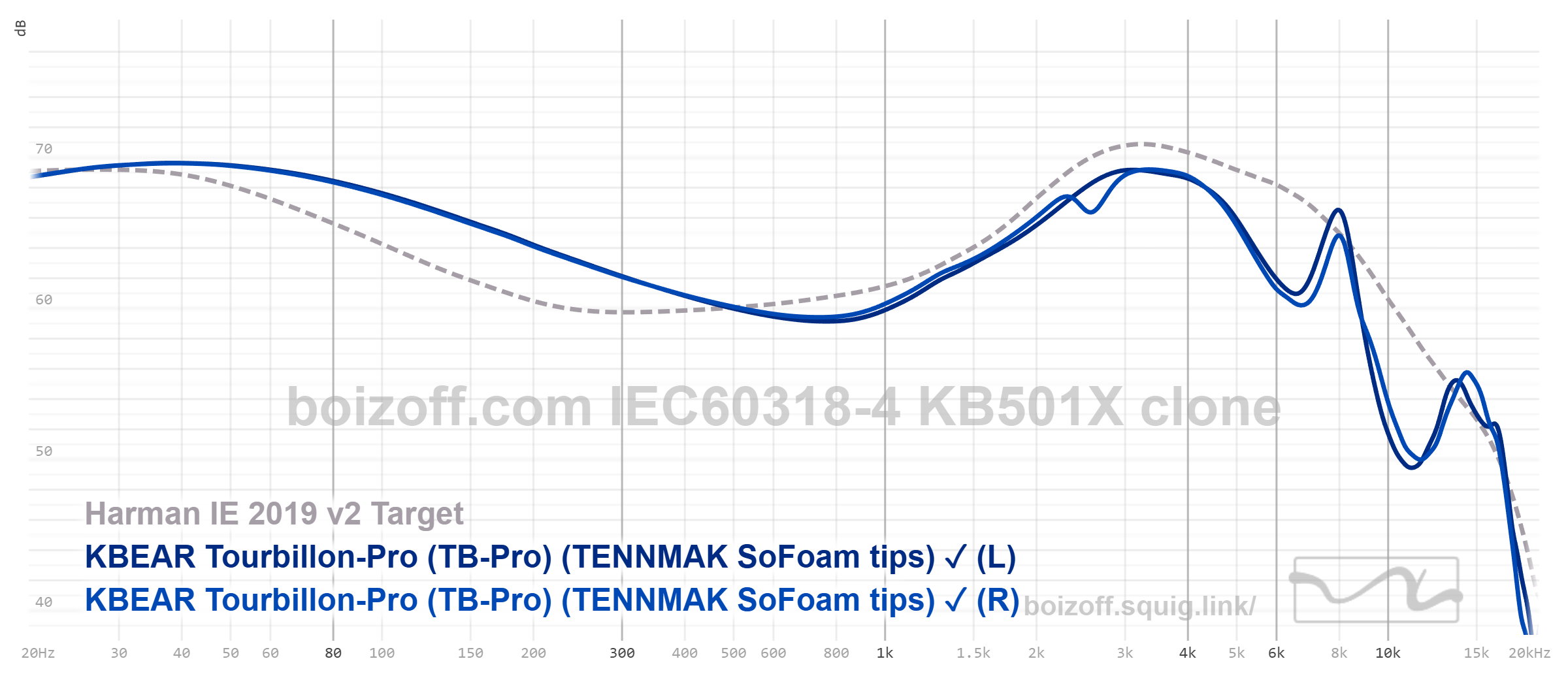
The picture above shows the measurements for foam eartips. The result is slightly different with the original ones.
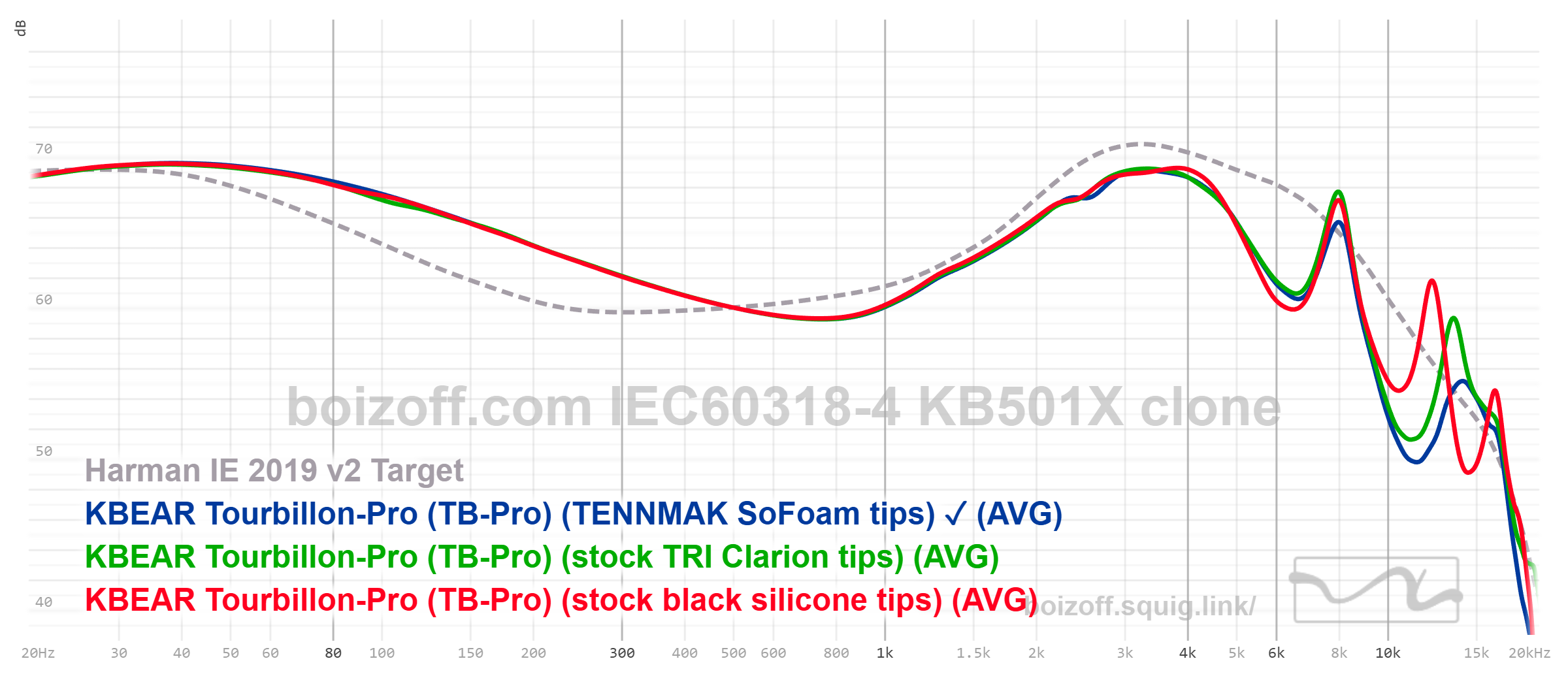
Personally, with my standard fit depth, my ears hear what corresponds to the blue graph with any eartips, namely:
- a really pronounced, wide emphasis on the bass and the lower middle;
- a full-fledged ‘smooth’ middle and upper middle;
- a not-so-even ‘top’ (the segment from 6 kHz and above), approximately corresponding to the Harman curve in shape.
In the picture, we can see the frequency response of ‘warm’ headphones with features that are typical of dynamic models.
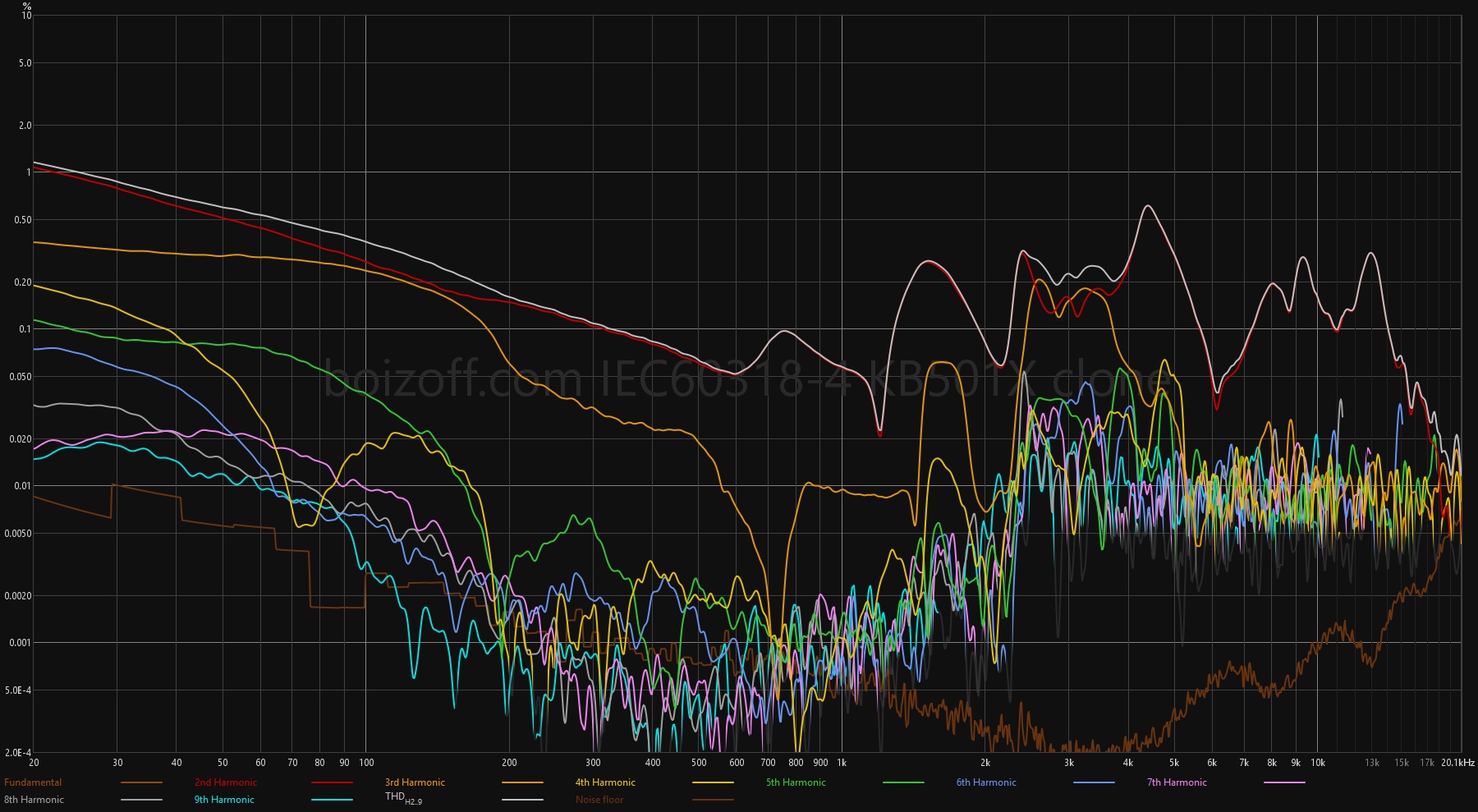
Nonlinear distortion at 94 dB with the ‘Use harmonic frequency as ref’ option turned off and on:
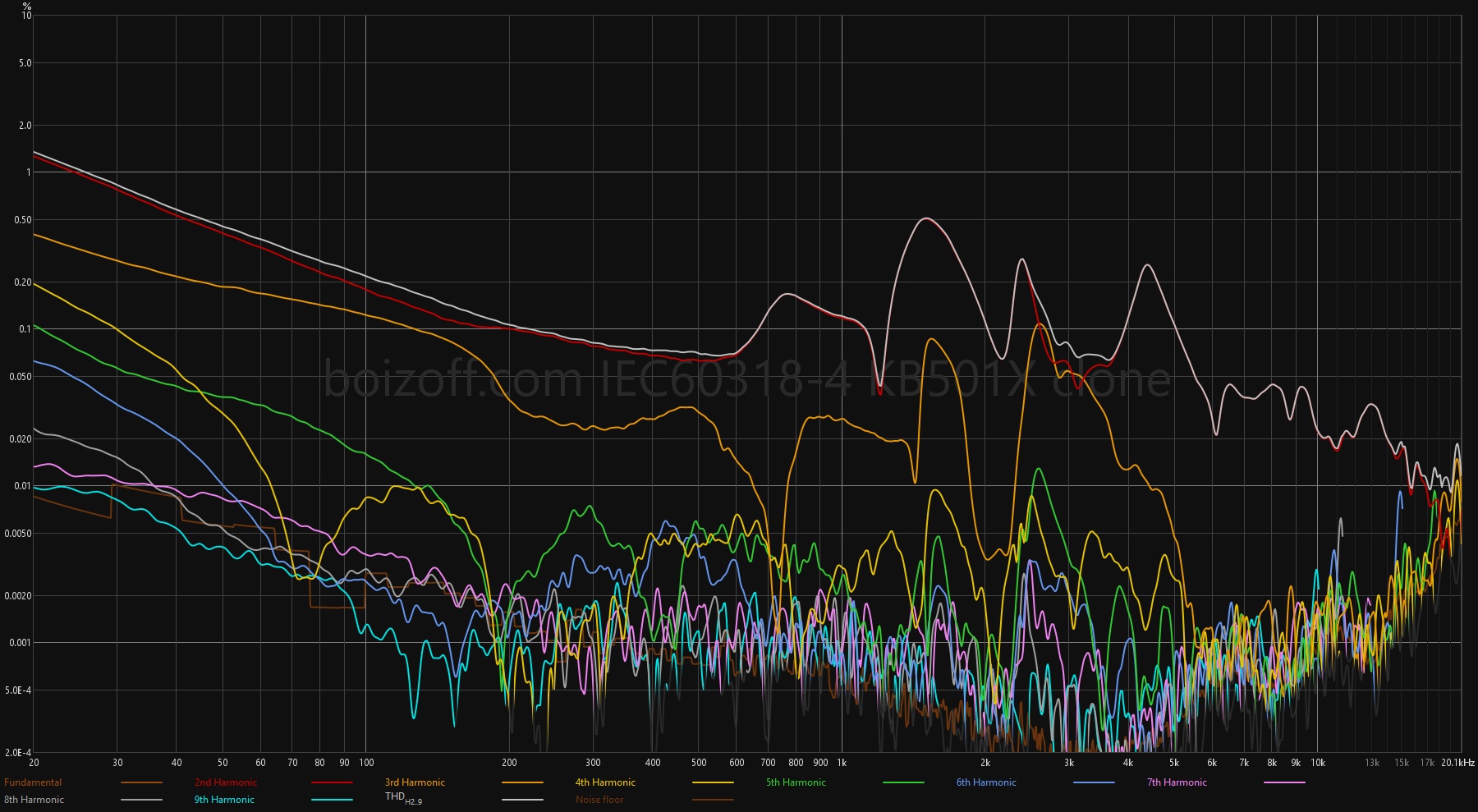
Nonlinear distortion at 104 dB with the ‘Use harmonic frequency as ref’ option turned off and on:
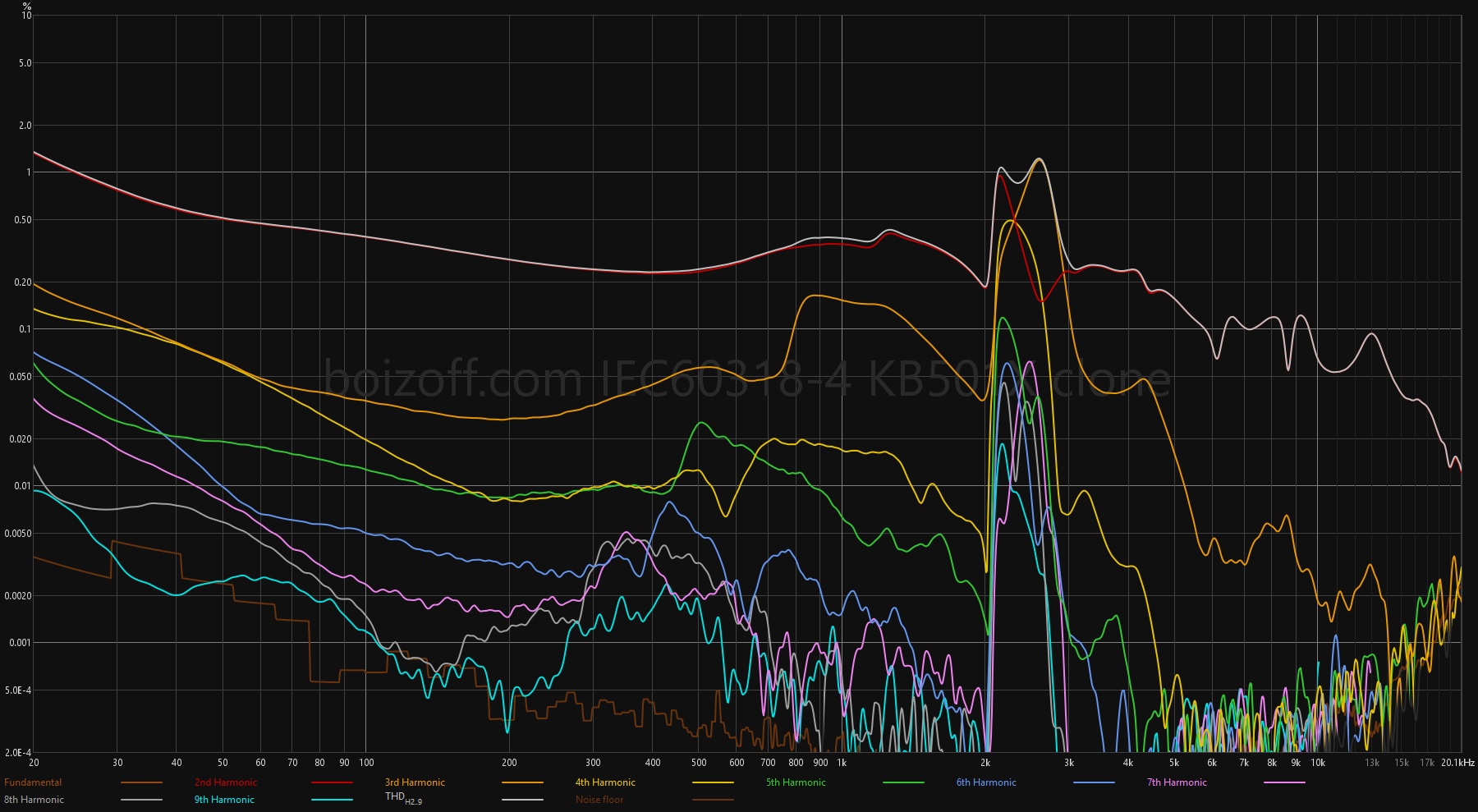
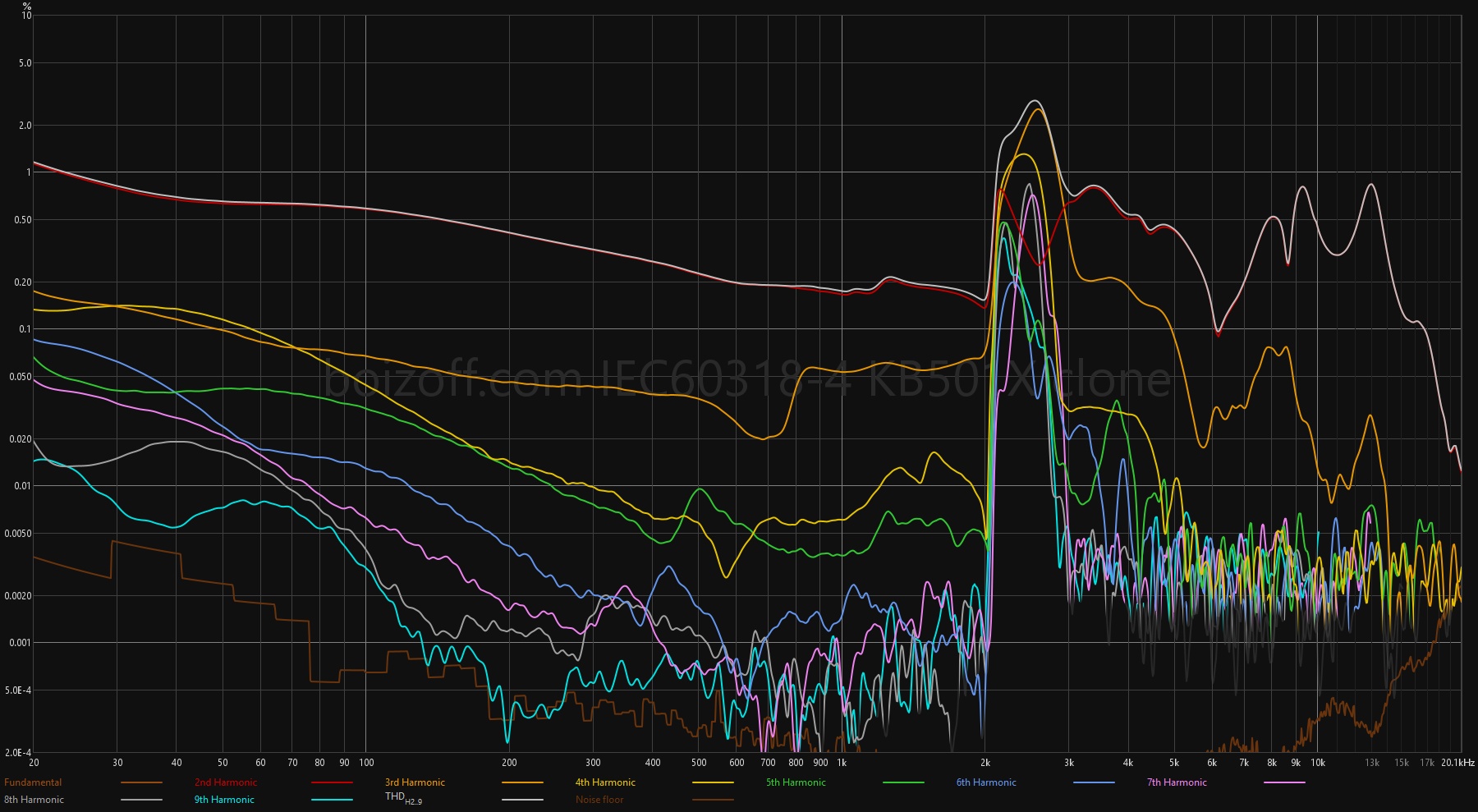
The amount of distortion is far from record-breaking, but it’s perfectly acceptable for listening at a volume of 94 dB. But you’d better not turn up the volume any more because the distortion level rises to 3% at 2.6 kHz.
Group delay and spectrogram in the ‘Burst decay’ mode:
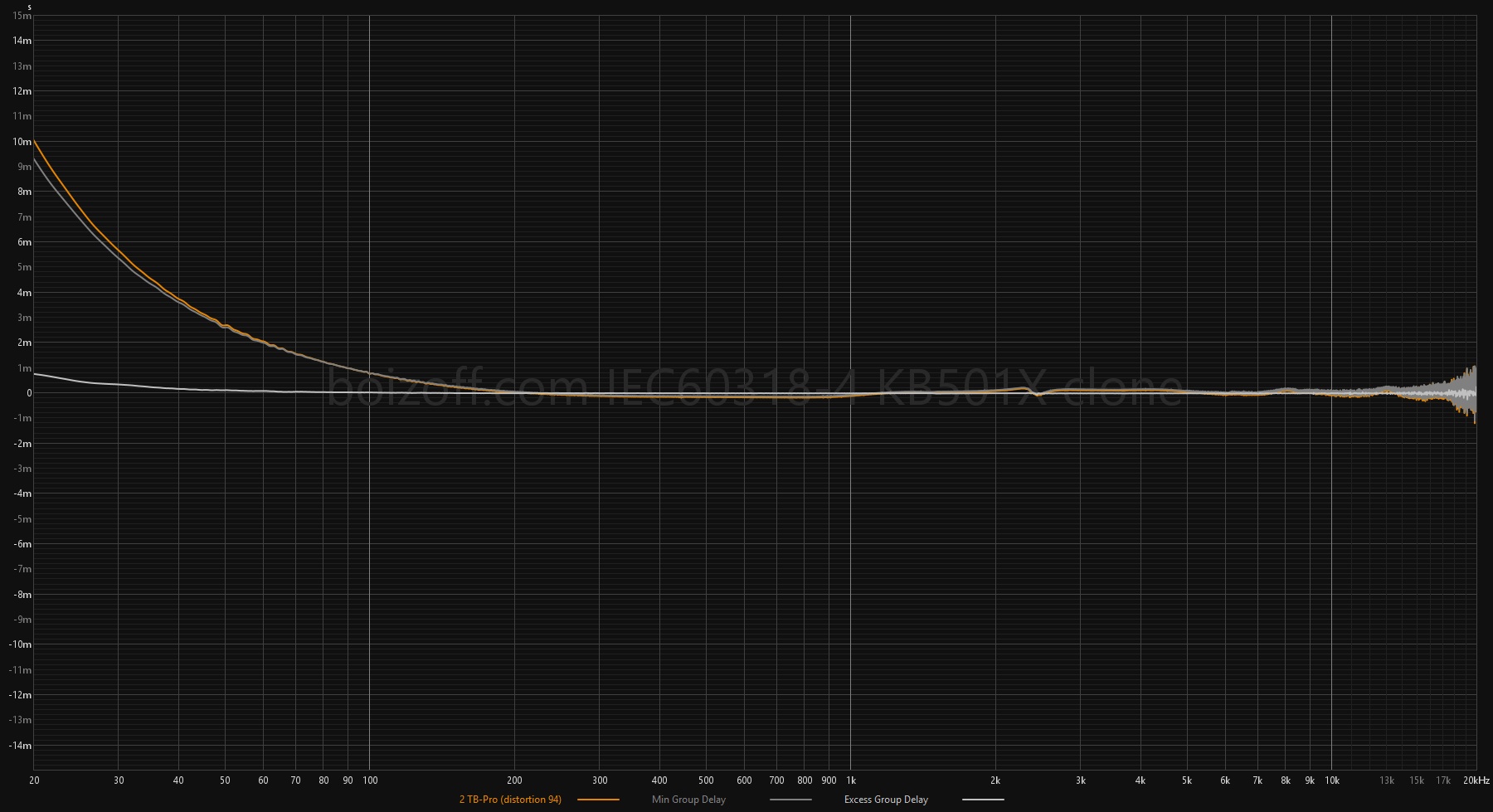
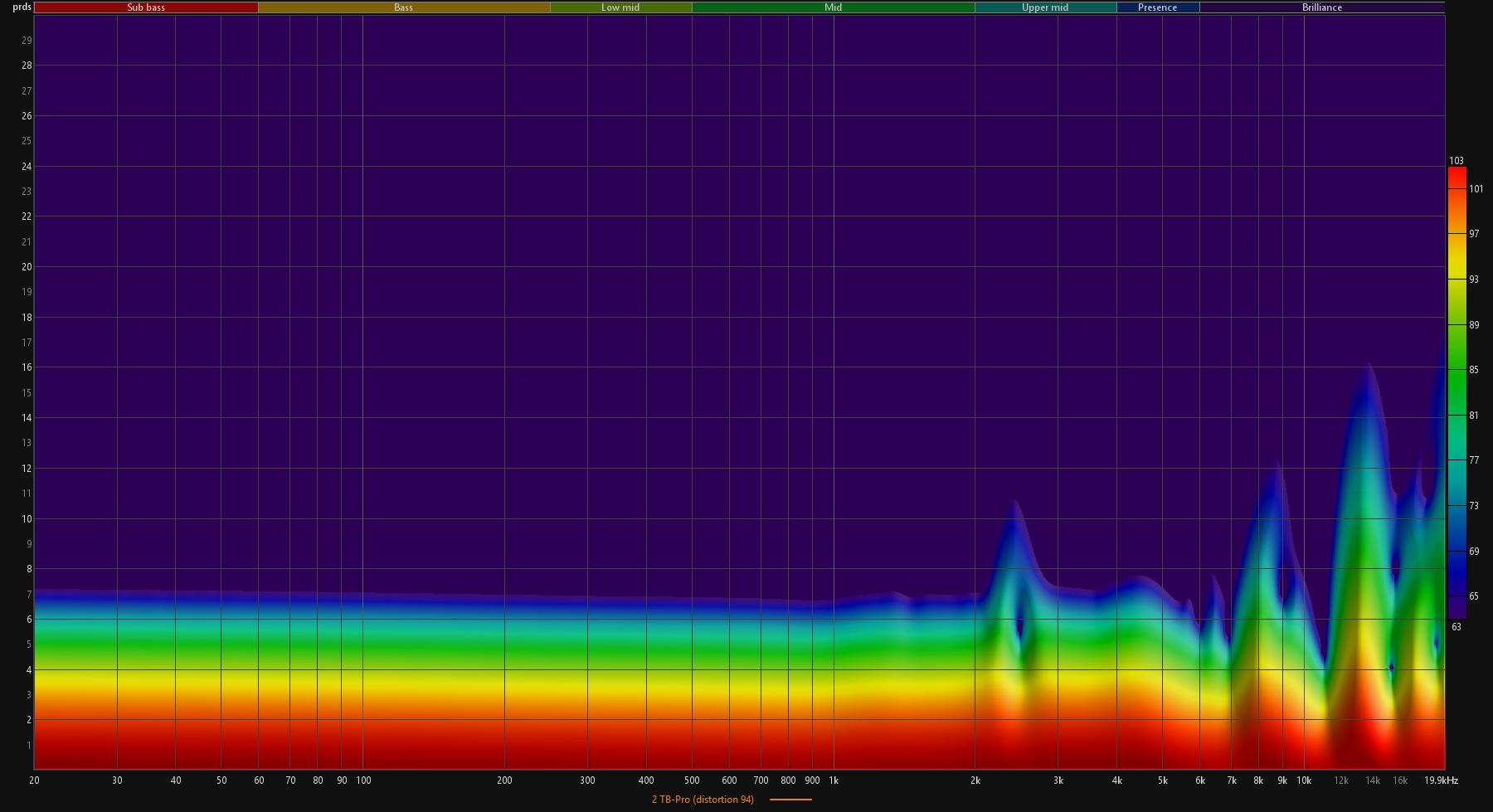
Everything is just fine here.
Subjective listening experience: the earphones’ sound delivery is ‘simple’ in the sense of both the tuning ideology and the sound itself. There are no long audiophile overhangs, clear sense of ‘air’, ‘wide sound stage’ and all that stuff. Powerful, rolling low frequencies and a smooth middle are what makes a formula for TB-Pro’s success. The drawbacks follow from this sound delivery dialectically. These earphones are not everybody’s cup of tea and, as it seems to me, not suitable for all genres. Old rock and metal of the 2000s, such as Halloween or Sonata Arctica, as well as more or less calm instrumental genres sound good. But when it comes to complex electronica saturated with low-frequency parts, fast death metal or slow, layered post-rock, you’ll need earphones with a slightly different sound if you want to hear small ‘details’ in the bass range. TB-Pro, like many other dynamic single-driver models, are primarily about sound impressiveness and not about accuracy and balance.
On the bright side, female voices are never annoying with them. They are never deliberately close and loud. What’s more, TB-Pro are also well suited for outdoor use, compensating for low-frequency roar of the city in spades.
Comparisons
Based on the known rating of in-ear monitors, I will compare TB-Pro with the best models in their price category:
- Simgot EA500LM;
- Truthear x Crinacle ZERO: RED;
- Twistura Sigma.
Frequency response of TB-Pro compared to EA500LM:

EA500LM are brighter, much brighter, but, coupled with the tuned high frequencies, the earphones sound balanced in terms of an emphasized V-shaped sound delivery. TB-Pro are quieter, they don’t sound as exciting, but they also don’t irritate your ear.
Frequency response of TB-Pro compared to ZERO: RED:
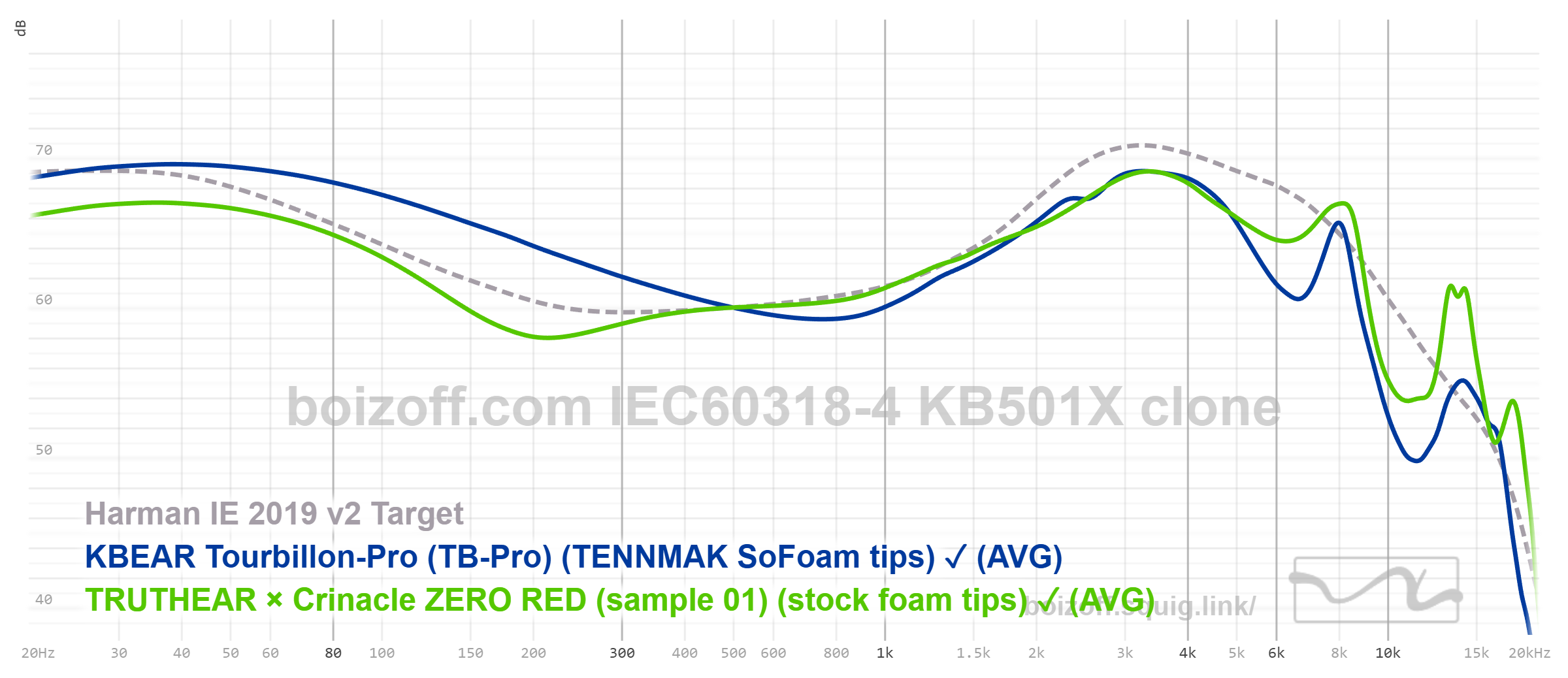
In contrast to TB-Pro, RED sound almost neutral. The volume difference at 250 Hz reaches 6 dB, that is, two times, and this is despite the fact that RED have less subbass, which is separated from the bass better, and there are more high frequencies.
Frequency response of TB-Pro compared to Sigma:
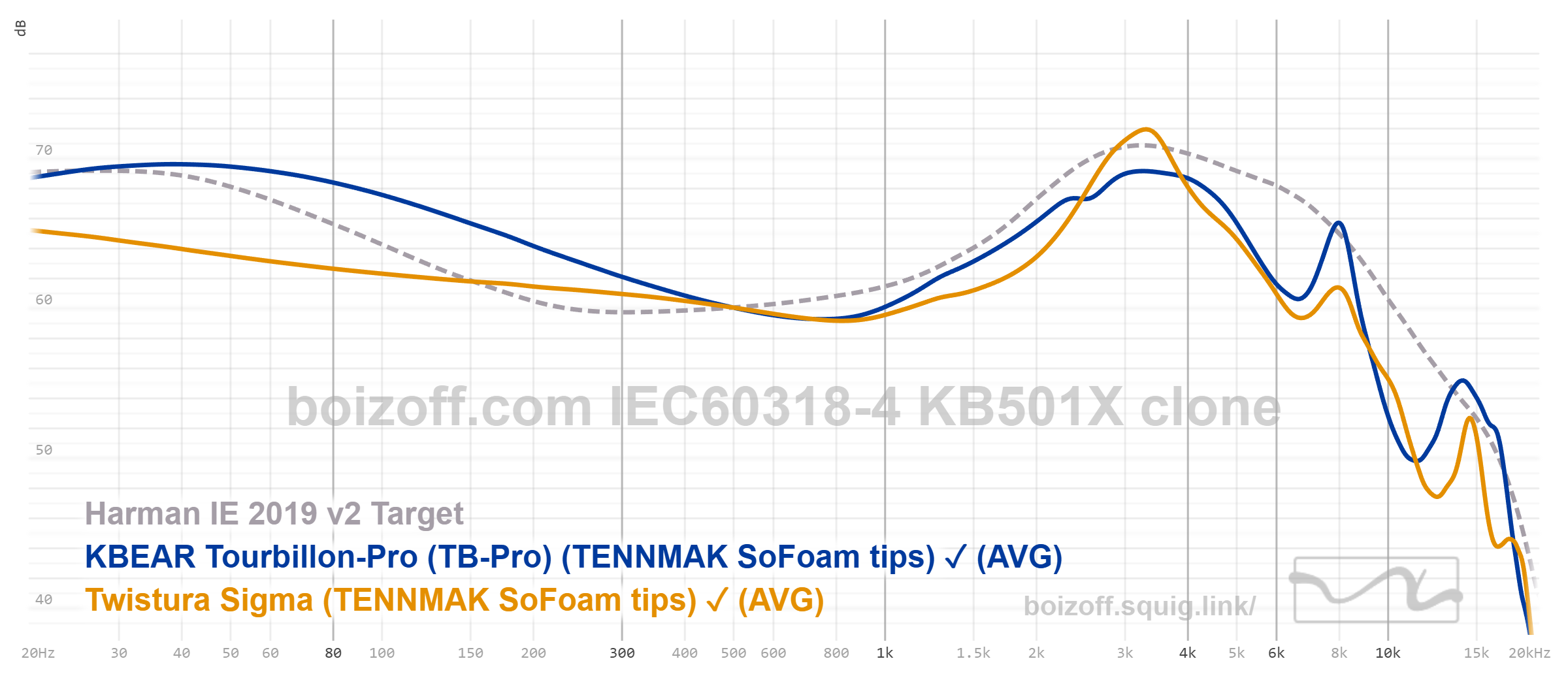
Twistura Sigma are one of the most neutral earphones I’ve ever heard. Their sound is based on the midrange, while the bass and top are very ‘calm’ — Sigma don’t want to surprise you with their sound. With its thunderous bass, the TB-Pro sound differs radically and in almost everything.
TB-Pro are like nothing on earth among what I personally consider to be good earphones for this price. But what do they appear to be in a different context, compared to purely ‘dynamic’ models, even if their prices are somewhat different? That’s a really interesting question.
Actually, here is the choice of models for comparison:
- PULA Unicrom;
- Roseselsa QuietSea II;
- Sivga Que;
- VerseKeys × Celest Ultra-Sense Planet;
- Celest (Kinera) Wyvern Abyss.
Frequency response of TB-Pro compared to Unicrom:
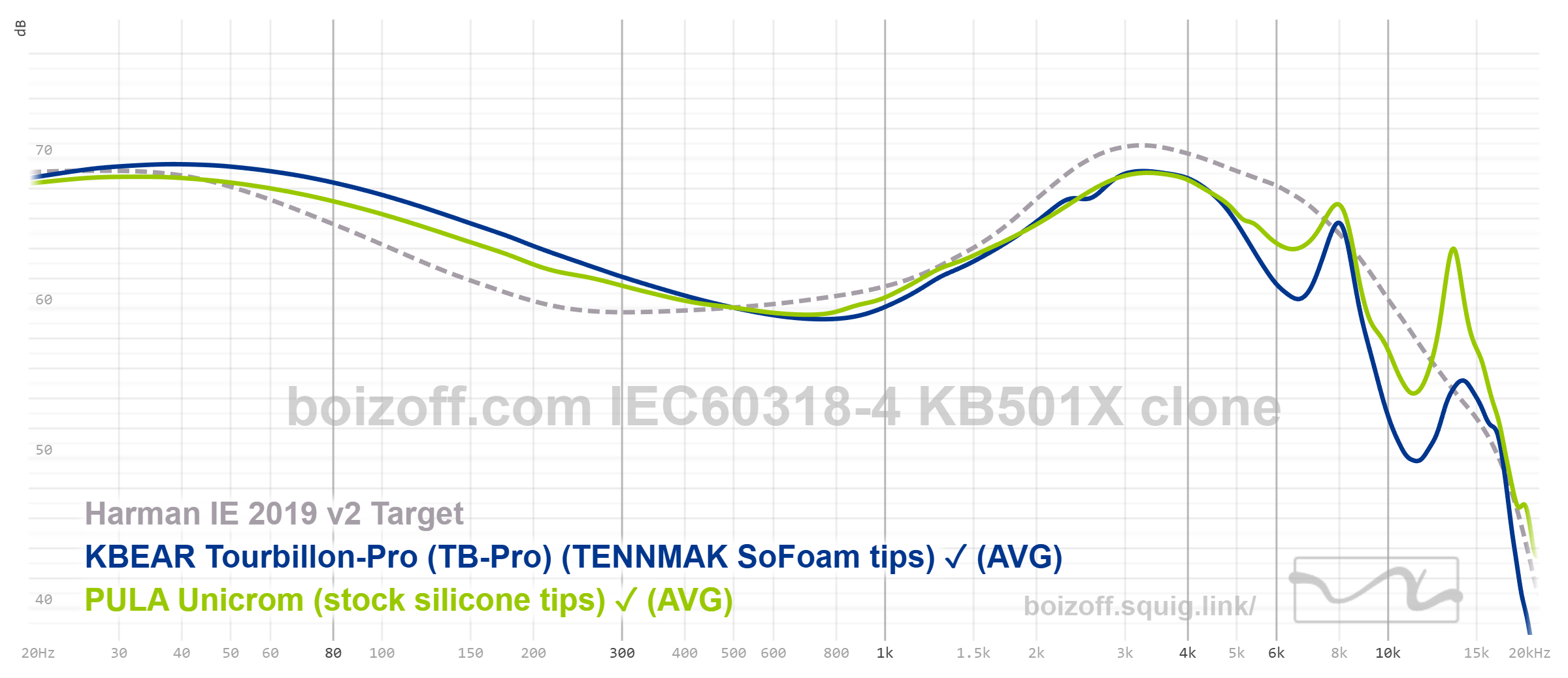
The high-frequency peak in the Unicrom sound is clearly audible, and it’s unpleasant to the ear. TB-Pro deliver this section without accents and even with some recession, which actually (among other things) gives that typical ‘warm’ sound. I’d say that TB-Pro definitely win in the overall sound delivery balance.
Frequency response of TB-Pro compared to QuietSea II:
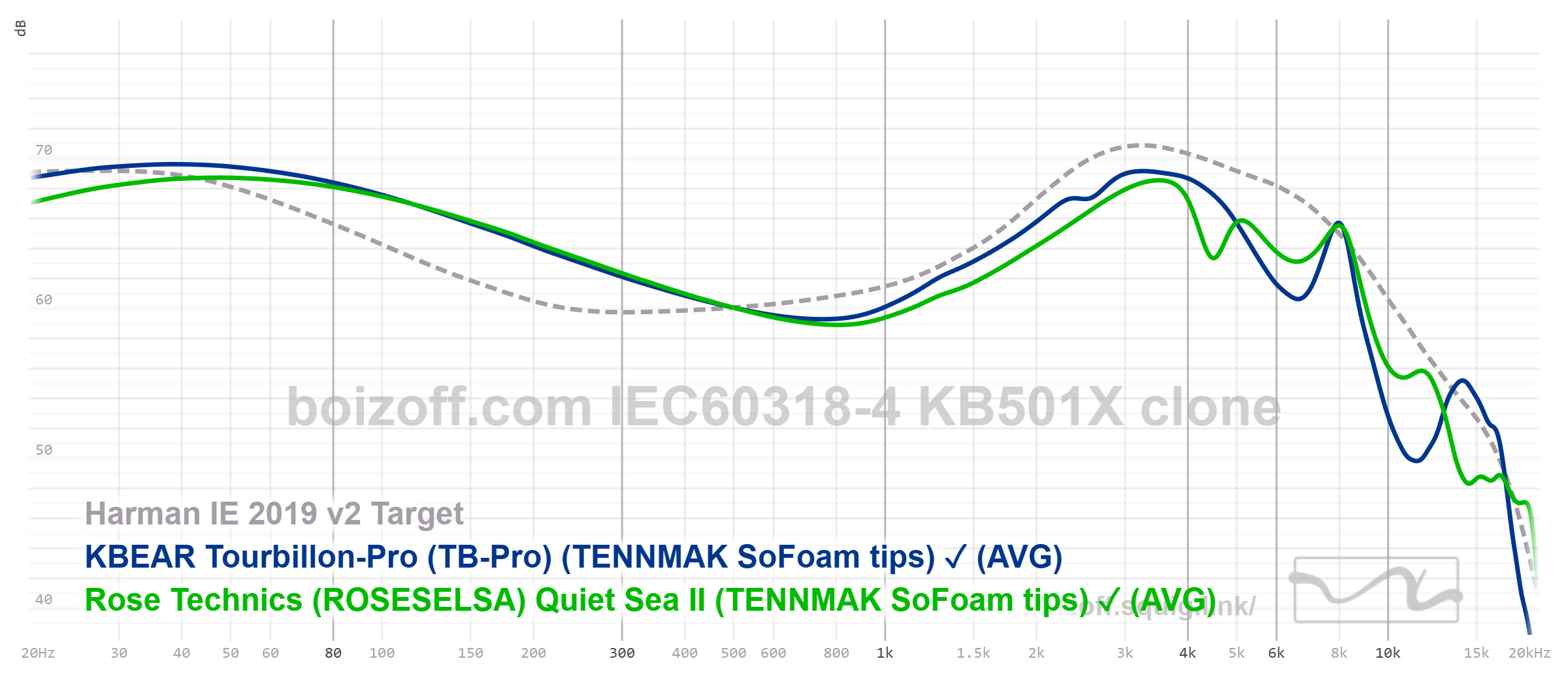
QuietSea II are excellent earphones for fans of such tuning, and they get undeservedly little attention. Their sound delivery differs from TB-Pro in greater warmth. The upper middle and everything that lies to the right on the frequency response graph is reduced in volume even more. In this sense, TB-Pro sound more balanced. The QuietSea II features include a very shallow fit. Even their original eartips have cross-sectionally oval sound ducts, like those of TWS.
Frequency response of TB-Pro compared to Que:
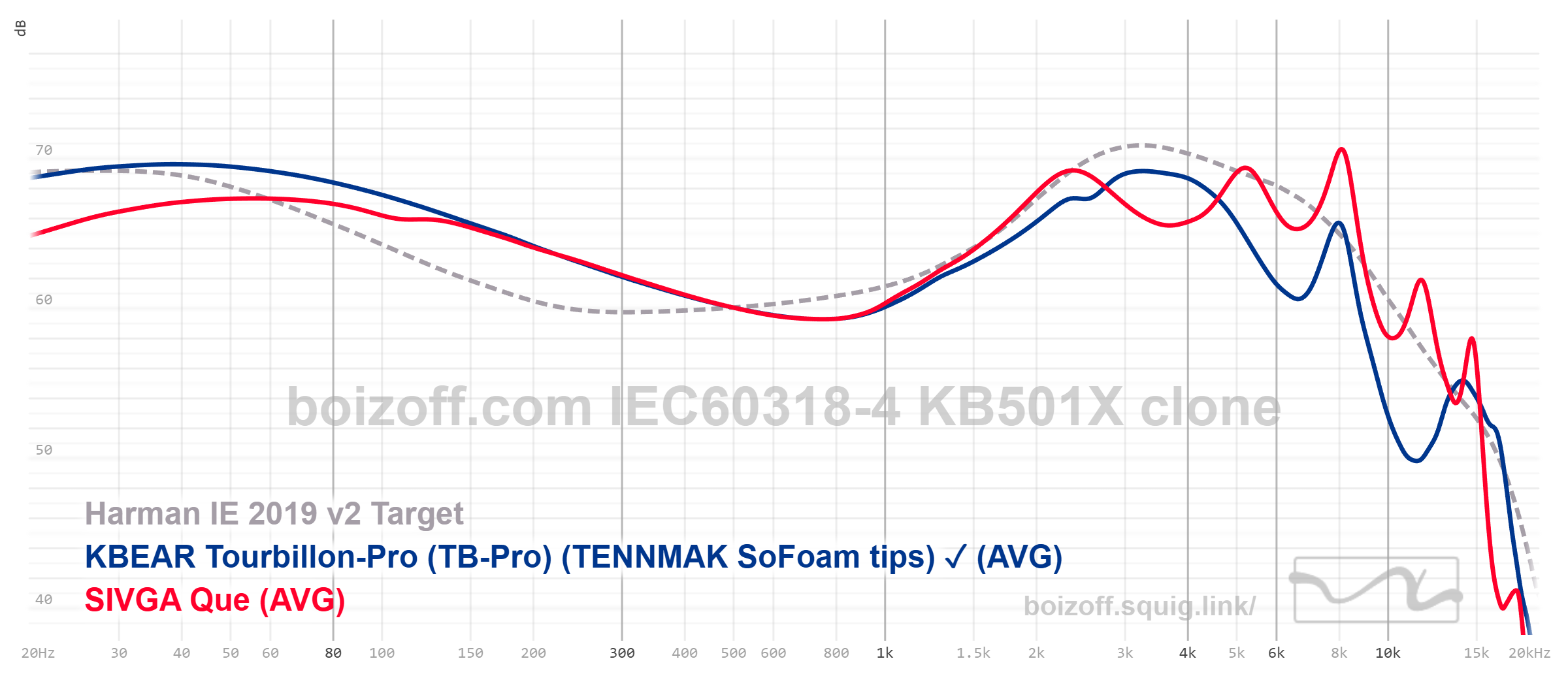
I’m talking about the ‘old’ model that I reviewed, not the UTG one. Que sound much louder and sharper, while TB-Pro are more reserved.
Frequency response of TB-Pro compared to Ultra-Sense Planet:
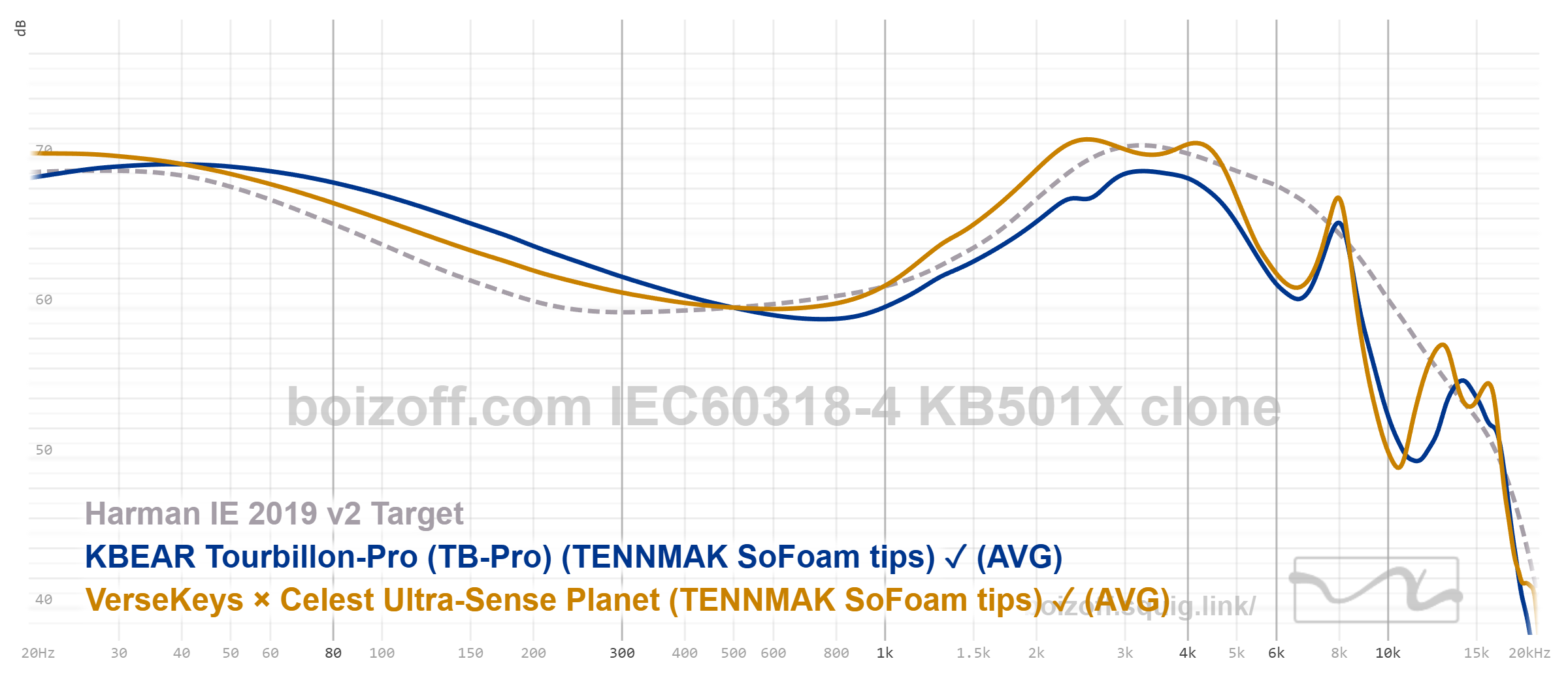
The dominant sound of Ultra-Sense Planet is the upper middle. These are ‘light neutral’ earphones, whereas TB-Pro are based on bass. Ultra-Sense Planet require a deep fit for normal sounding (in my particular case), and this is not comfortable for everyone, while TB-Pro are much more gentle in this regard.
Frequency response of TB-Pro compared to Wyvern Abyss:
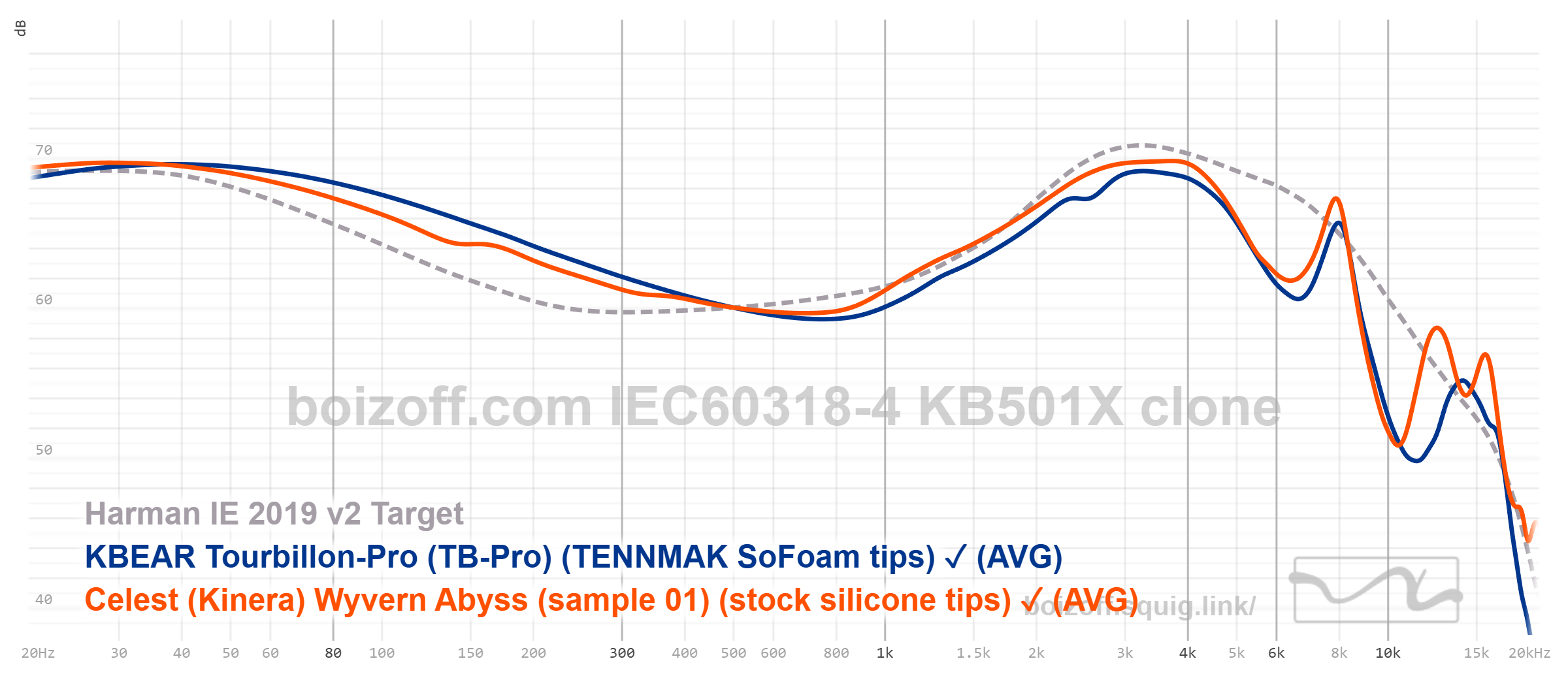
In my opinion, this is the most ‘dangerous’ comparison for TB-Pro. Wyvern Abyss slightly change the balance towards the midrange, keeping the frequency response as such almost intact – this can be roughly (!) described as a slight counterclockwise rotation of the TB-Pro frequency response. To my ear, Wyvern Abyss sound more balanced and realistic, although they can’t boast of their regular case, cable quality or good original eartips, unlike TB-Pro. But the difference in the cost of these models is 2-3 times, too: Wyvern Abyss are much cheaper.
Summary
The main thing is that TB-Pro are decent-sounding dynamic earphones with a ‘warm’ sound delivery, which differ from other models that use a single dynamic driver with a lack of sharpness at high frequencies. And that’s already not too bad. In this model, the manufacturer has relied not only on sound, but also on design – it’s objectively unusual, memorable, and eye-catching.
TB-Pro don’t break any records technically, and they don’t have any unique tuning that’s peculiar to them only. They just play well: in a powerful, dynamic, ‘dramatic’ way, if you will.
As always, I can recommend these earphones solely to fans of this very sound – ‘warm’, ‘dark’, and even a bit basshead.
To buy or not to buy: to decide after listening.