

TANGZU Bajie Earphones Review
I bought these in-ears 2 hours after I got to know them. I put them in my ears, and two hours later I was already discussing whether the reader who sent them to me was actually ready to sell them and for how much. This is quite uncommon for me: in 2025 alone, I tested more than 100 models, so it’s quite difficult to surprise my hearing right away, and things that can make me feel like ‘shut up and take my money’ are really few and far between.
Today, we’re gonna talk about the earphones that managed that: TANGZU Bajie. They cost some $600 and are (supposedly) the flagship model in the 2024 TANGZU product range. Despite their age that’s venerable by today’s standards, the earphones have not been discontinued and are listed on the manufacturer’s website as a present model.
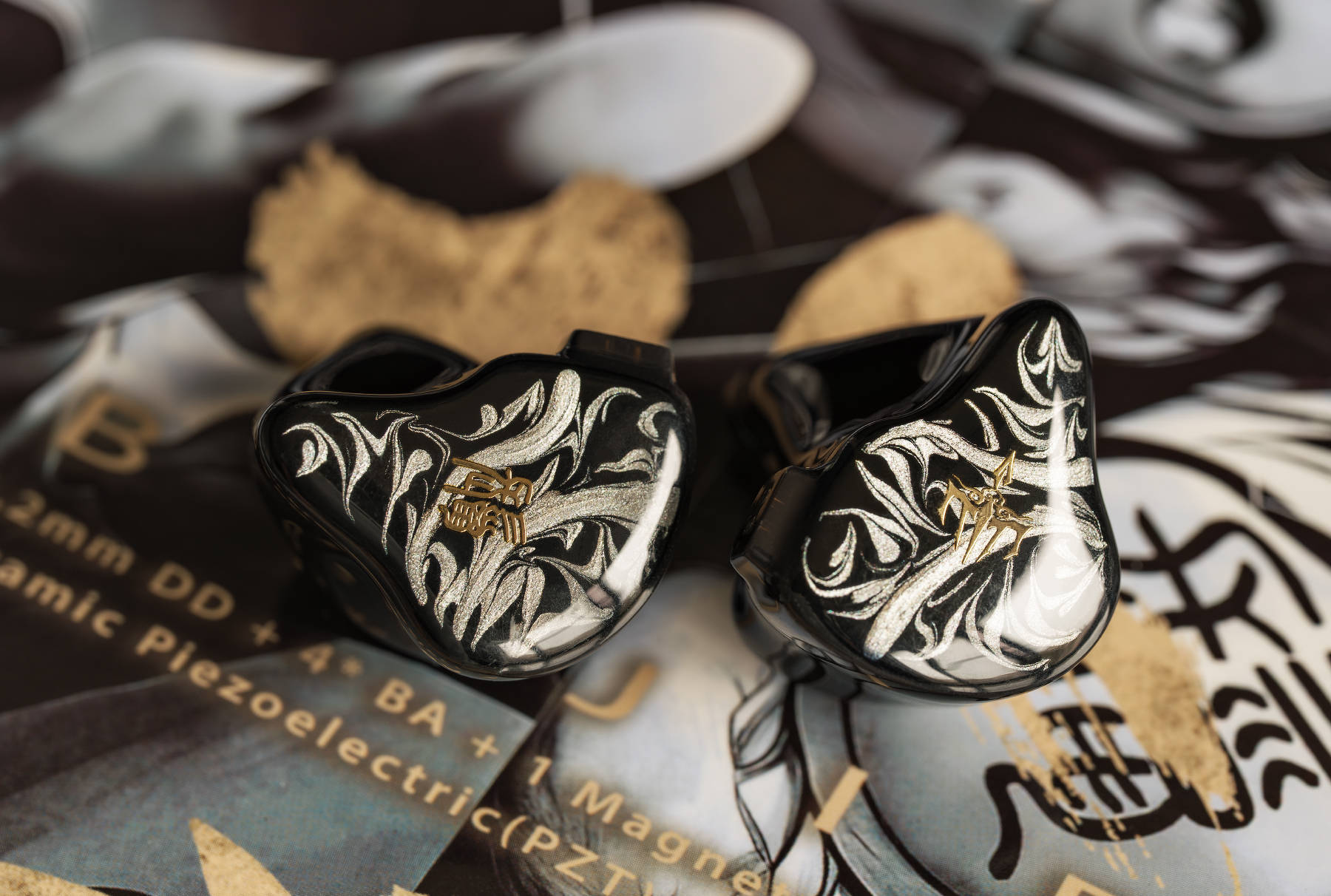
The full correct name of the model is Zhu Bajie, which is the name of a character, a half-human, half-pig wizard from a classic Chinese novel Journey to the West published in the 16th century.
All but the sound
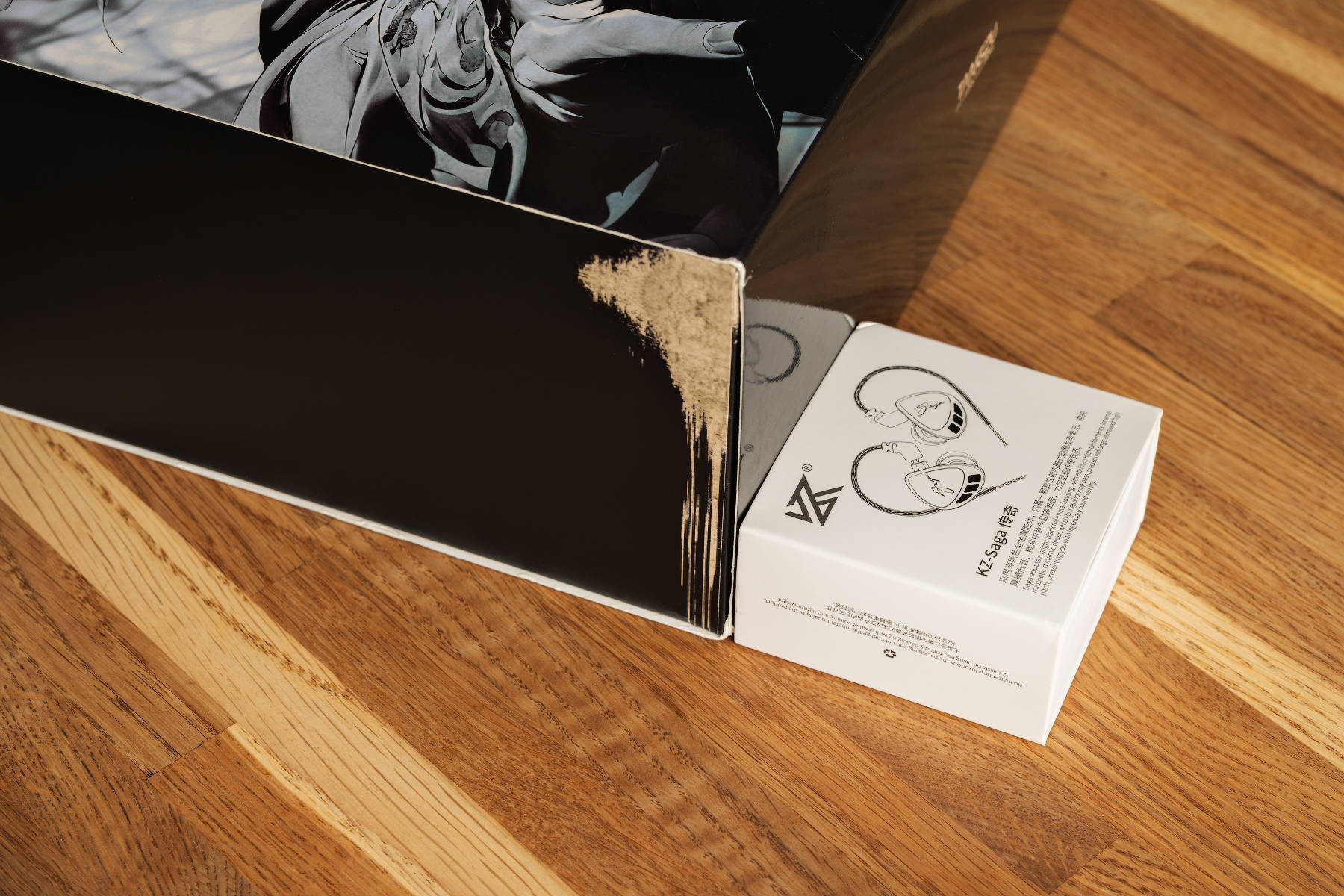
The earphones come in a box, which is not surprising. What is surprising is its size because… it’s not a box, it’s a damned ziggurat! It’s literally majestic, it’s perceived as a direct statement, “We’ve got the largest box for in-ear monitors that you have ever seen!” Now it must be a full-size metal case to outshine it, for real. The box is so spacious that some non-folding full-size headphones can easily fit into it. As for the models such as Fiio JT7, I think, some 6 of them will do the same.
I took a picture of the Bajie box next to the regular ‘matchbox’ by KZ so that you could see the difference:

The box contains the following items:
- the king-size case;
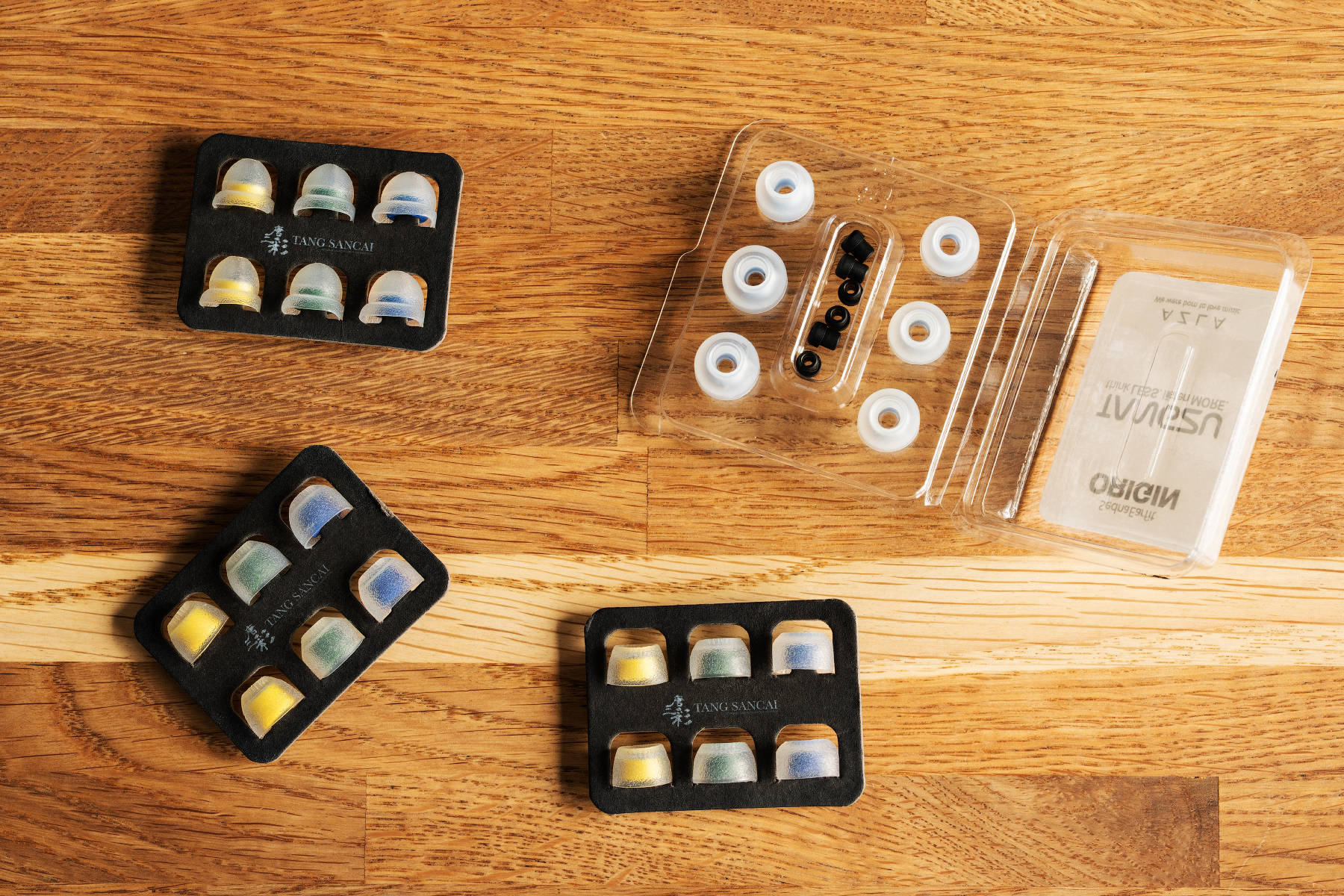
- 4 sets of eartips, 12 pairs in total;
- a cable;
- the earphones.
The zippered case is large to match the box. It has an organizer insert covered with ‘soft-touch’ plastic. The organizer implies placement of the earphones, the cable, 3 pairs of eartips, as well as a small portable DAC inside the case. There’s also a pocket under the top cover.
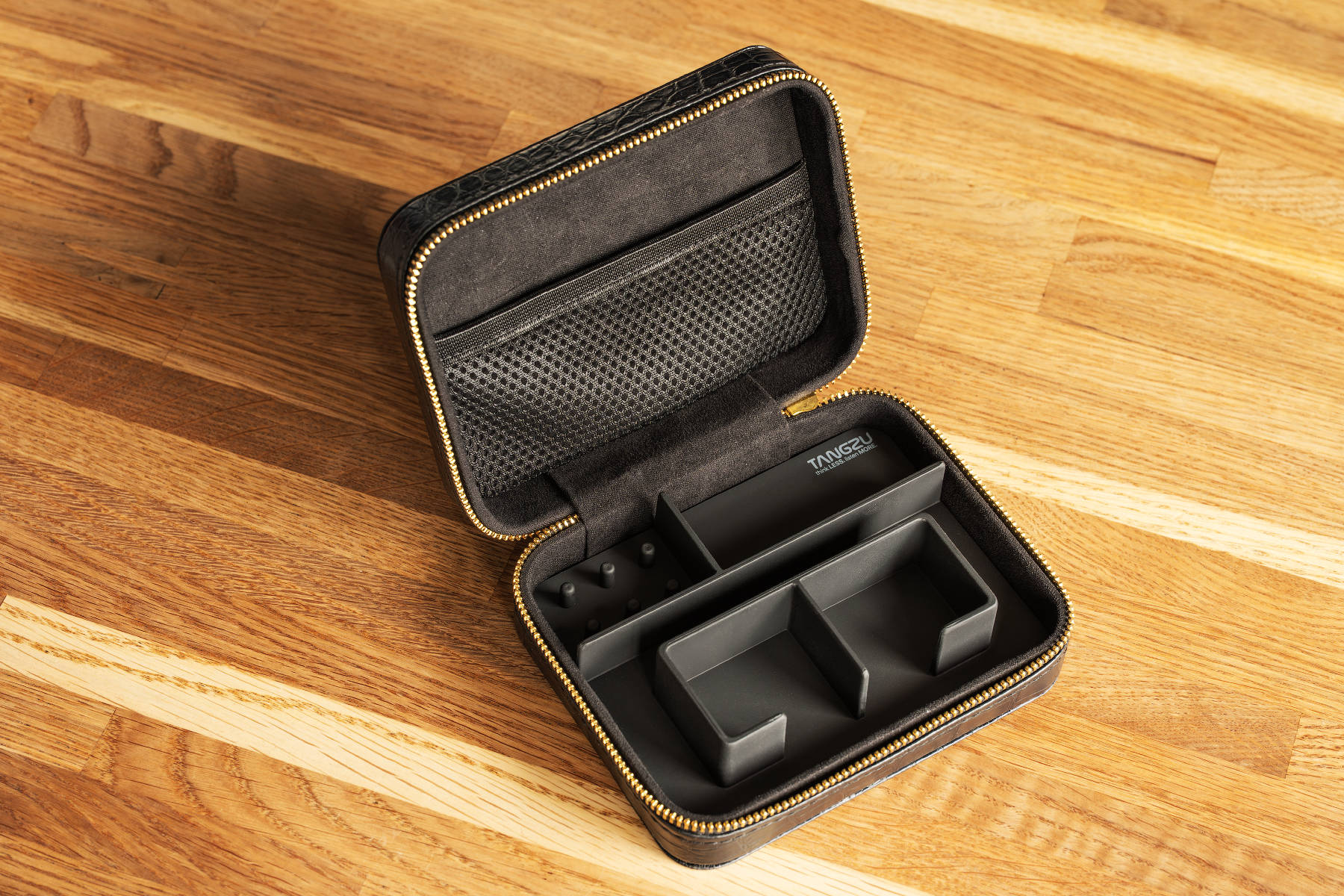
It’s sold separately and can be found on a well-known marketplace by entering ‘TANGZU MAX case‘.
The eartips are 3 sets by TANGZU and one by Azla. The latter are made not of thermoplastic elastomer, but just of soft, velvety silicone. The sets from the manufacturer are Tang Sancai, Tang Sancai WB, and Tang Sancai Narrow Bore. While the first two models are well-known, the third one is not so popular. The eartips have an oddish shape, as if the manufacturer was creating 2-flange eartips, but then it decided to combine the surfaces of the front narrow and rear wide flanges into one. I can hardly imagine the ears, for which this model would be convenient.
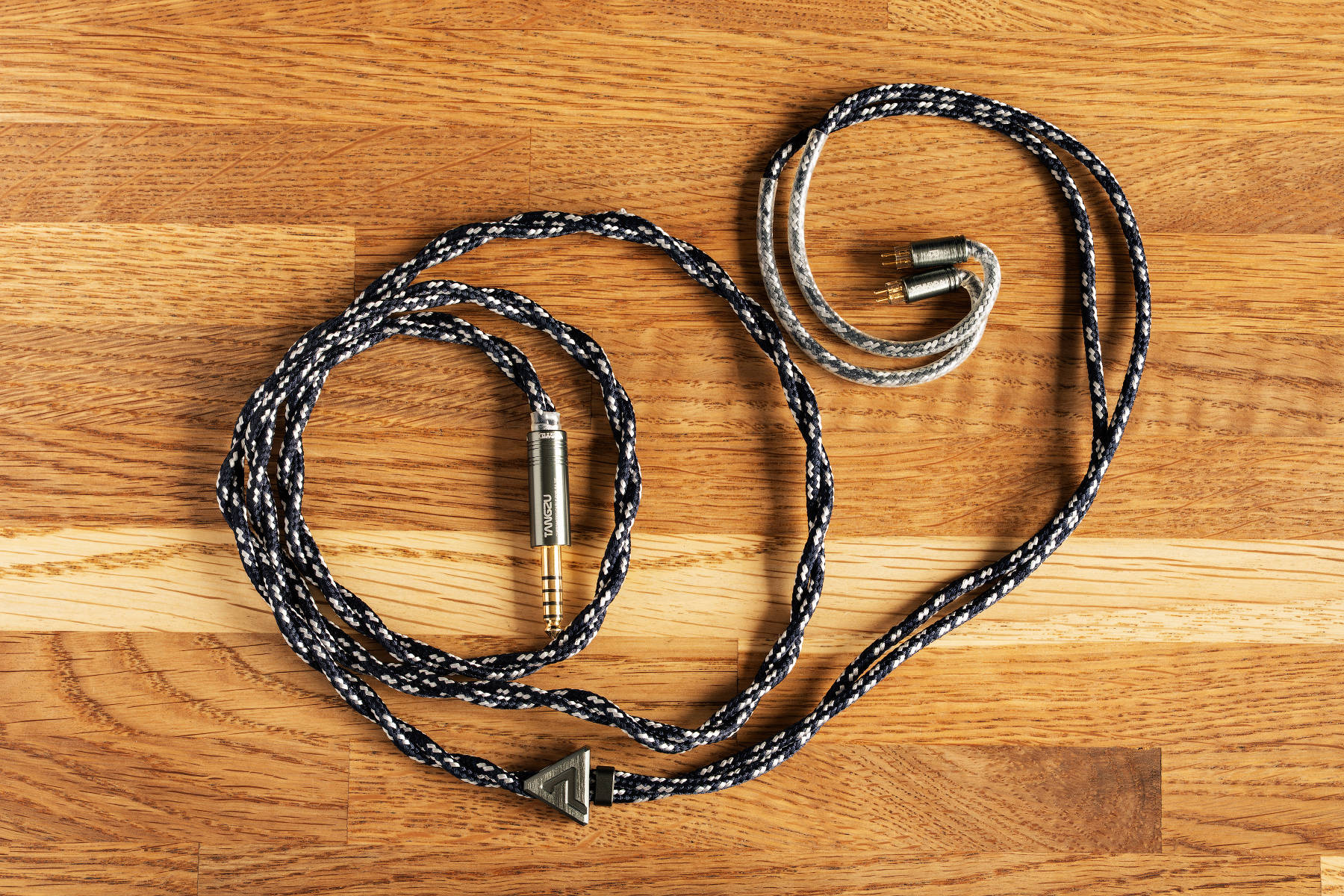
The cable has no replaceable connector. Produced by Vortex, it’s clearly ‘audiophile’, in a fabric braid and with a metal splitter of exceptional brutality, but, damn it, it has no replaceable connector! With this price of the in-ears, this is an outrage.
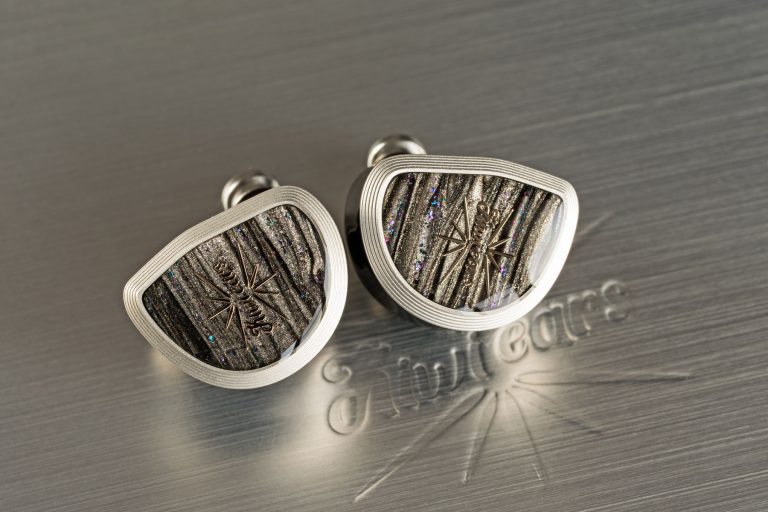
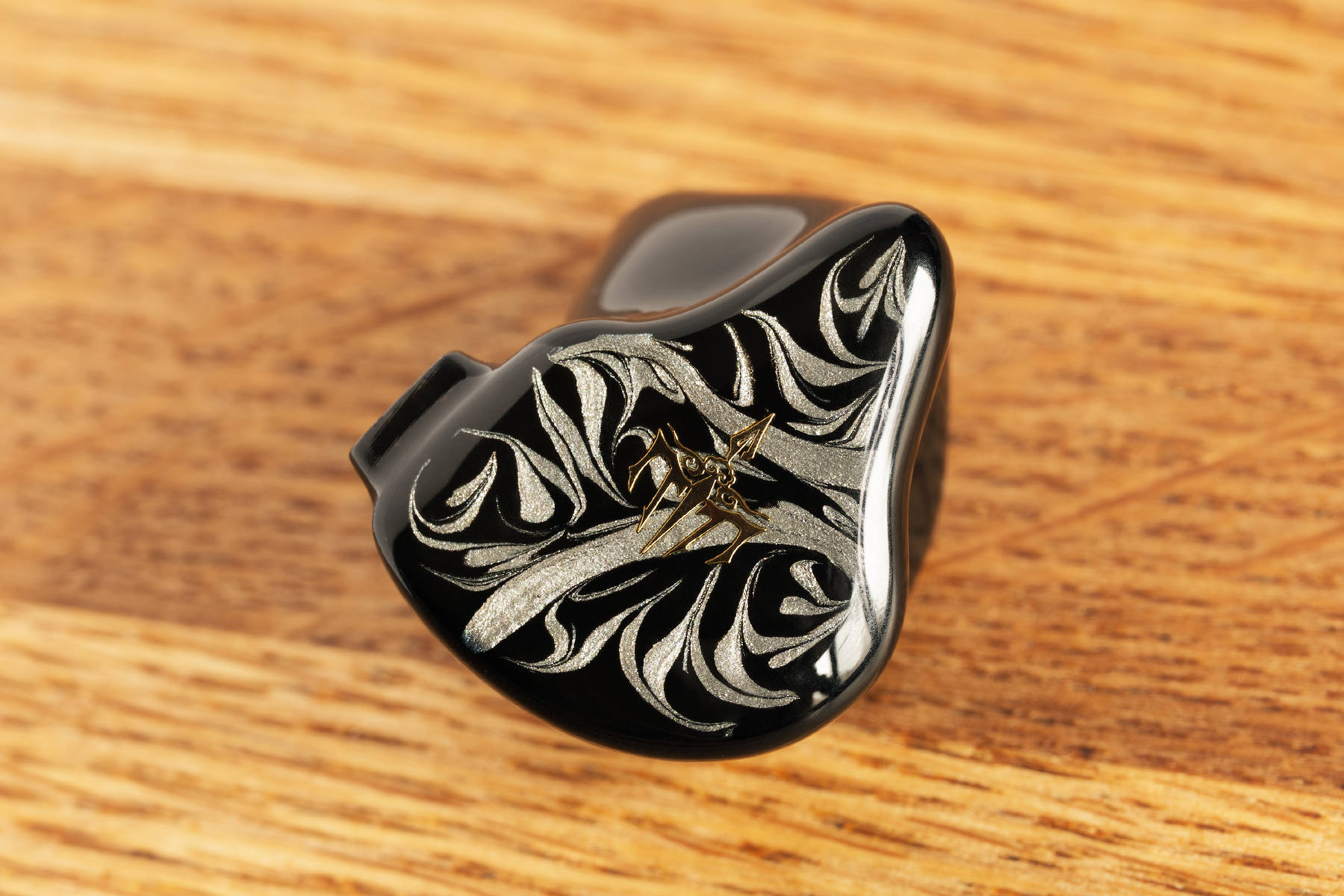
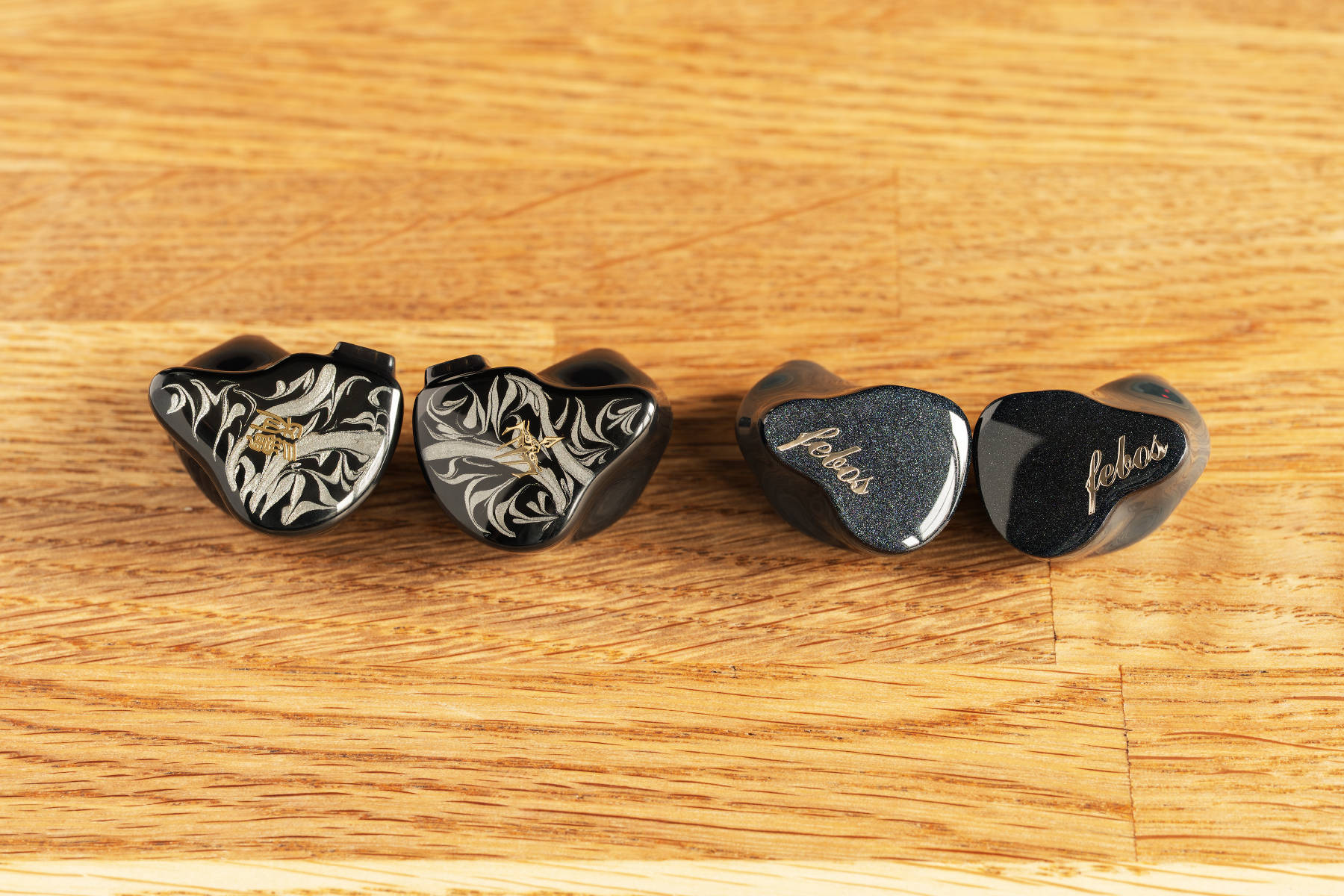
And here are the earphones themselves. The design or decorations of their shells are not that peculiar, actually. The shells are 3D printed, as follows from the manufacturer’s information.
A grid covering the compensation hole is attached near the connector.
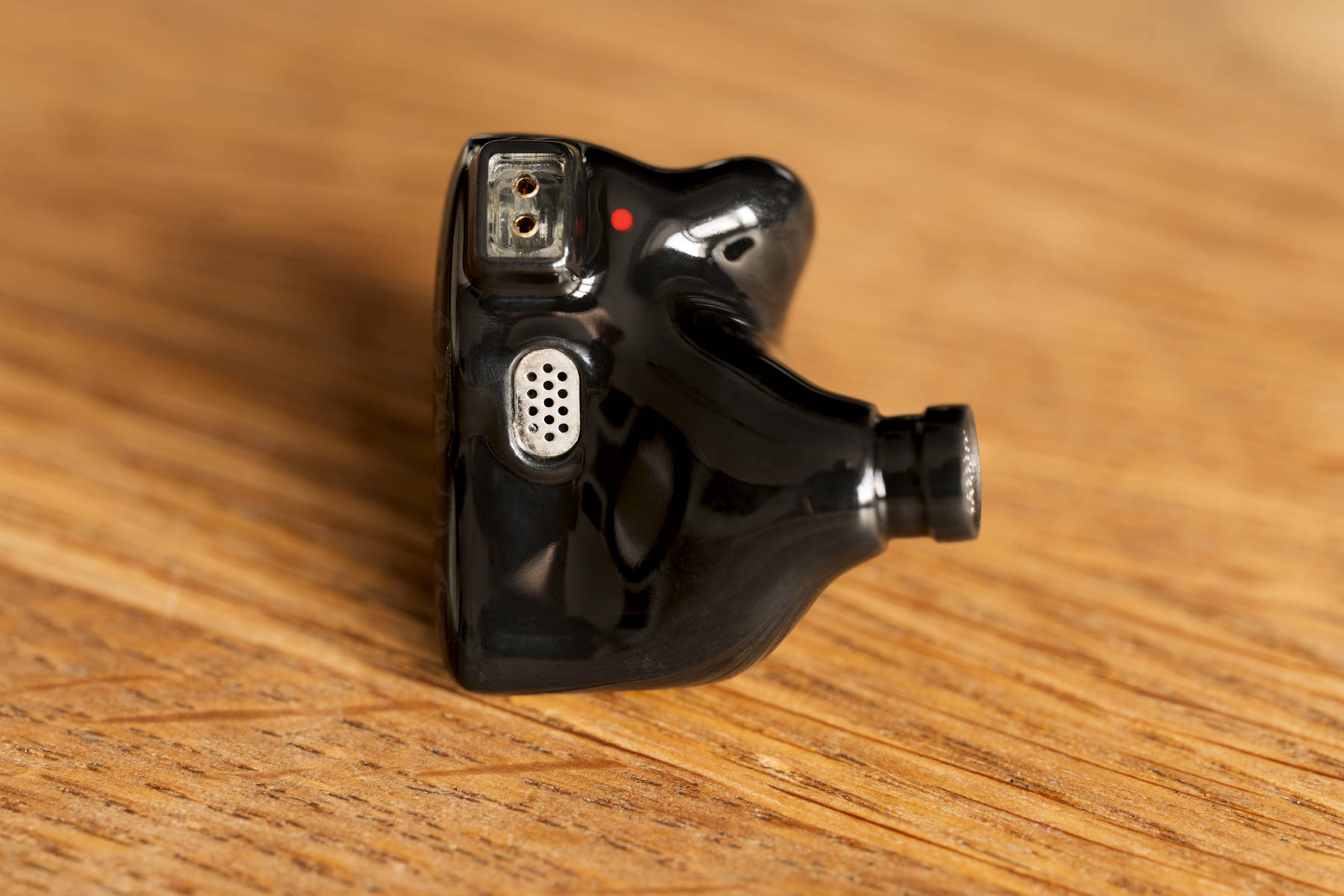
The sound duct is covered with a metal grid, too.
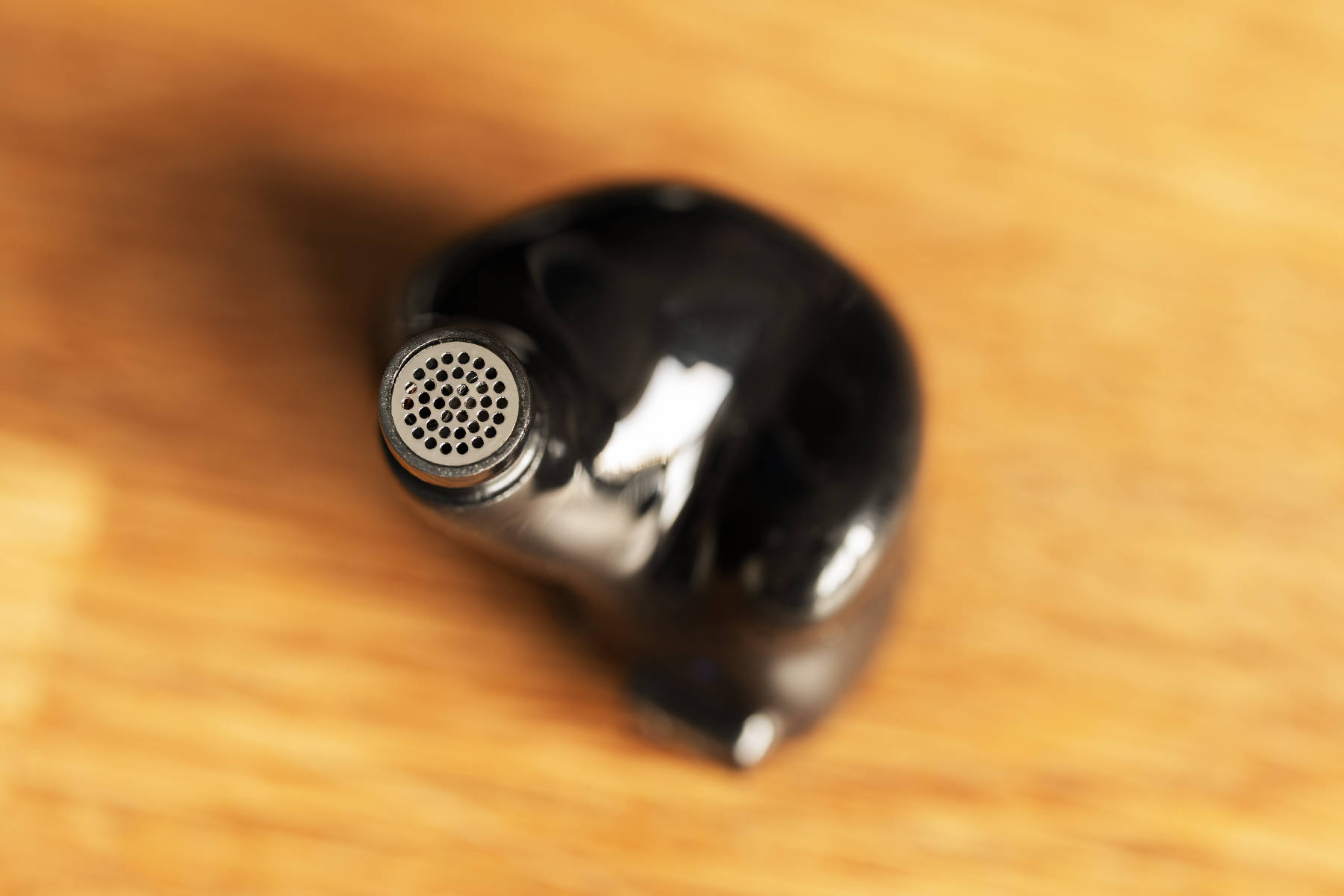
It’s all clean and tidy, but, taking the price into account, it’s quite dullish, IMHO.
However, it’s important to know something different about the shells — they have a bunch of all sorts of drivers stuffed into them:
- a dynamic driver with a diameter of 14.2 mm;
- 4 balanced armatures;
- an (electret) EST-driver;
- a bone conduction driver (ceramic, as emphasized by the manufacturer).
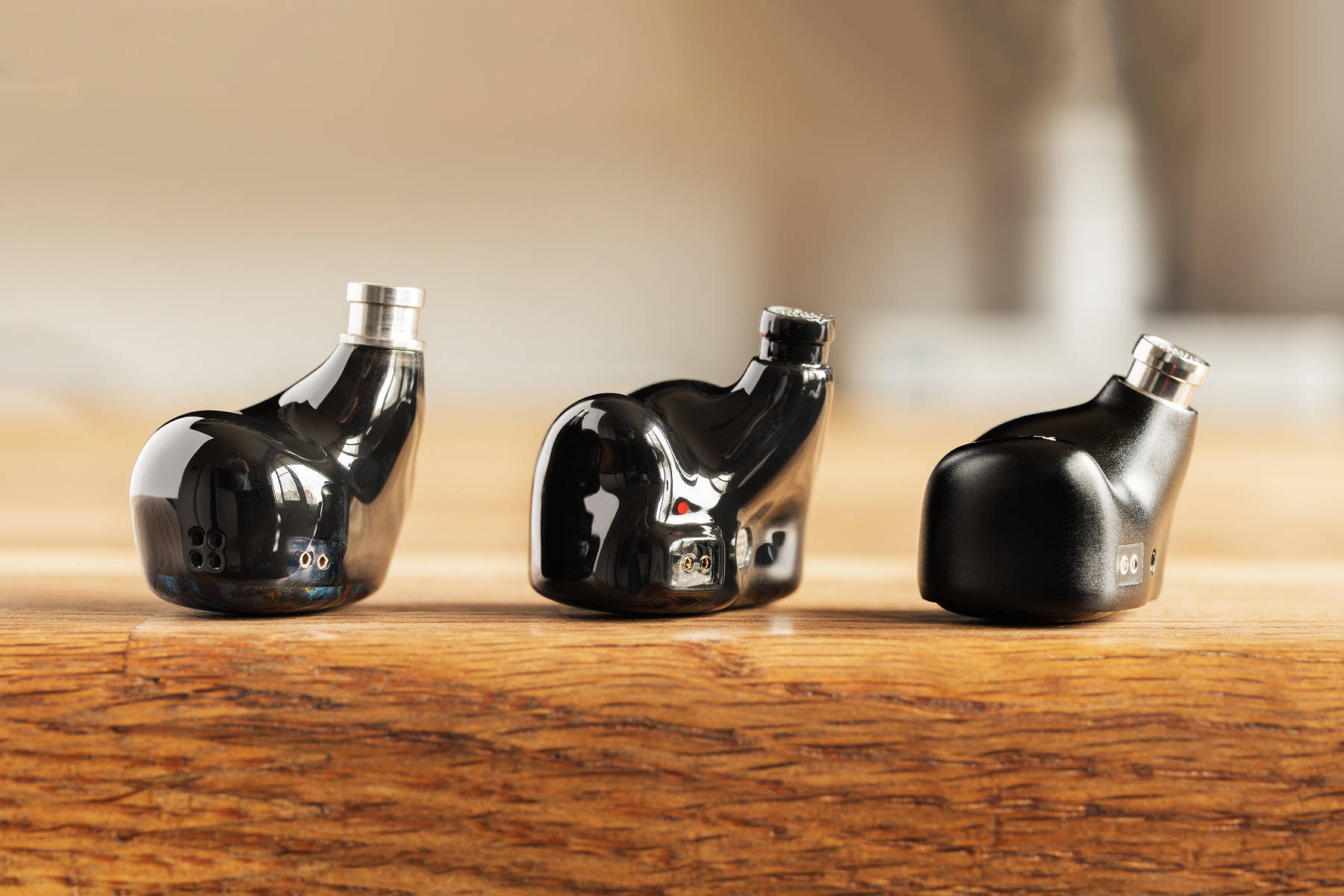
The use of this framework made the manufacturer make the shells big. Like, really big. In the picture, you can compare the sizes of the Bajie shells with the Mangird Tea Pro and the PULA Anvil114 ones (on the right and on the left), and they’re not so small, by the way:
The sound ducts seem to be narrow enough for a deep fit. Truth is, they start to widen just behind the chamfers. Be it whether this feature or a specific angle of the sound ducts, Bajie made me go through almost all the eartips I have, and it’s about 50 models. The only eartips that fit with no ifs and buts were Divinus Prism Wide Bore, although it goes without saying that anything will fit 5.9 mm wide sound ducts. OpenAudio 003 felt comfortable, too, but the volume of the subbass with them was clearly lower, that is, they didn’t provide normal pressure against the walls of the auditory canals.
Therefore, the situation is controversial in terms of ergonomics: I personally had to be picky about the eartips. The fit with Divinus Prism WB turned out to be average in depth, and the earphones protrude from my auricles quite a lot. In general, it’s fine, but the sound insulation is a bit compromised.
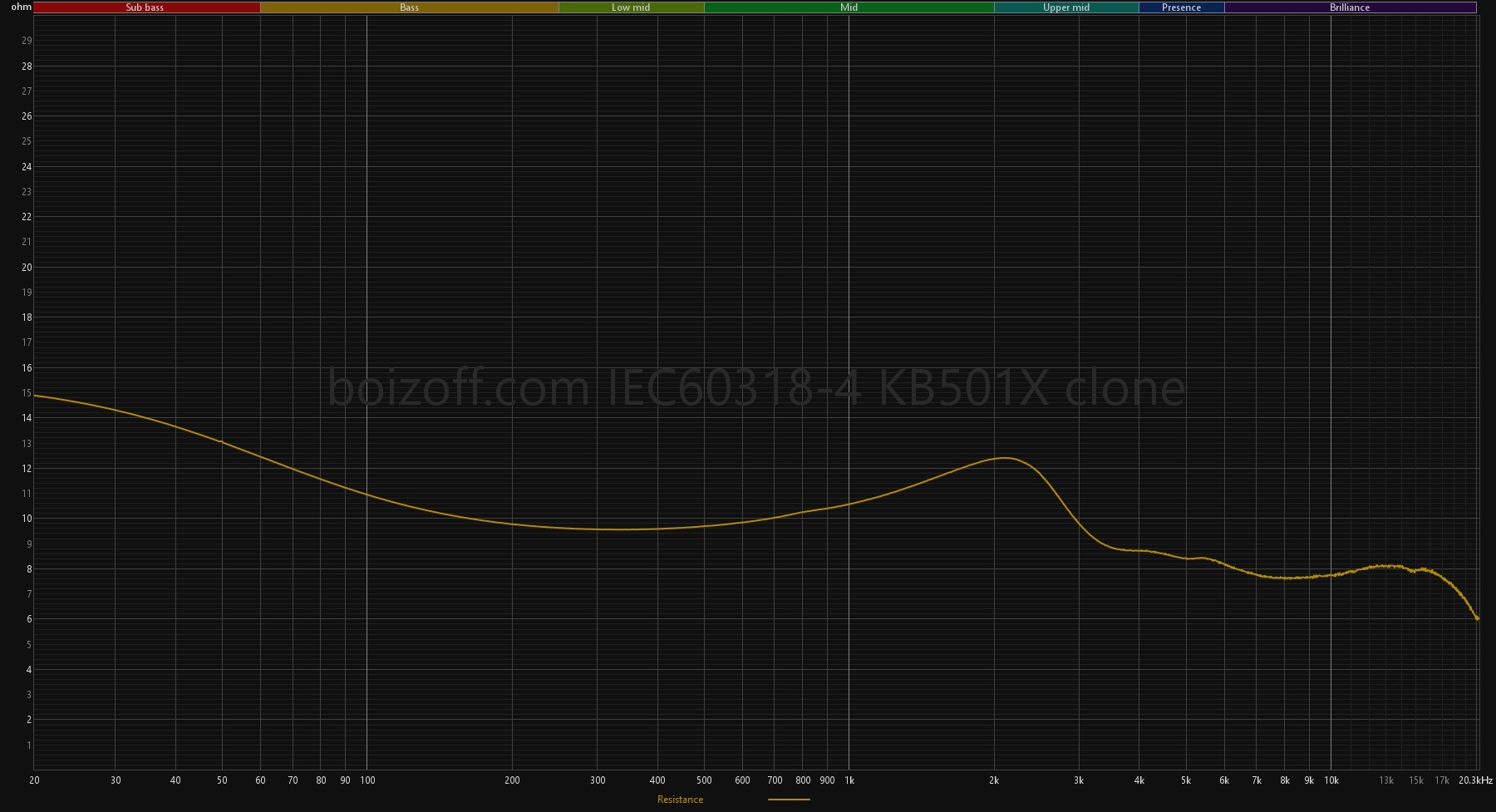
Electrical specification: the manufacturer indicates an impedance value of 9.8 Ω ± 20% at 1,000 Hz, but there is actually no information about the sensitivity on the official website. Some sources state 104 dB, but I have no idea where this information comes from.
I measured the impedance, and it roughly matched. But we need to understand that the value changes significantly, from 15 to 6 Ω:
The sound
Standard links:
- the description of my rig is here;
- the audiogram of my hearing is here;
- articles on measurement theory and the whole shebang are here.
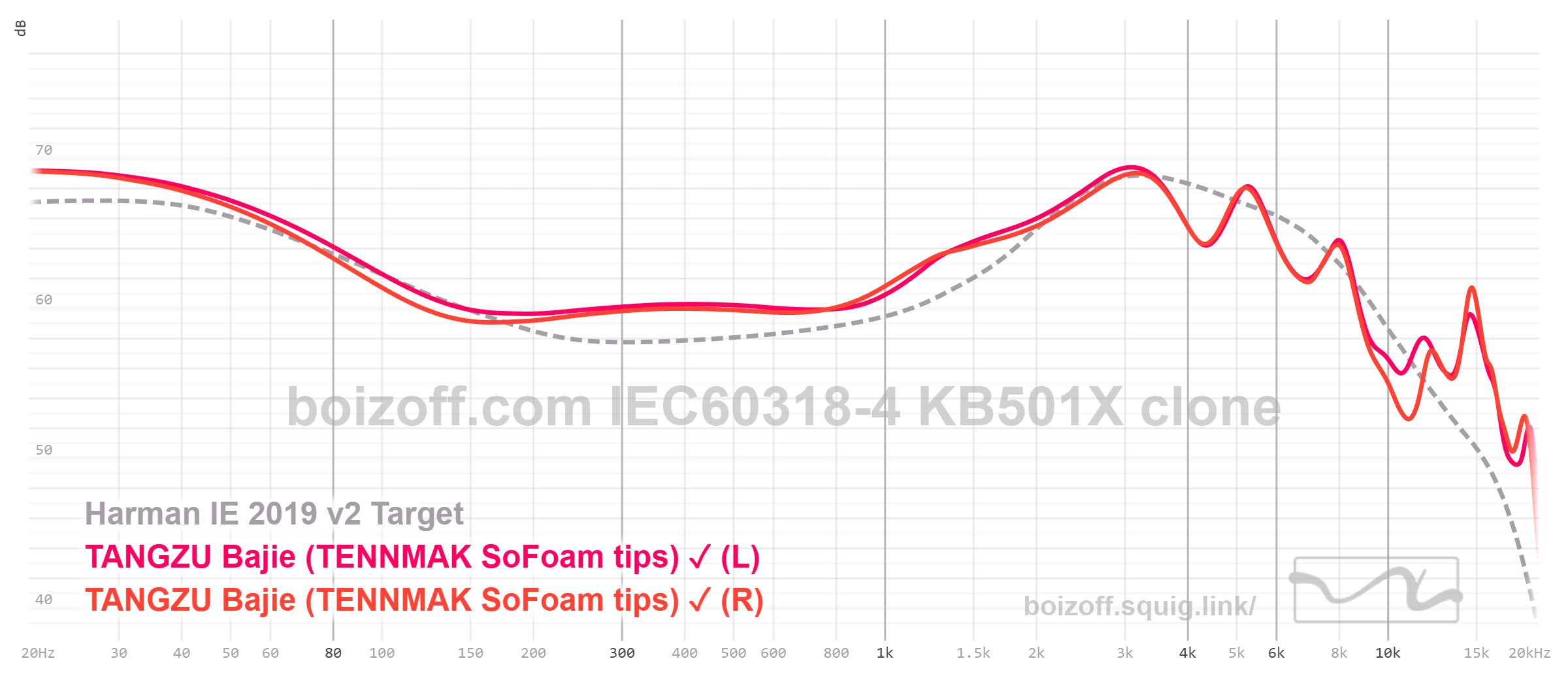
Frequency response of TANGZU Bajie:
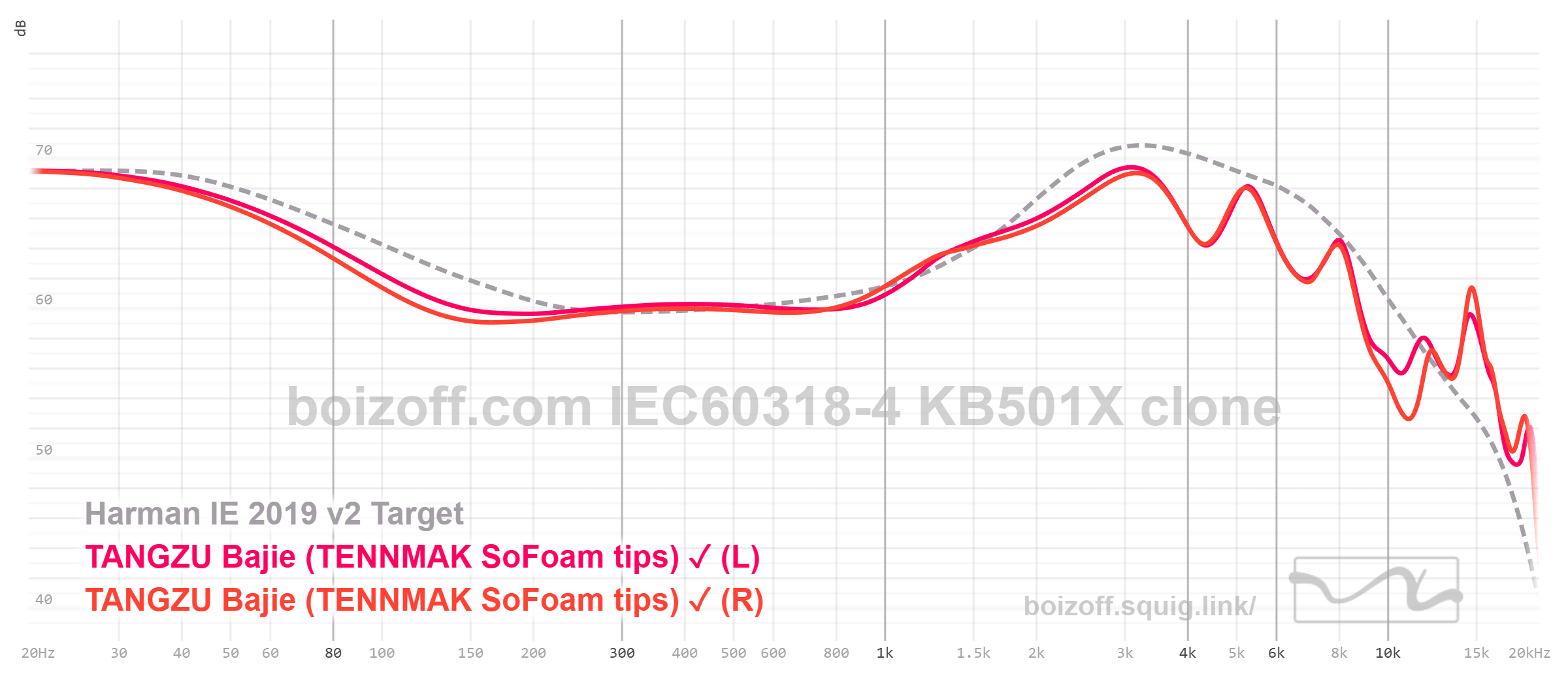
That’s exactly what my ear hears, but the results will surely differ with different eartips:
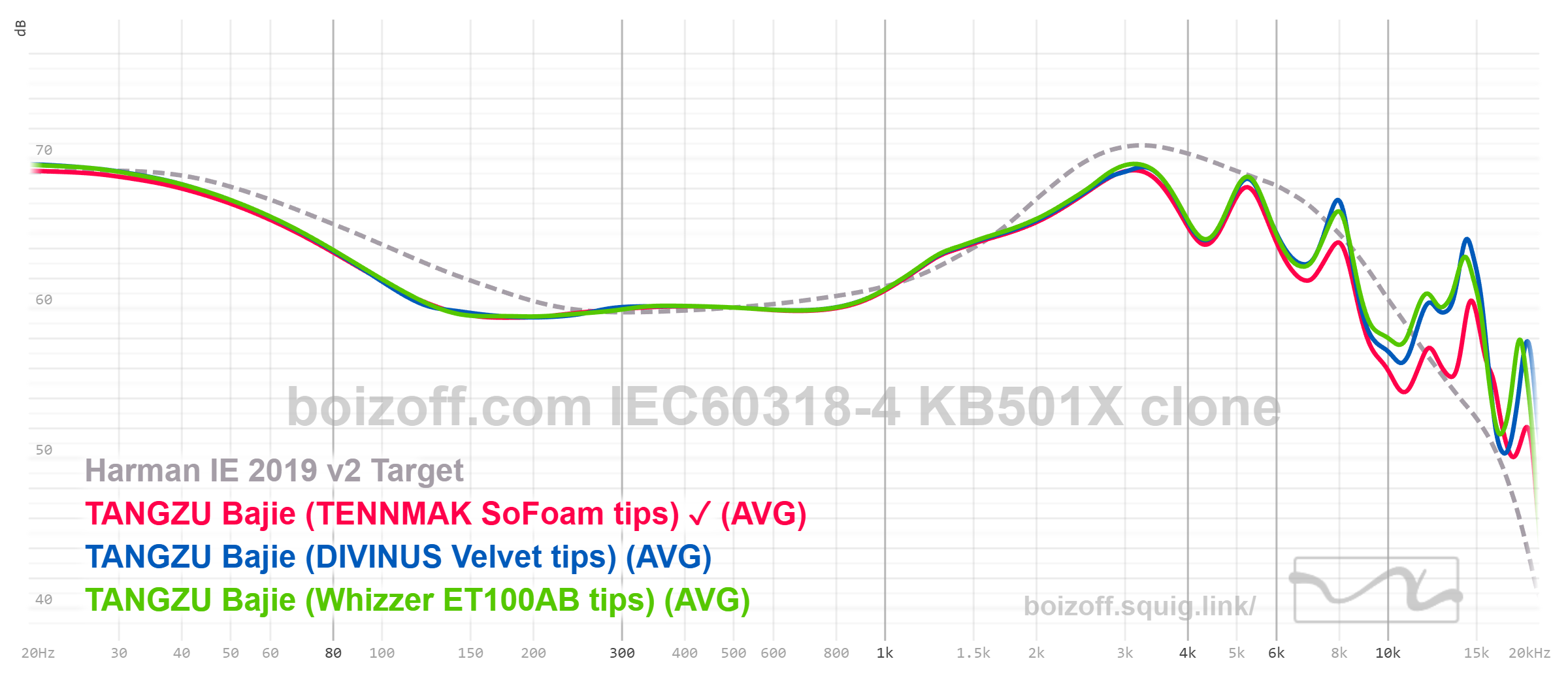
What we see on the graphs:
- with regards to the Harman curve, the subbass is in place, but the bass at 150 Hz bass is dipped;
- the frequencies at about 1200 Hz are slightly emphasized;
- the upper middle is not very smooth, the area around 5 kHz is emphasized;
- and there’s also an emphasis in the ‘air’ area, at 14 kHz.
What should such a sound delivery sound like? Not so good? Not only does the emphasis at 5 kHz usually come to no good, but also such a balance between the bass and the segment of 1-3 kHz leads to an unpleasant sonorous and ‘thin’ sound.
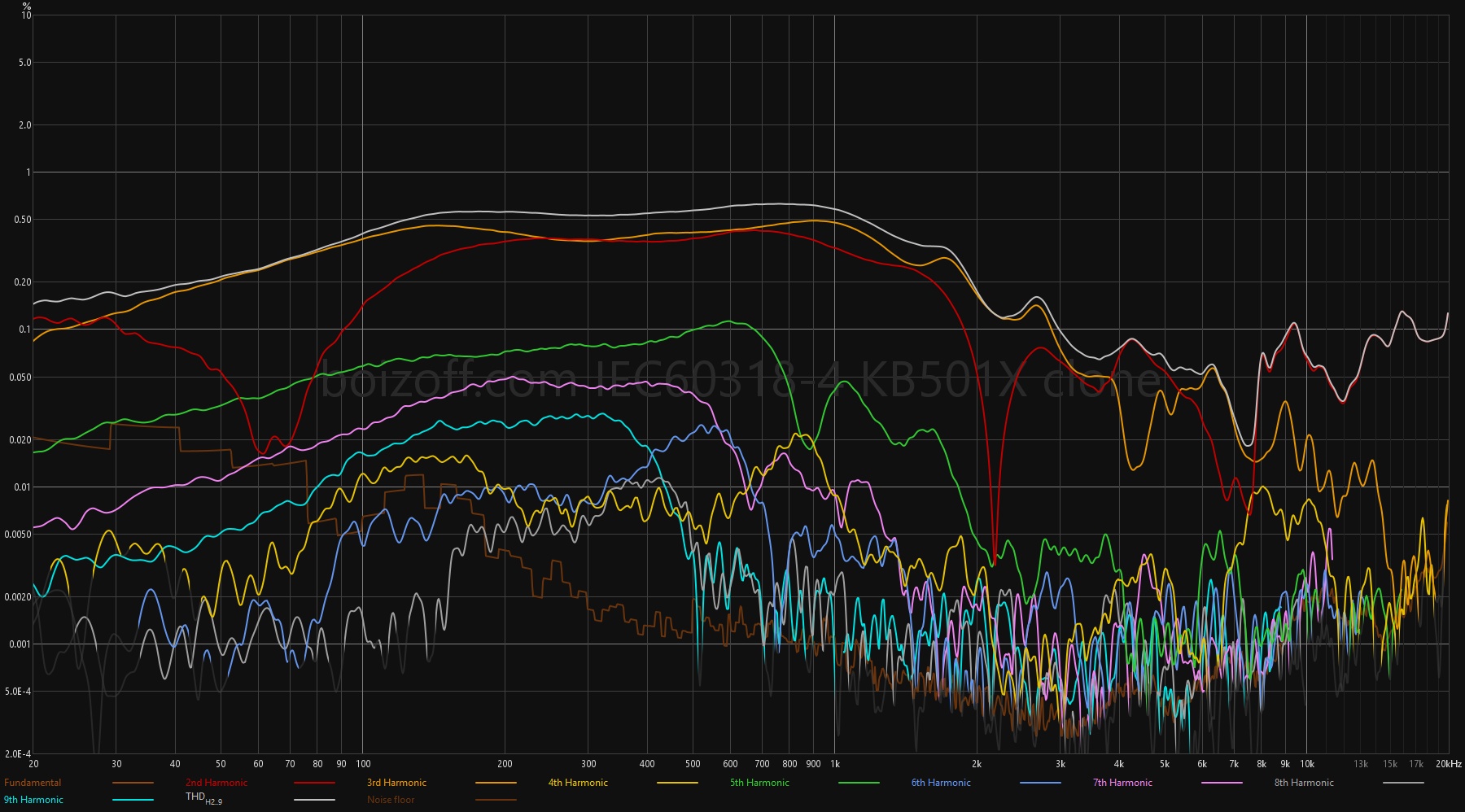
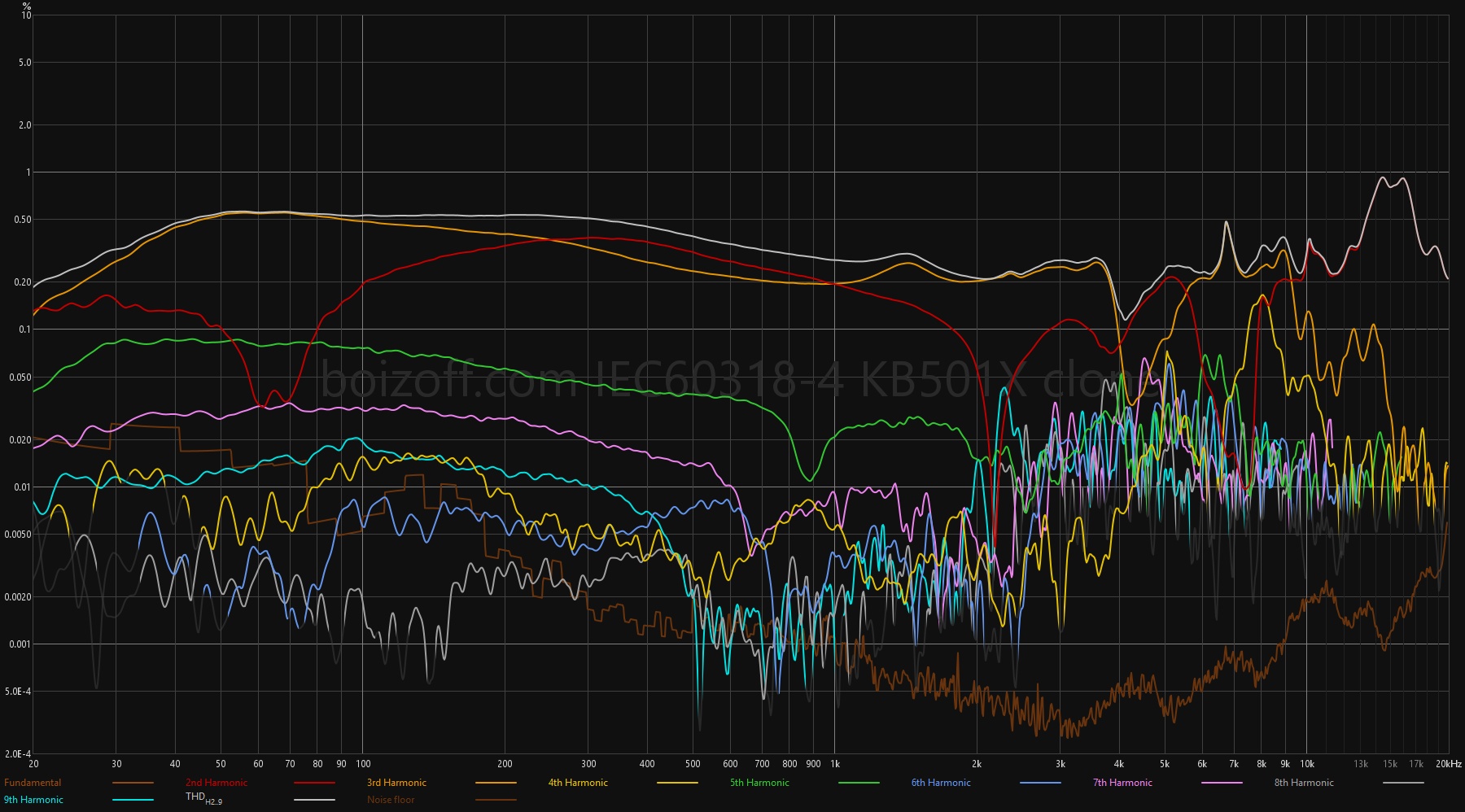
Nonlinear distortion at 94 dB with the ‘Use harmonic frequency as ref’ option turned off and on:
Nonlinear distortion at 104 dB with the ‘Use harmonic frequency as ref’ option turned off and on:
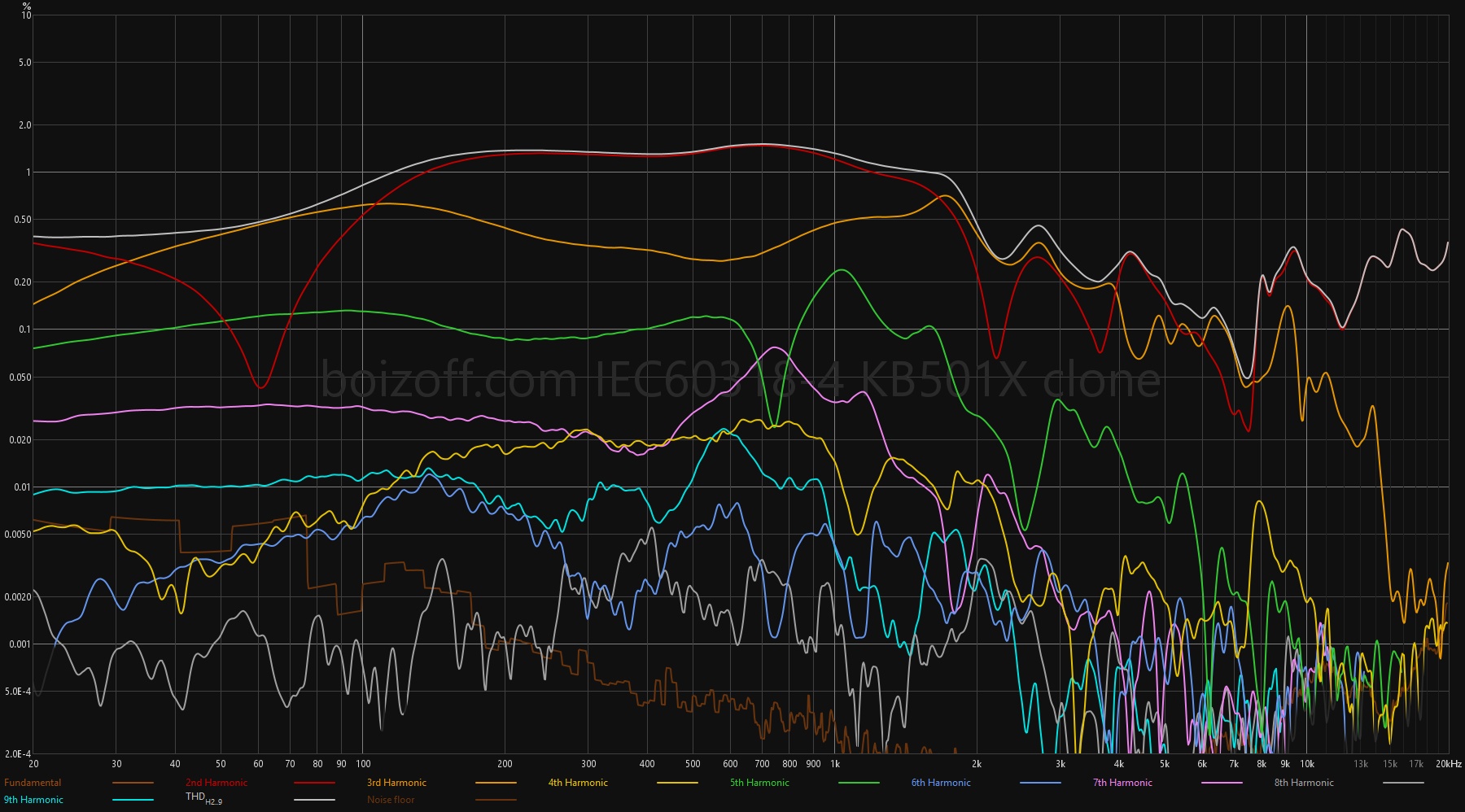
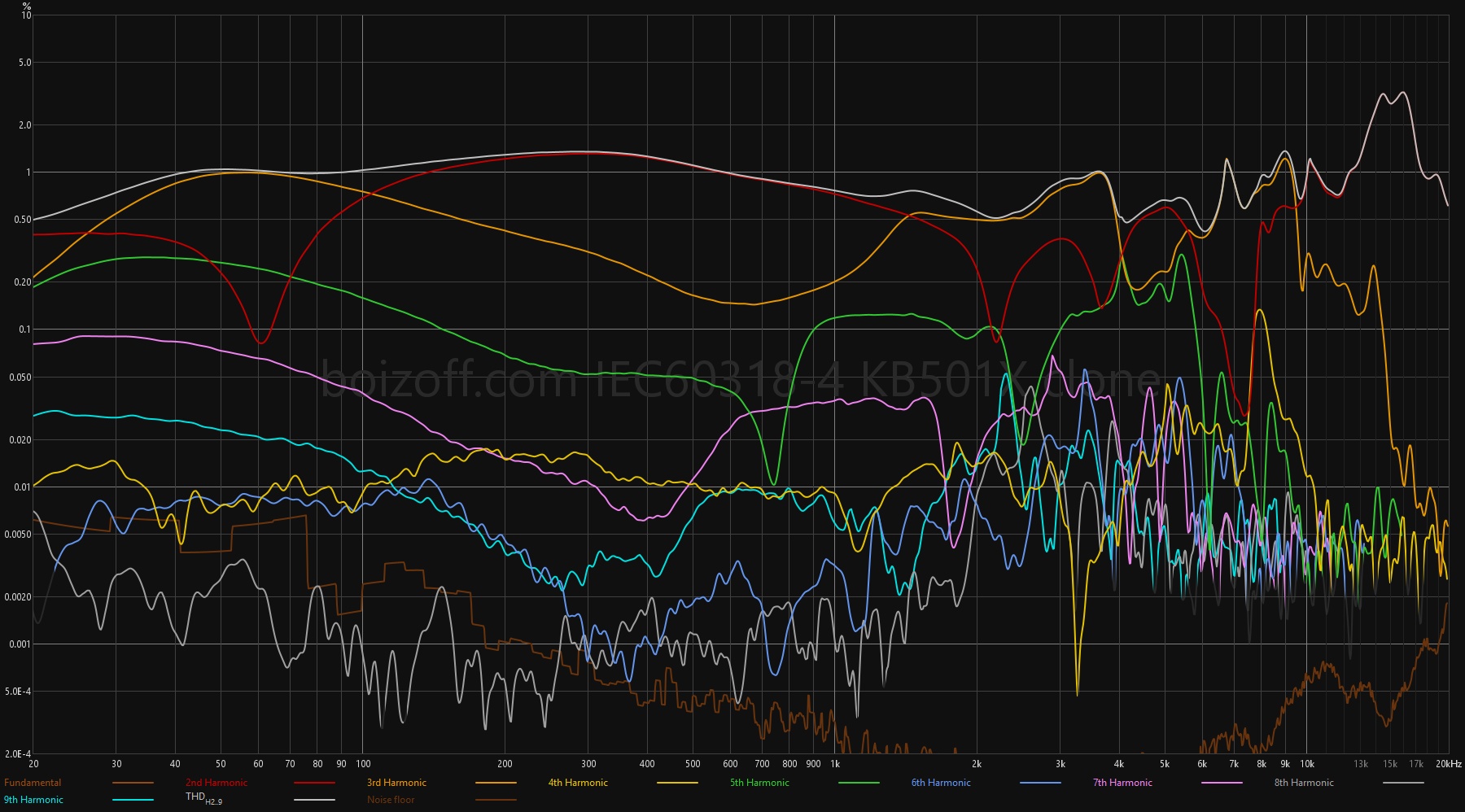
Let’s make it clear: when it comes to earphones for this price, we are used to seeing slightly different distortion graphs. At 94 dB of volume, nothing terrible happens, it’s just that the distortion is far from record-breaking. But with 104 dB at 15 kHz, THD jumps to 3.5%. You won’t hear it, but just add a little more, and you will.
Phase response, group delay, and spectrogram in the ‘Burst decay’ mode:
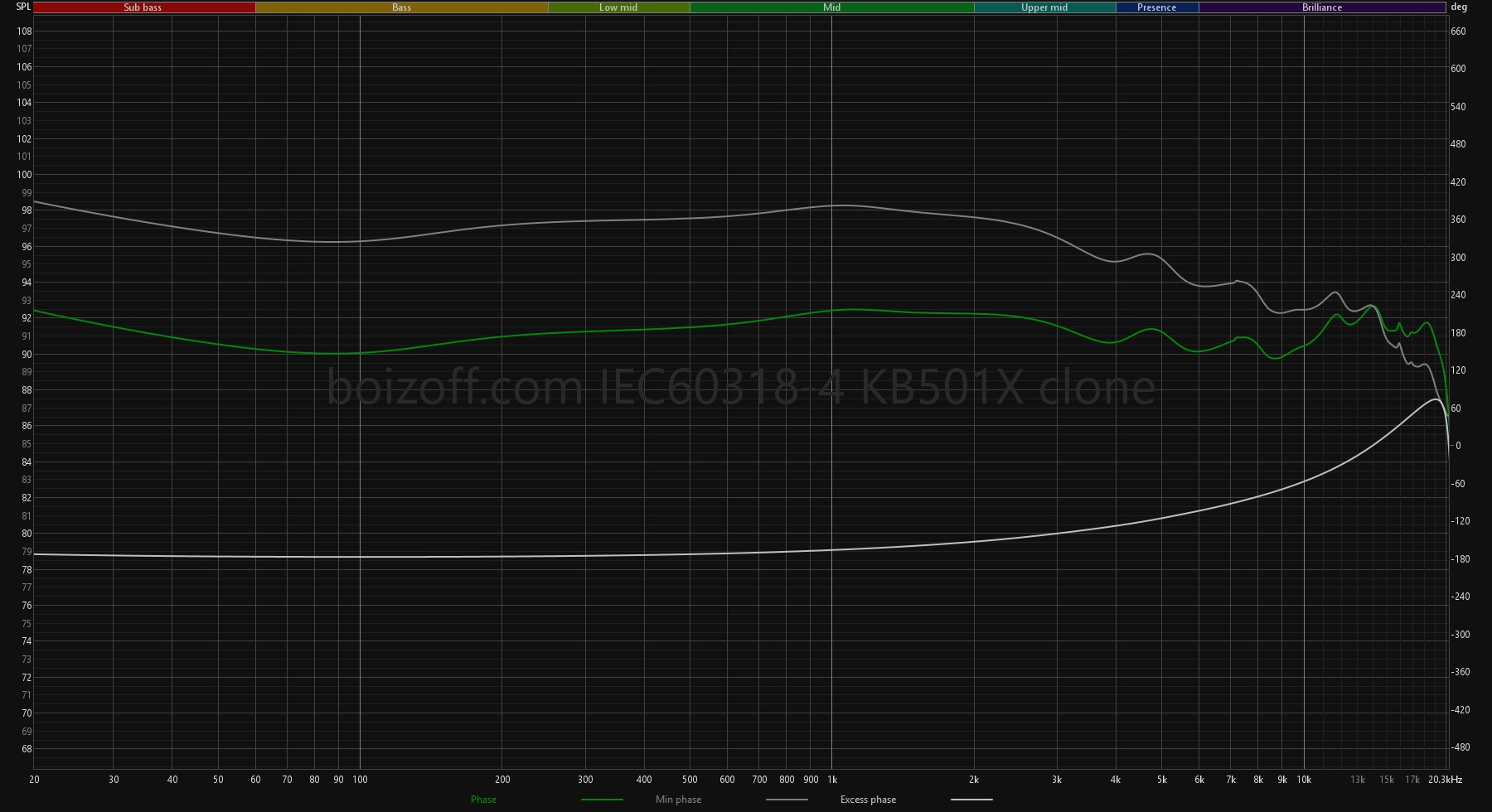
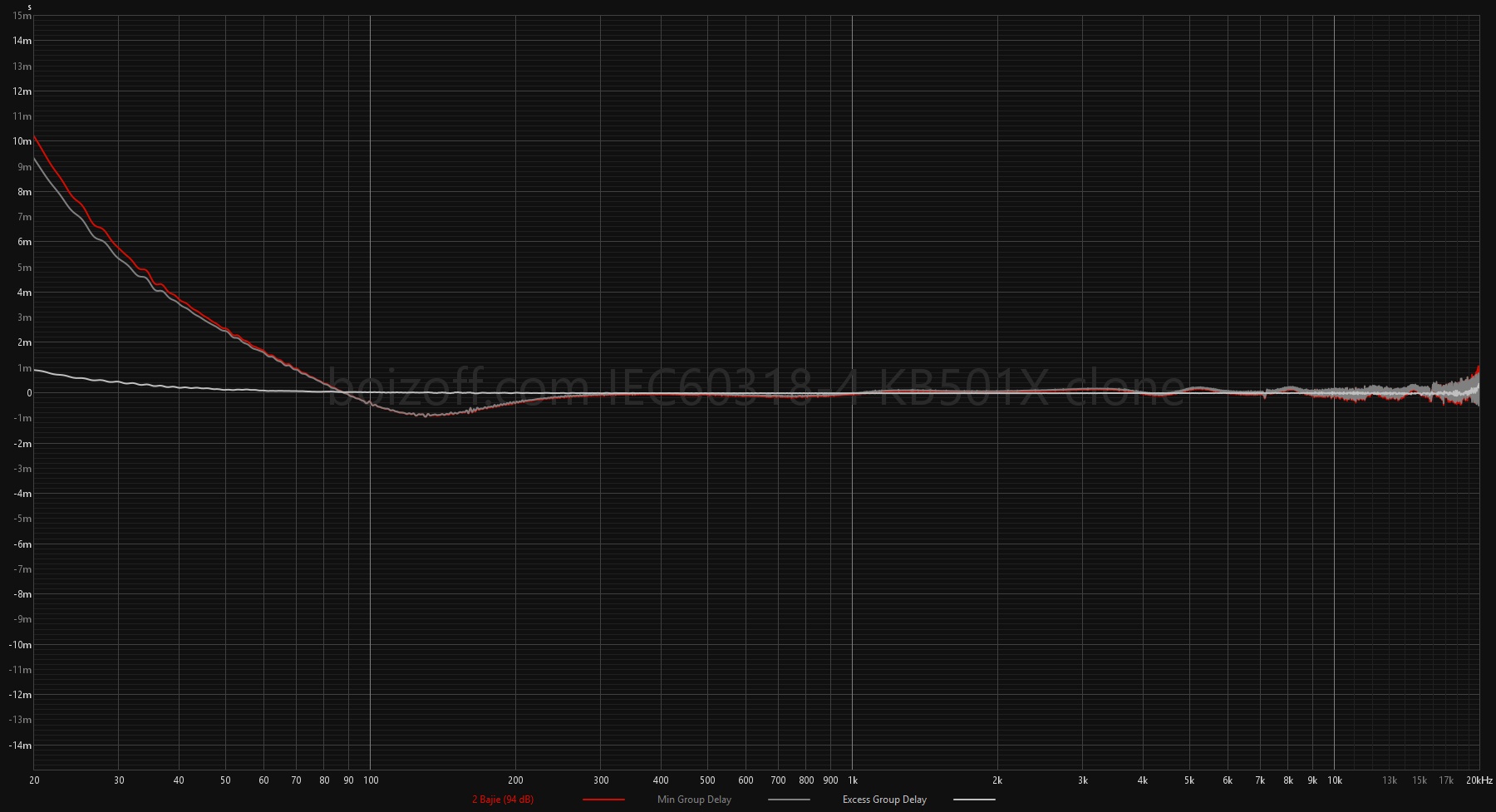
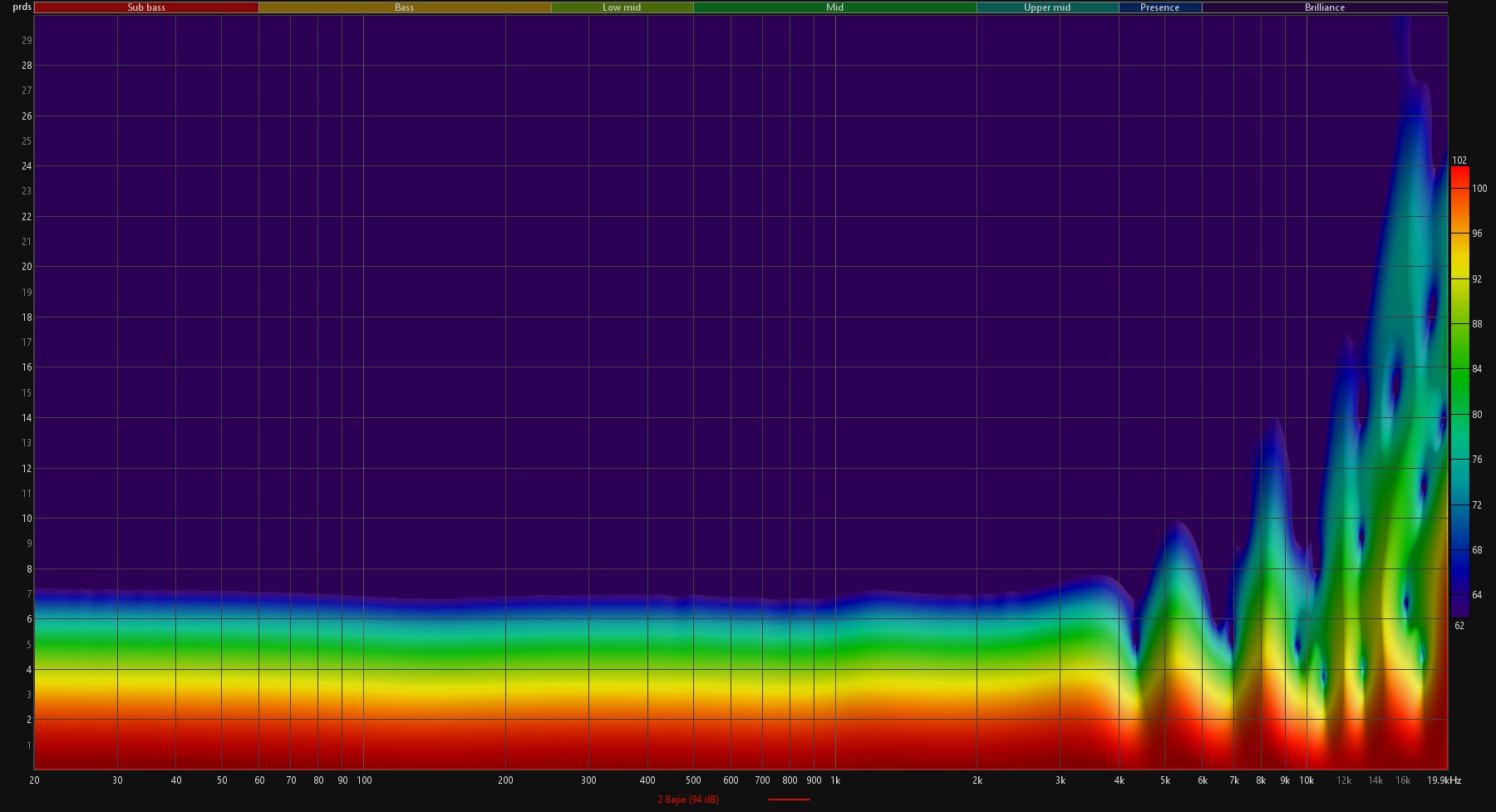
These figures give no surprises.
As for my take on the sound, it is unusual, just like everything else in these in-ears. Imagine a sound signature that combines incredibly deep, literally head-shaking subbass, reduced bass, close-positioned midrange frequencies, the 4-7 kHz range pulling out the ‘details’ from the tracks, plus some airiness, though very restrained one. At first, I tried to describe this sound using the standard formula about ‘X-shape’, ‘coldness’/’warmth’ and epithets alike, but the futility of this approach quickly became apparent. The appropriate sound characteristic of these earphones is ‘nervous and detailed’.
The key property of the Bajie sound is the subjective feeling of ‘detail’. I want to note that I’ve got that long-forgotten feeling of ‘hearing what I’ve never heard before in tracks’, and I’ve heard a lot, really a lot of things. The frequency range of about 5 kHz (not only, but predominantly) is responsible for this. In 99% of cases, experiments with volume at about 5 kHz come to a sticky end, as the ear is too sensitive. Yet still, the Bajie sound skates on the edge of the thin ice: the earphones sound, although already a bit tonally inaccurate, but exciting in terms of the number of those sounds that are usually not heard.
Another feature is a completely infernal subbass that you never can tell, looking at the frequency response measurements. However, the frequency of the subbass rise is shifted to the left from the usual 220 Hz to 150 Hz. That is, in order for the earphones to show how they can play this very subbass, it must be clearly represented in the track itself.
If I try to show how I hear the Bajie sound on the graphs, this is how it will look like:
Here is the logical next question: is this sound delivery versatile? God forbid! Far, very far from everything sounds good when performed by Bajie. If a track is based on bass, Bajie give up and go into the ‘tantrum’ mode because there is no counterbalance in volume ‘from below’ at the frequencies of 4-7 kHz. Old rock, heavy metal, and other genres of this kind also miss, for my taste: you’ll need conventionally tuned earphones for them. But take electronics, post-metal, music with live instruments, trip-hop, academic genres — and yes, here Bajie are capable of downright revelations.
As for all sorts of other sensations, the sound stage is just normal, without additional volume and lightness; the positioning in the games is mediocre; the tonal separation of instruments is excellent.
Comparisons
I’m not sure if any reasonable comparisons may be the case when it comes to Bajie. Formally, they can be compared to Hisenior Mega5-EST in terms of the price.
Frequency response of Bajie compared to Mega5-EST:
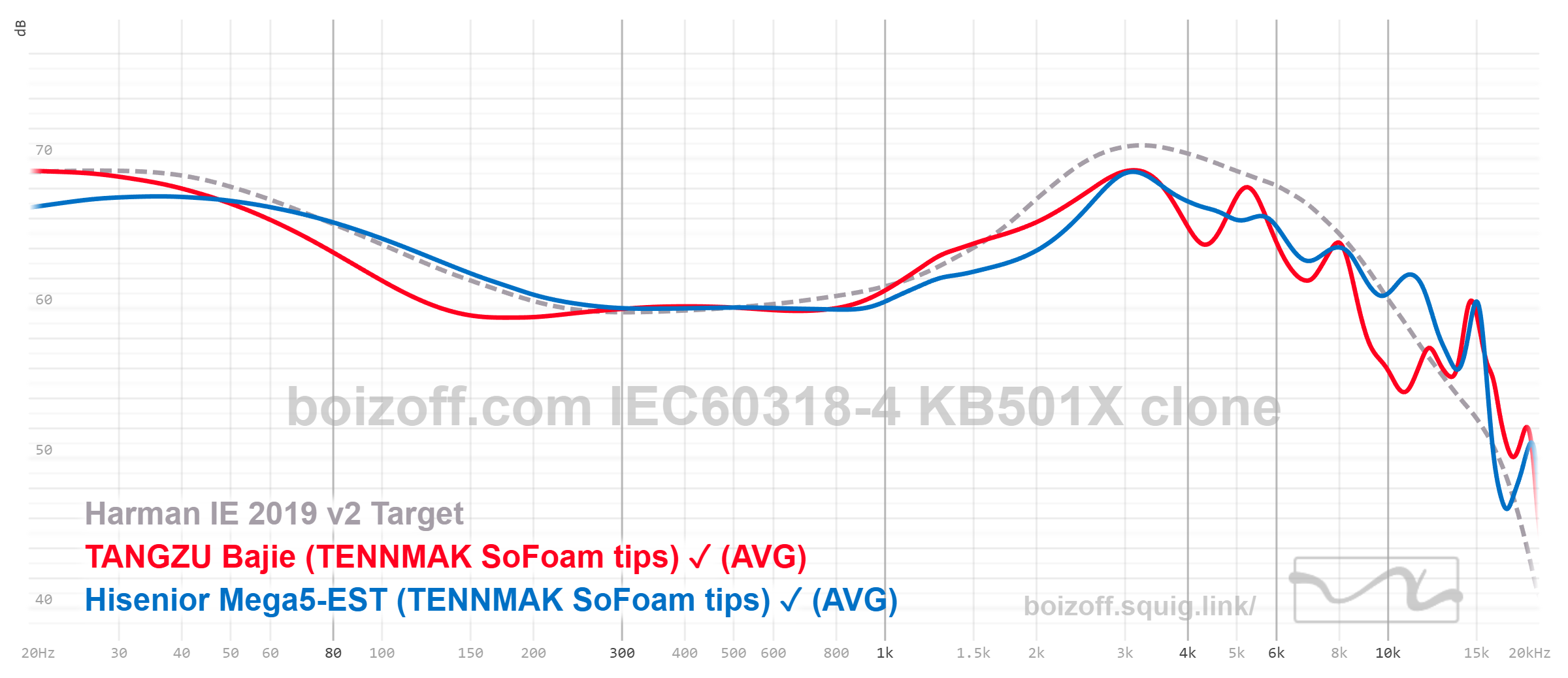
Mega5-EST are ‘warmer’, bassier, and airier at the same time. Bajie are sharper, more ‘detailed’, less natural, but more ‘whipping’.
I would have been happy to find something similar from any other price range, but, I must confess, I failed.
Summary
I’m not sure that it was necessary to shift the subbass rise area so low and to raise 5 kHz that high. I’m not sure that these earphones need this ridiculously large box and so many eartips. The only thing I’m sure of is that Bajie are not the result of well-considered, rational decisions made by use of ruler and compass, from the box to the sound.
Actually, all Tangzu headphones are not about that. Tangzu releases headphones that are somewhat kooky. The beauty of Tangzu is that they manage to make headphones with a ‘well-tasted’ but literally inaccurate sound delivery (it will be an eye-opener for some, but Wan’er SG are just the same). And, against the odds, too many people like these headphones to consider them a taste aberration. Bajie are full-fledged followers of this strange but viable approach. They are not versatile, their tuning is wonky, and this is definitely not an abstract kilogram of good sound from the Audiophile Bureau of Weights and Measures. But these headphones pull the right strings of perception and can cause animal delight in the listener on some tracks. They should definitely be not your first or second headphones; they’re not the top deal. These headphones are an experiment. They are aimed at those who have already heard enough of the ‘normal’ models and want something peculiar.
In this context, I cannot say that Bajie are ‘good earphones’. For this reason, I won’t put them on my list of the best in-ears.
But they will stay in my personal collection beyond any doubt.
To buy or not to buy: to buy if you want something outside the box.
P.S. Just this month, Tangzu has released its first full-size, open-back planar model. It’s called OX Demon King. And I really wonder what Tangzu could do with open-back planar headphones, given their usual approach to sound!