


ZiiGaat × Fresh Reviews Arete II Earphones Review
I am wary of ZiiGaat earphones because I’ve observed inconsistencies in measurements of different samples of their models more often than not. I wrote more about it here. But it seems that ZiiGaat is doing better now. At least, I didn’t notice a radical difference in frequency responses between the Horizon samples. Therefore, when Linsoul approached me with an offer to write a review on the next ZiiGaat earphones, I didn’t refuse.
Today, we’ll talk about ZiiGaat × Fresh Reviews Arete II, multi-driver in-ears priced at $240 on the Linsoul website. On the websites of Russian marketplaces, the price is nearly the same (+ $13 of duty).

As for the number of drivers, it’s either 3 or 5, depending on how you count:
- a dynamic driver with a diaphragm with a diameter of 10 mm;
- a dual armature driver Knowles ED 29689;
- a dual armature driver Knowles SWFK 31736.
All but the sound
The earphones come in a well-made, medium-sized box.
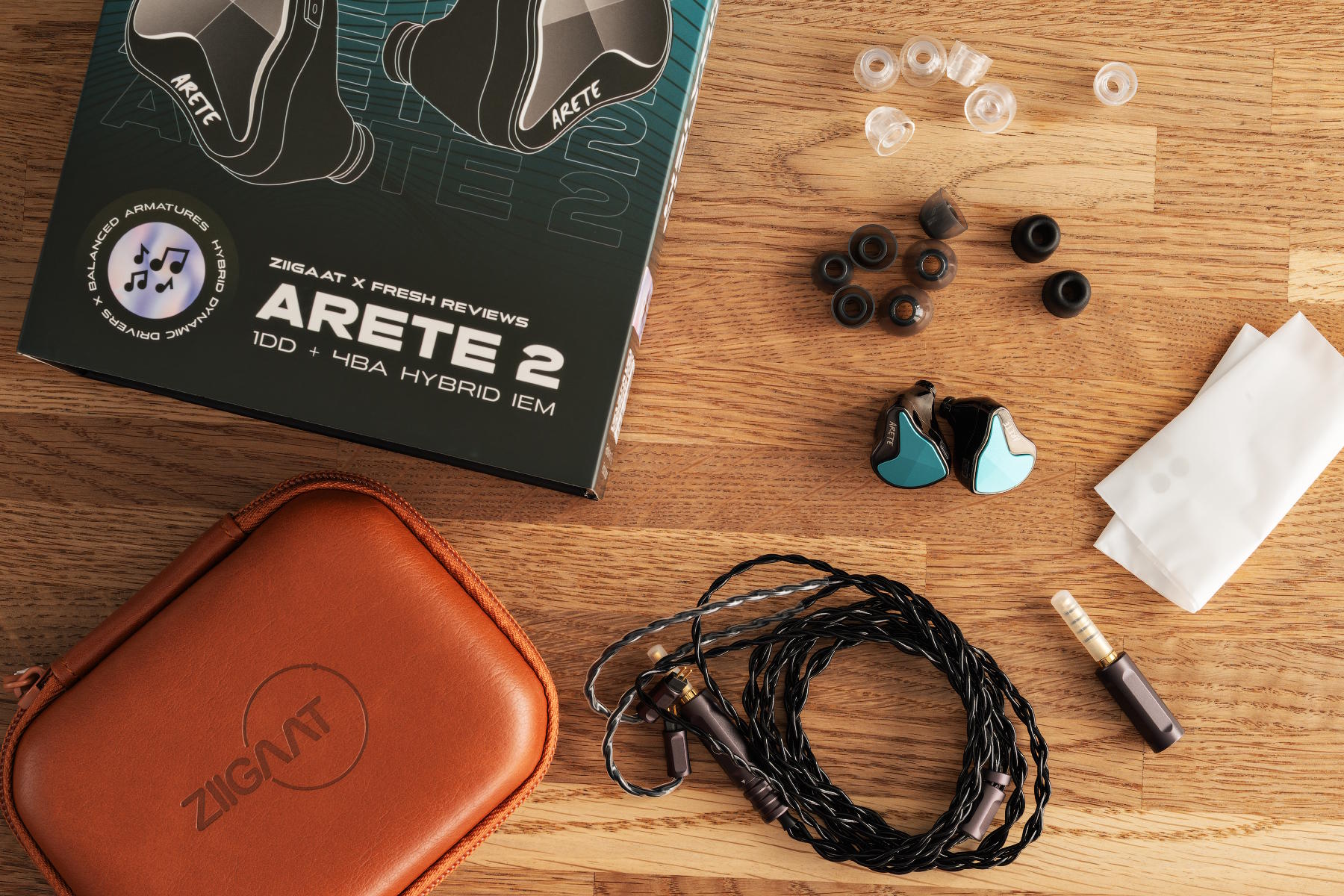
What do you get:
- the earphones themselves;
- a case;
- a cable with 3.5 and 4.4 mm replaceable connectors;
- eartips in the amount of 7 pairs;
- replaceable meshes for sound ducts;
- some papers.
The case is quite unusual. It’s large, with a mesh on one side and a molded bed upholstered in soft fleecy fabric on the other side.
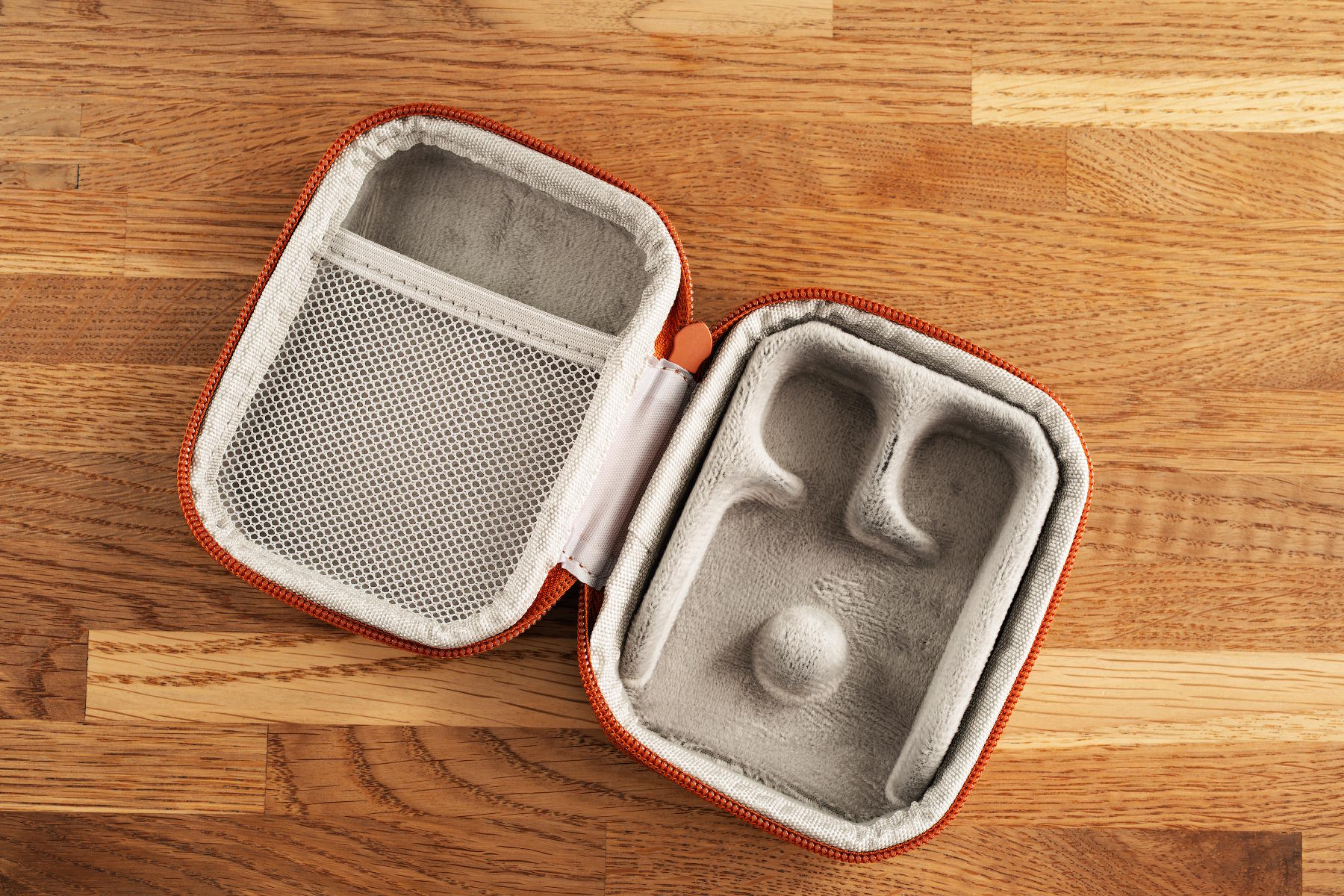
It’s assumed that the wire is placed around the central ‘stub’, and each of the earpieces is placed in its own compartment. This way, the earpieces won’t touch each other or the cable when carried.
It’s a clever idea (and, by the way, you can just take out the bed), but the case turned out to be very large.
The cable has, I’ll say it again, replaceable connectors.
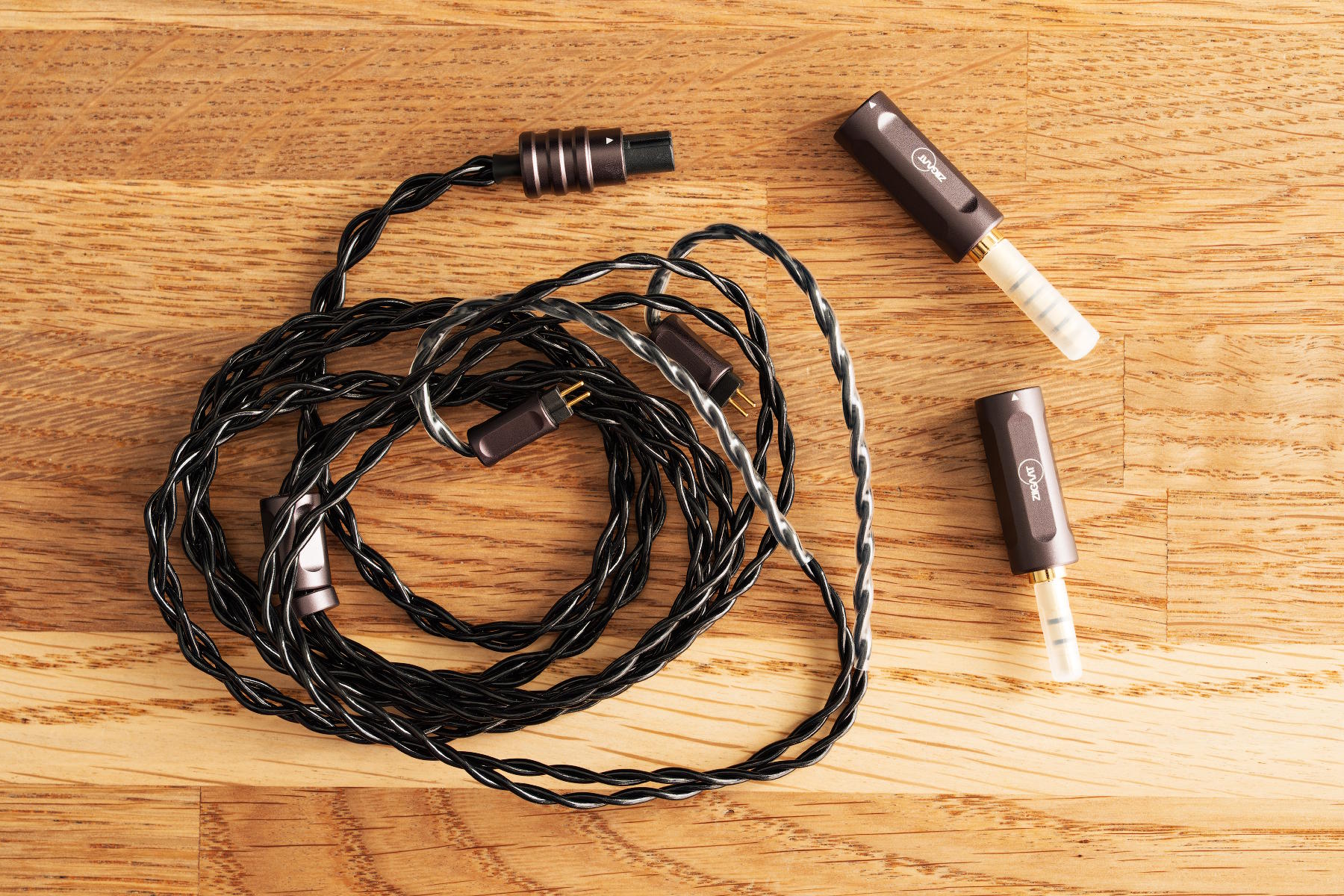
The connector enclosures have recesses for comfortable finger grip. There are no locking threaded rings, so the connection is held by friction, but it feels not just reliable, but downright monolithic.
The set of the eartips is quite strange.
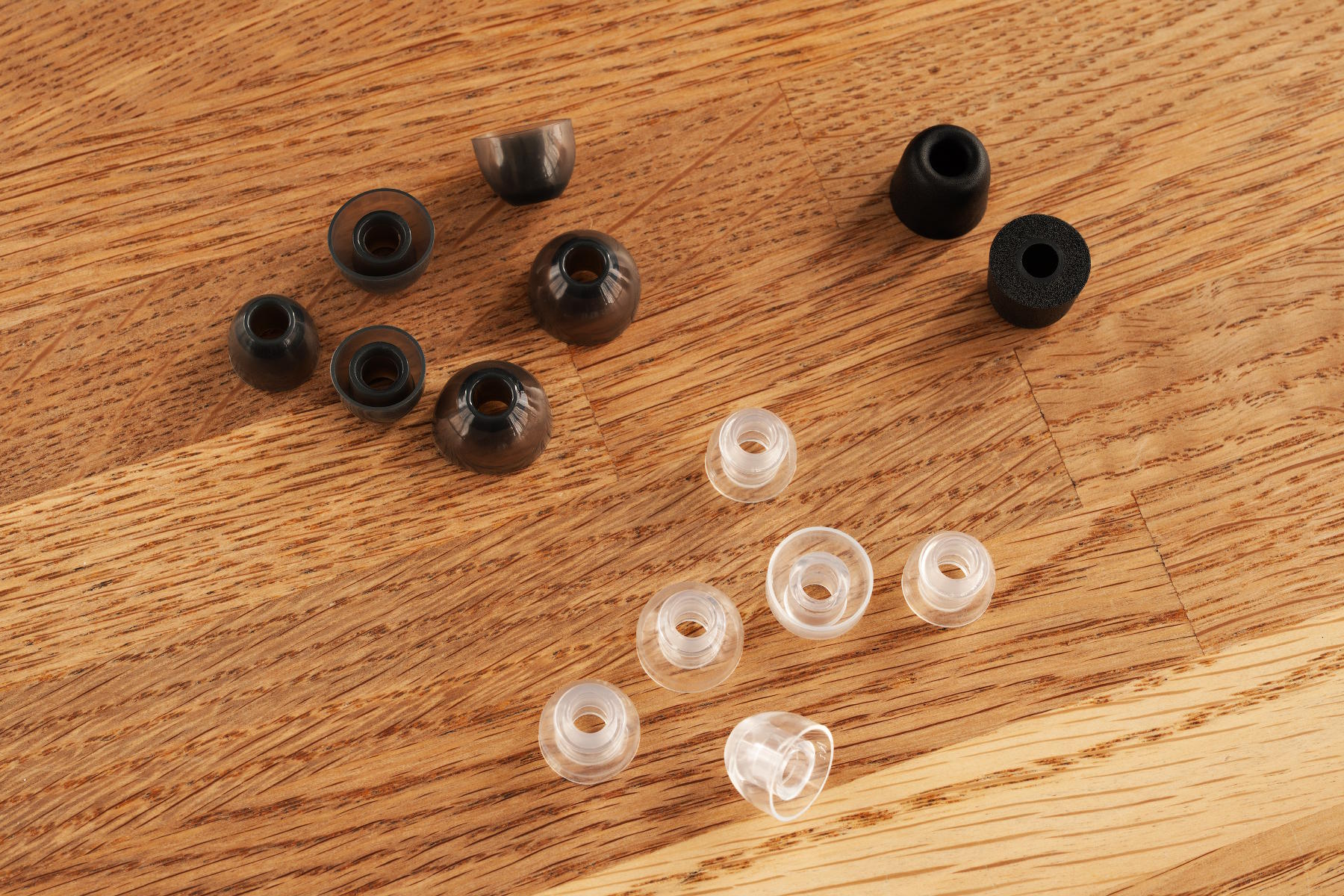
There are no models made of simple silicone: only TPE (thermoplastic elastomer) and memory foam. The dark ones are slightly larger in diameter, and the transparent ones are smaller. Not being a big fan of both foam and TPE eartips, I didn’t appreciate the manufacturer’s choice.
The earphones themselves are made just perfectly. The seam between the halves of the aluminum shells is minimal and even in width; it’s almost intangible. Colored decorative plates are also made of milled painted metal. However, the idea to use varnish to cover the shells looks rather ridiculous, as the surfaces of the earphones look plastic. I understand when people try to imitate metal when using plastic, but when it’s the other way round… The inscription on the faceplate is confusing, too: ‘Arete’. Why is it without ‘II’?
2-pin connectors on the earpiece side are made on separate transparent inserts.
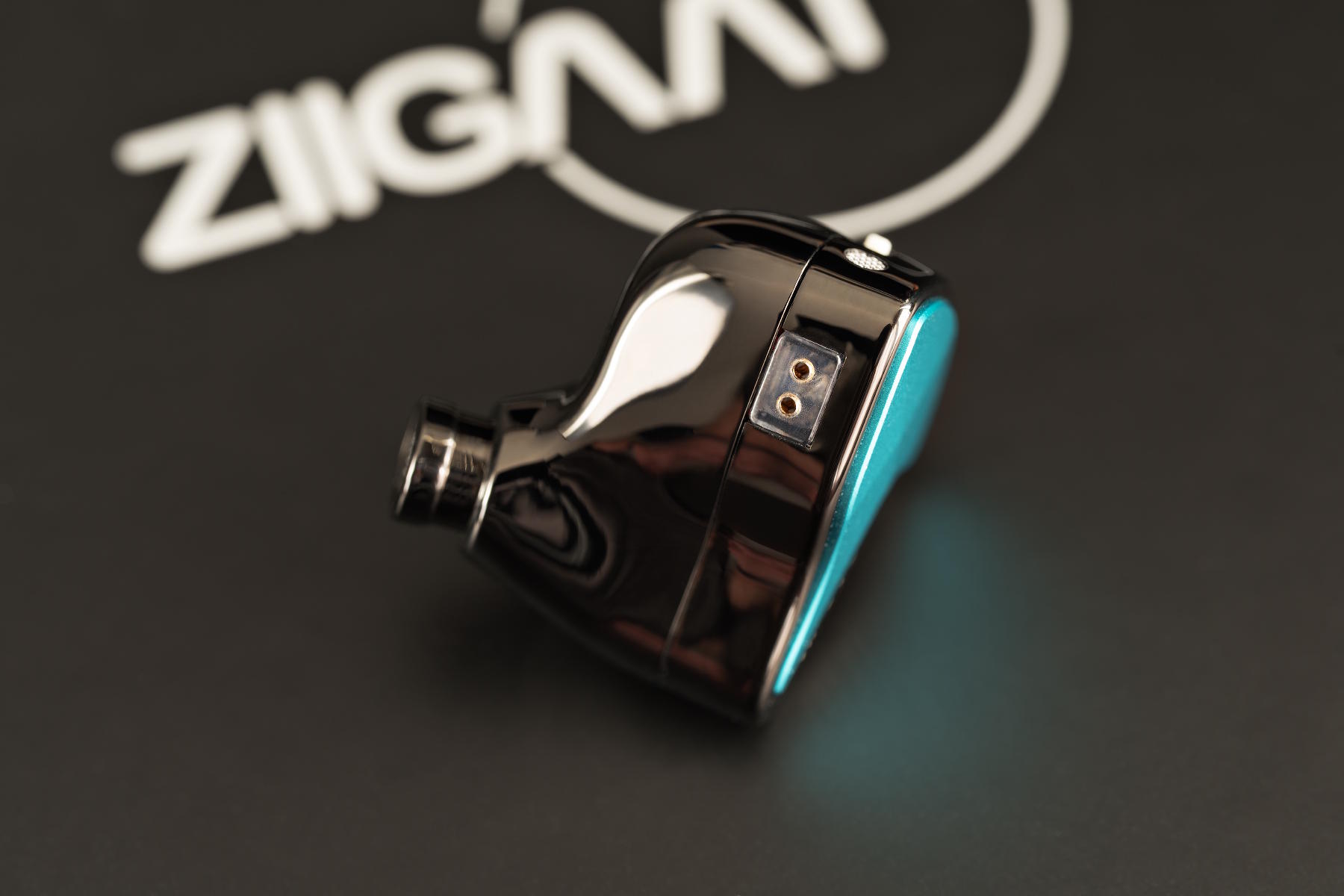
On the back side, there is a compensation hole covered with mesh, as well as a switch that affects tuning.
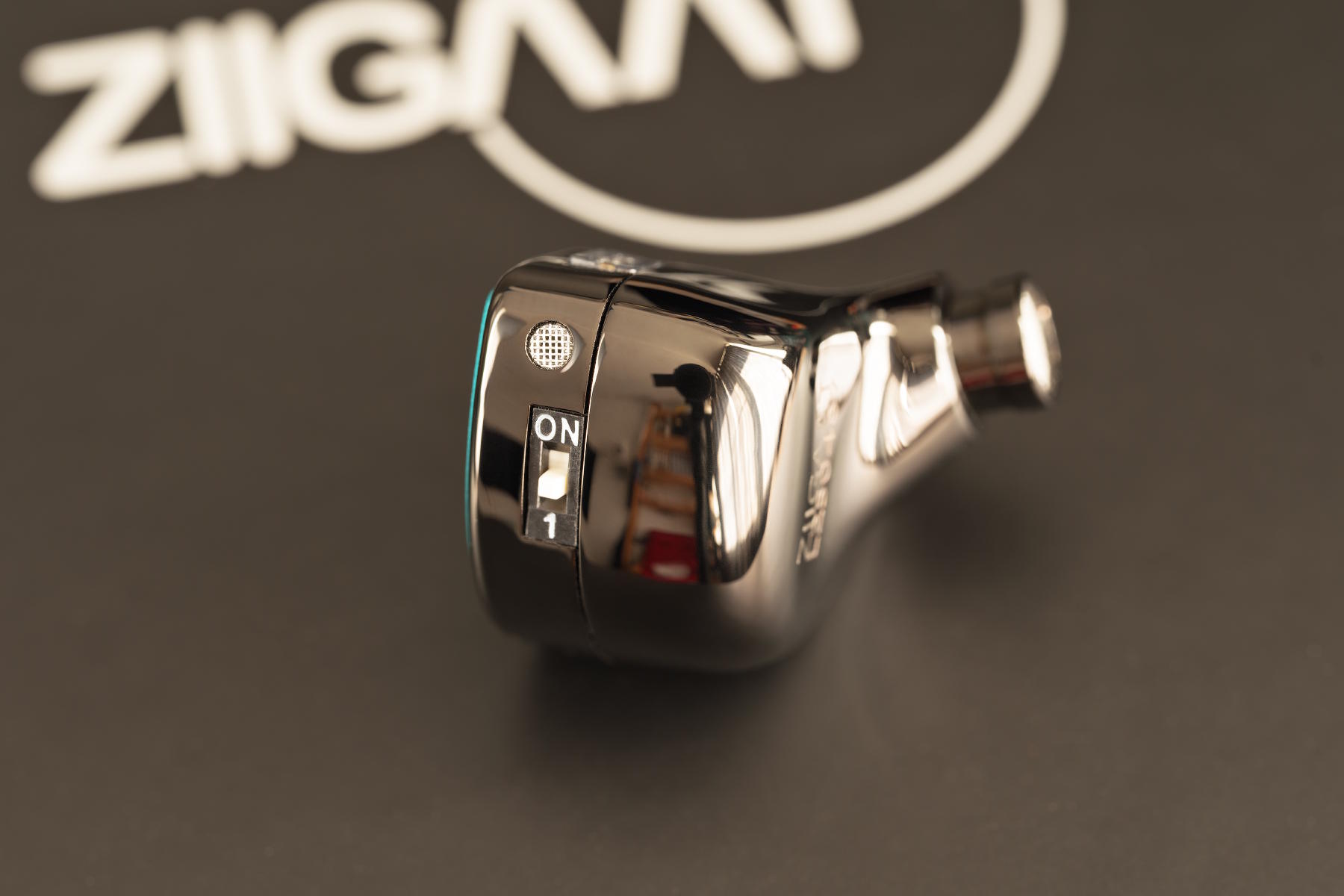
The switch positions have idiotic markings: 1 and ON. If you choose numbers for marking a two-position switch, then 1 should be on and 0 should be off. If there are standard letterings, they should be ON and OFF. However, we can observe the use of an uninformative mixture of these two approaches on the Arete II shell, which confuses the user when in use and is in no way associated with any particular sound tuning. And, as a result, it’s poorly remembered.
(From the graphs below, it will become clear that 1 stands for sort of standard tuning and ON is for a ‘warmer’ sound delivery.)
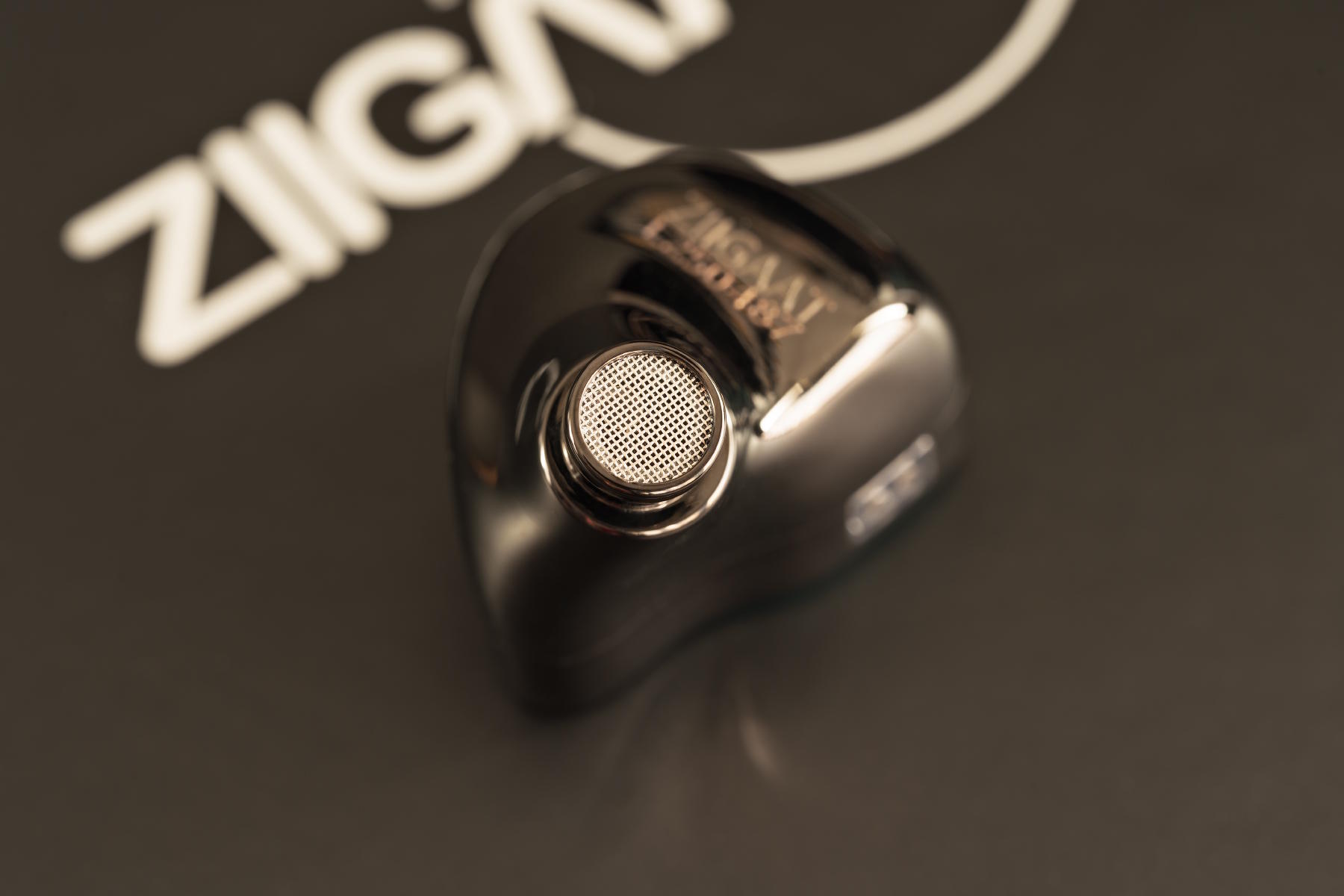
Last but not least are the meshes. They are replaceable and neatly installed.
What can I say about my user experience:
- It’s enough to use your nails to switch the switches on the shells, and not even the longest ones. There’s no need to use toothpicks or SIM ejector pins.
- The shape of the shells is very comfortable and will especially feel right at home with fans of the shallow fit. The diameter of the sound duct in its thick and thin parts is 6.3 and 5.7 mm respectively, the diameter of the protective mesh is 5 mm, and the length of the sound duct is 3.6 mm.
- As for the eartips, ddHiFi ST35 and OpenAudio 003 were perfect for me (personally) with Arete II. Whizzer ET100AB don’t hold up well. In general, I recommend choosing quite narrow (in terms of the diameter of the sound ducts) and long eartips.
- Sound insulation is poor. I can hardly imagine these in-ears in outdoor use.
In terms of electrical characteristics, the manufacturer claims 104 dB of sensitivity and 24 Ω of impedance without specifying the frequency. I measured the value of the second parameter:
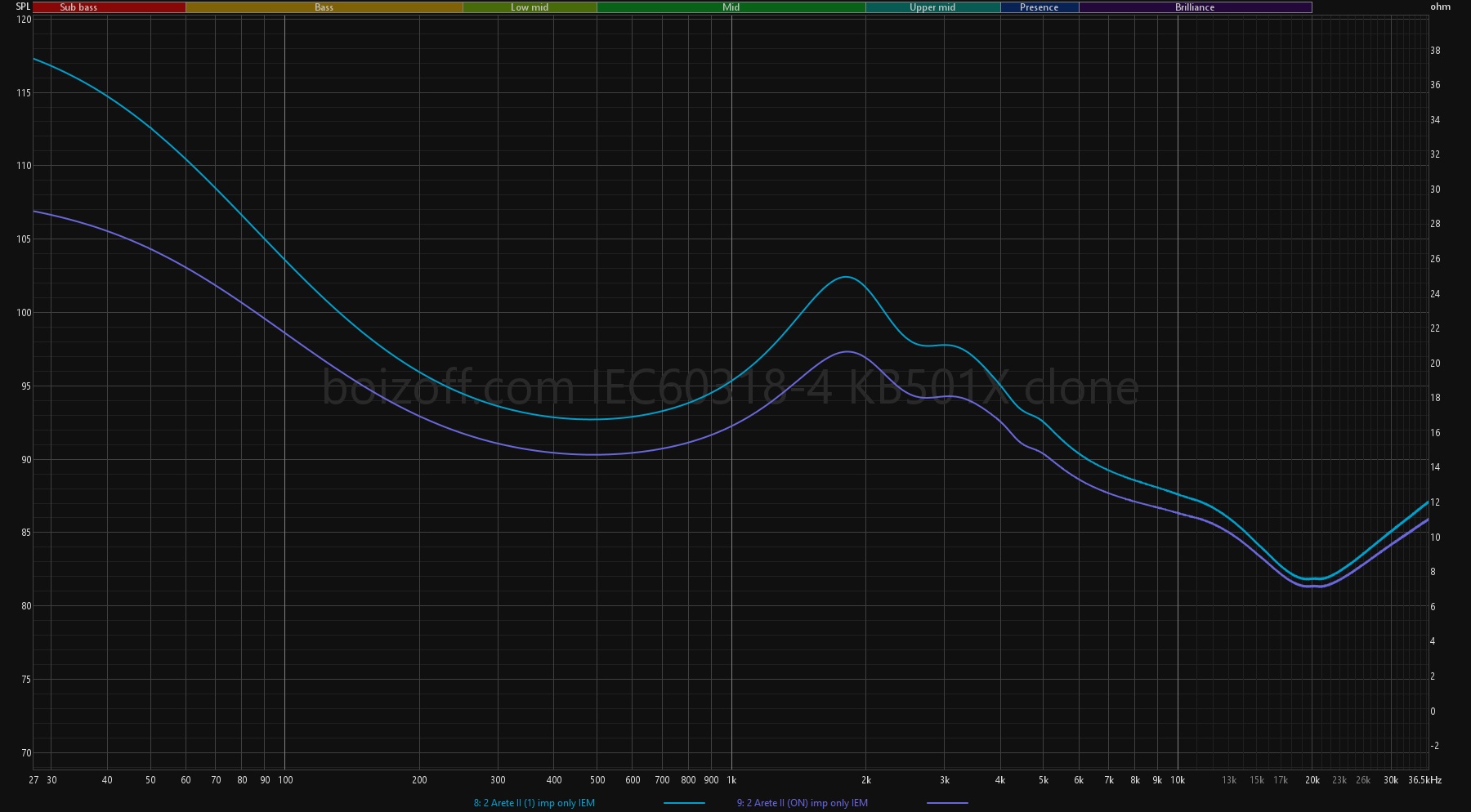
Depending on the position of the switch at 1000 Hz, we can see 16 or 19 Ω.
And this is if you add a standard cable with a 3.5mm connector:

That is, the cable gives another 0.5 Ω.
The sound
Standard links:
- the description of my rig is here;
- the audiogram of my hearing is here;
- articles on measurement theory and the whole shebang are here.
Arete II frequency response with original TPE eartips, with the switch on the shell in position 1:

The difference between 1 and ON:


Arete II frequency response with original foam eartips, with the switch on the shell in position 1:
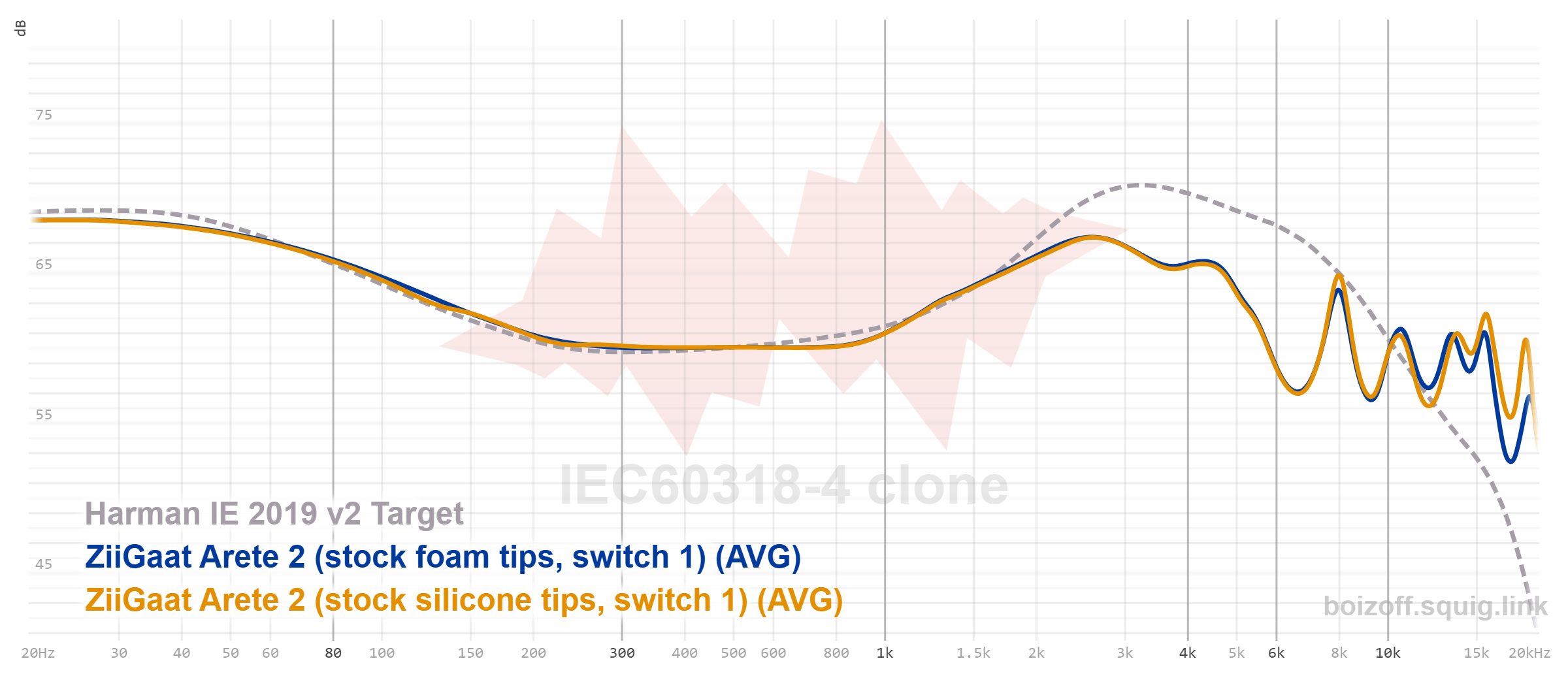
The problem with all the above measurements is that they are made with an eye to 8 kHz of the second resonance, but there’s no way to stick Arete II in your ears like that. This is a more realistic measurement, more or less corresponding to what I hear:

This graph is more plausible (the second resonance occurs at 7125 Hz); only the peak at 15 kHz is shifted even more to the right and is actually inaudible.
That’s what we can see on the graphs when the switch on the shell is in position 1:
- up to 1.5 kHz, the Arete II tuning corresponds to the Harman curve;
- from 1.5 to 10 kHz, the volume is reduced by 1-4 dB, although the frequency response remains fairly smooth;
- ultra-high frequencies after 10 kHz, on the contrary, are highlighted.
And if we set the switch to the ON position, we’ll get a little more of the bottom and a little less of the middle and top.
In other words, here we have a classically ‘warm’ sound, which can be made even warmer by using the switch, and the extended upper frequency range as a nuance.
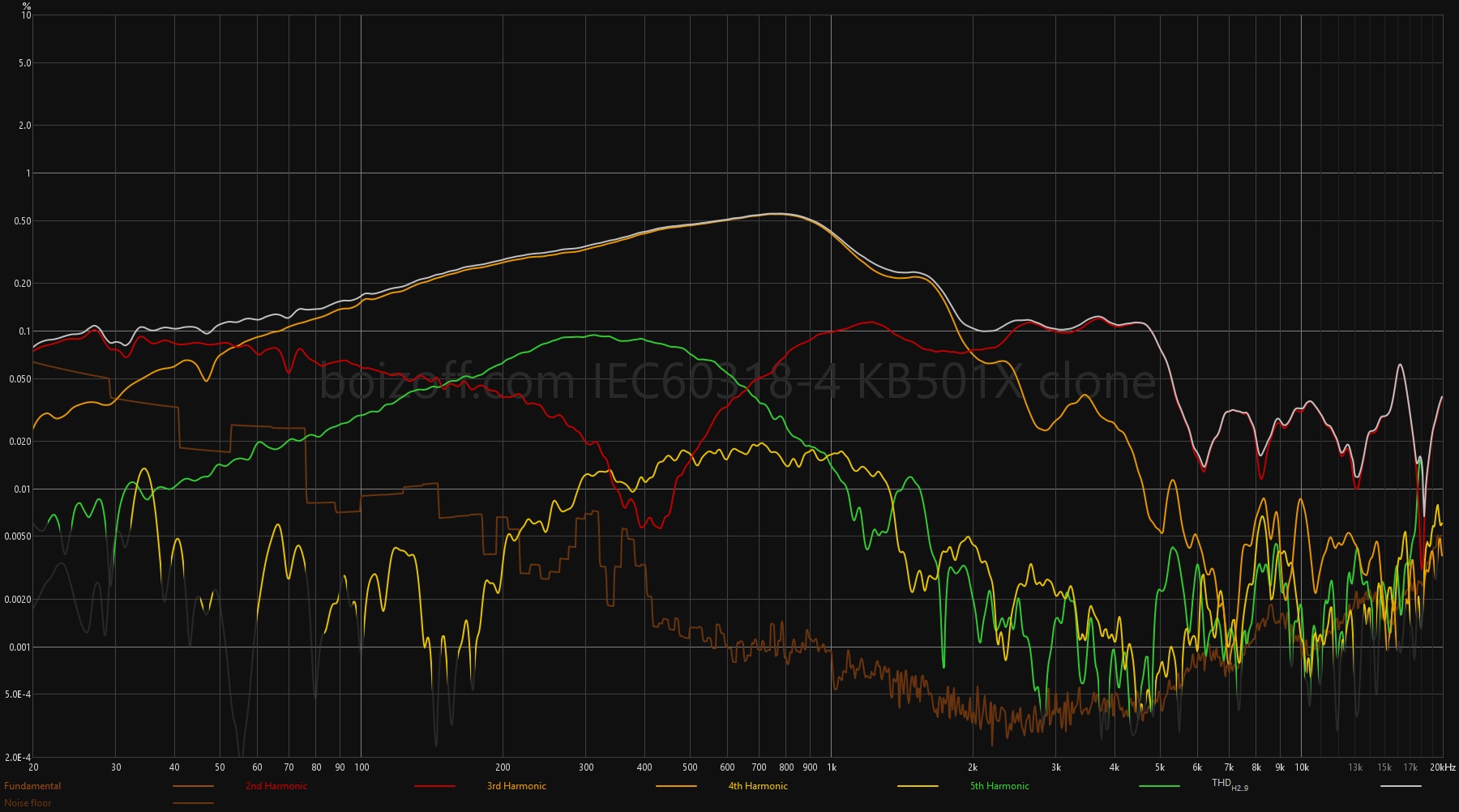
Nonlinear distortion at 94 dB with the ‘Use harmonic frequency as ref’ option turned off and on, with the switch in position 1:
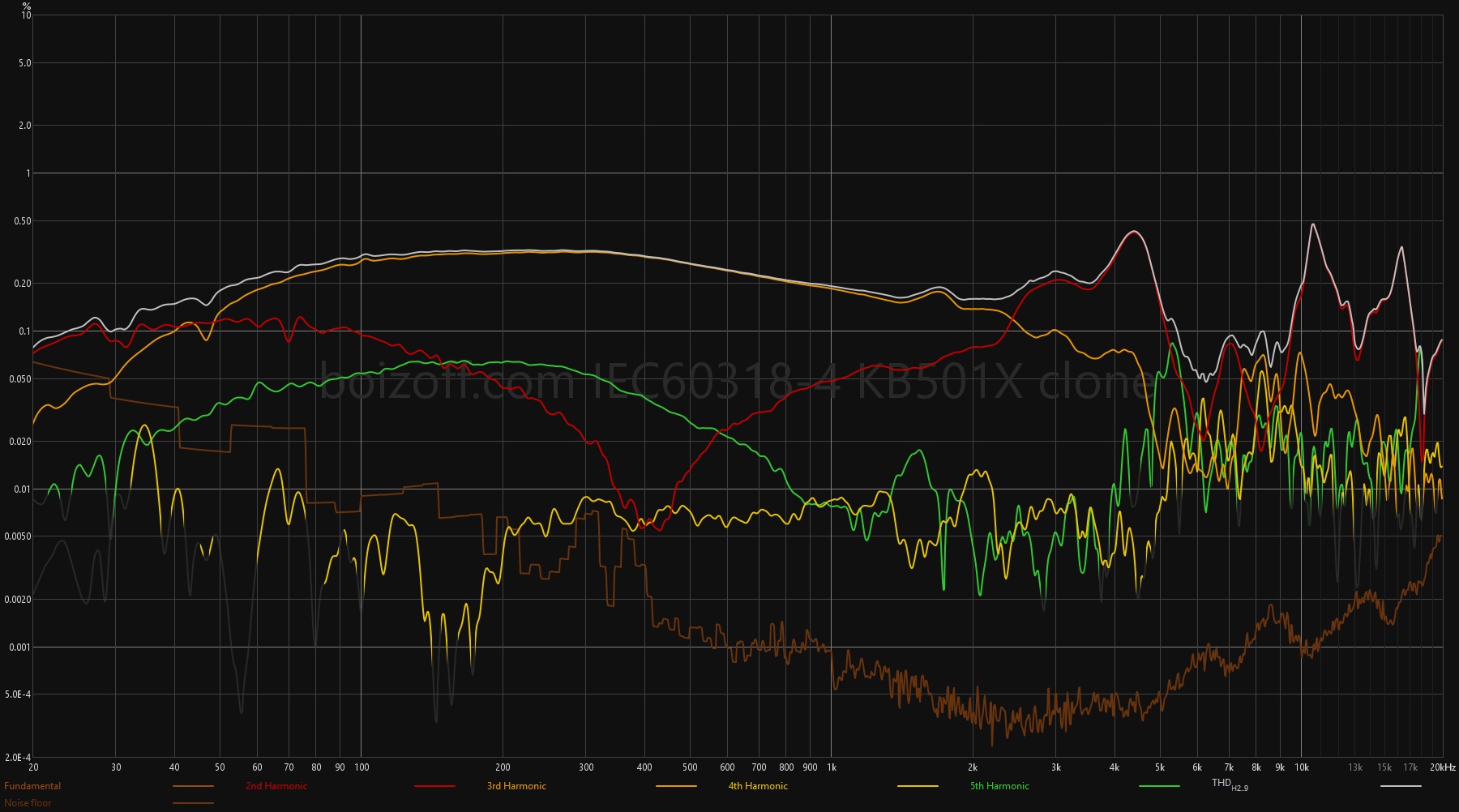
Nonlinear distortion at 104 dB with the ‘Use harmonic frequency as ref’ option turned off and on, with the switch in position 1:


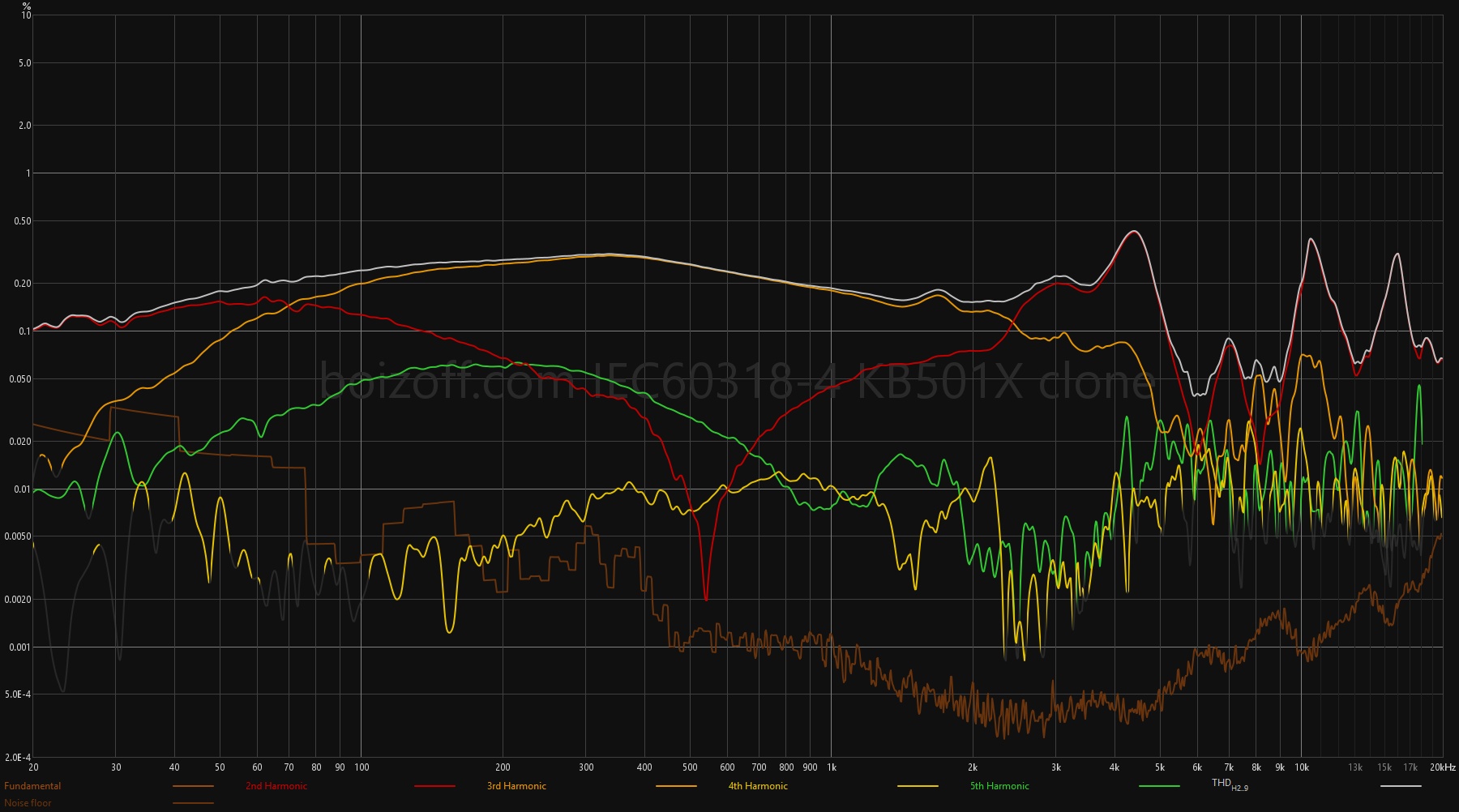
Nonlinear distortion at 94 dB with the ‘Use harmonic frequency as ref’ option turned off and on, with the switch in the ON position:
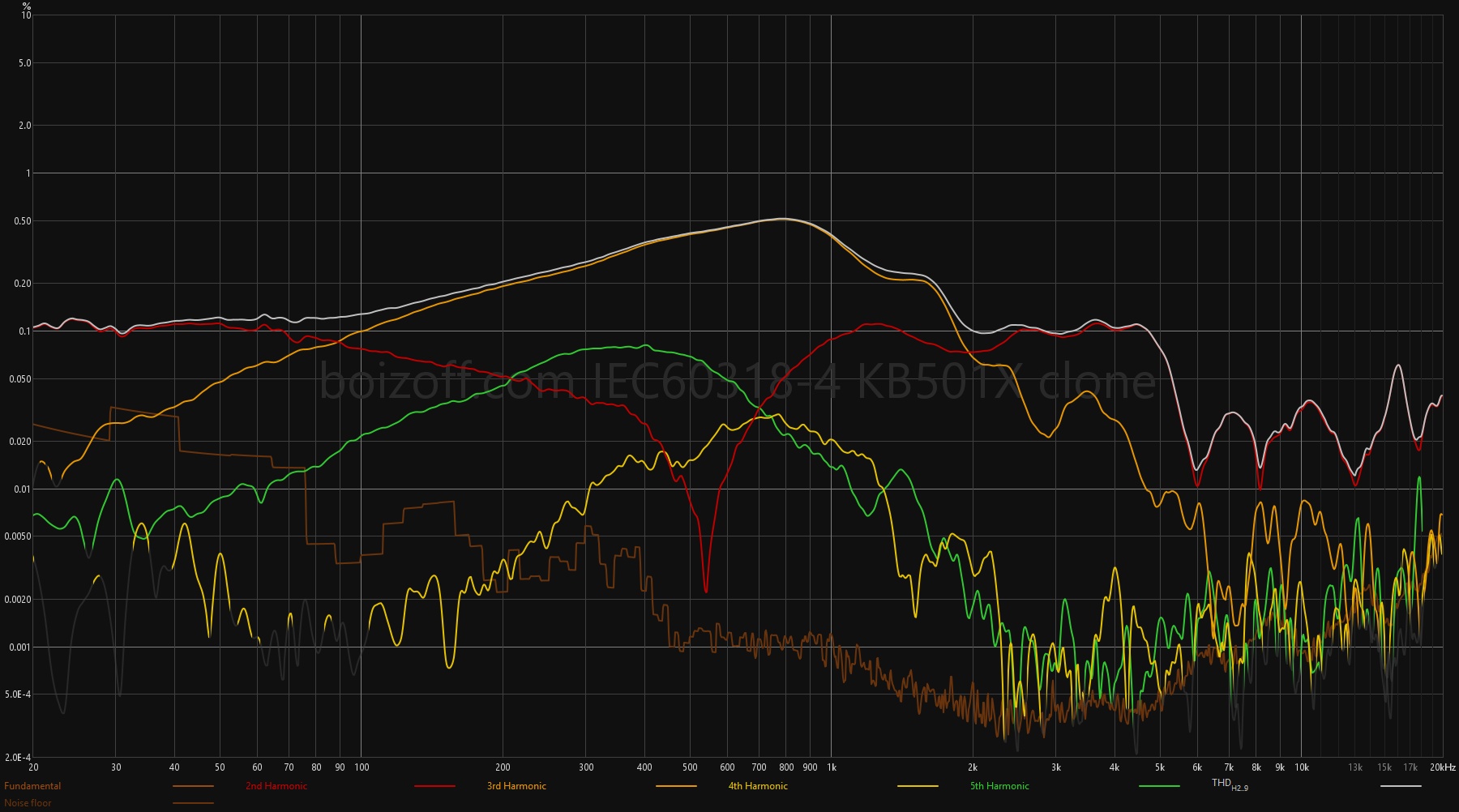
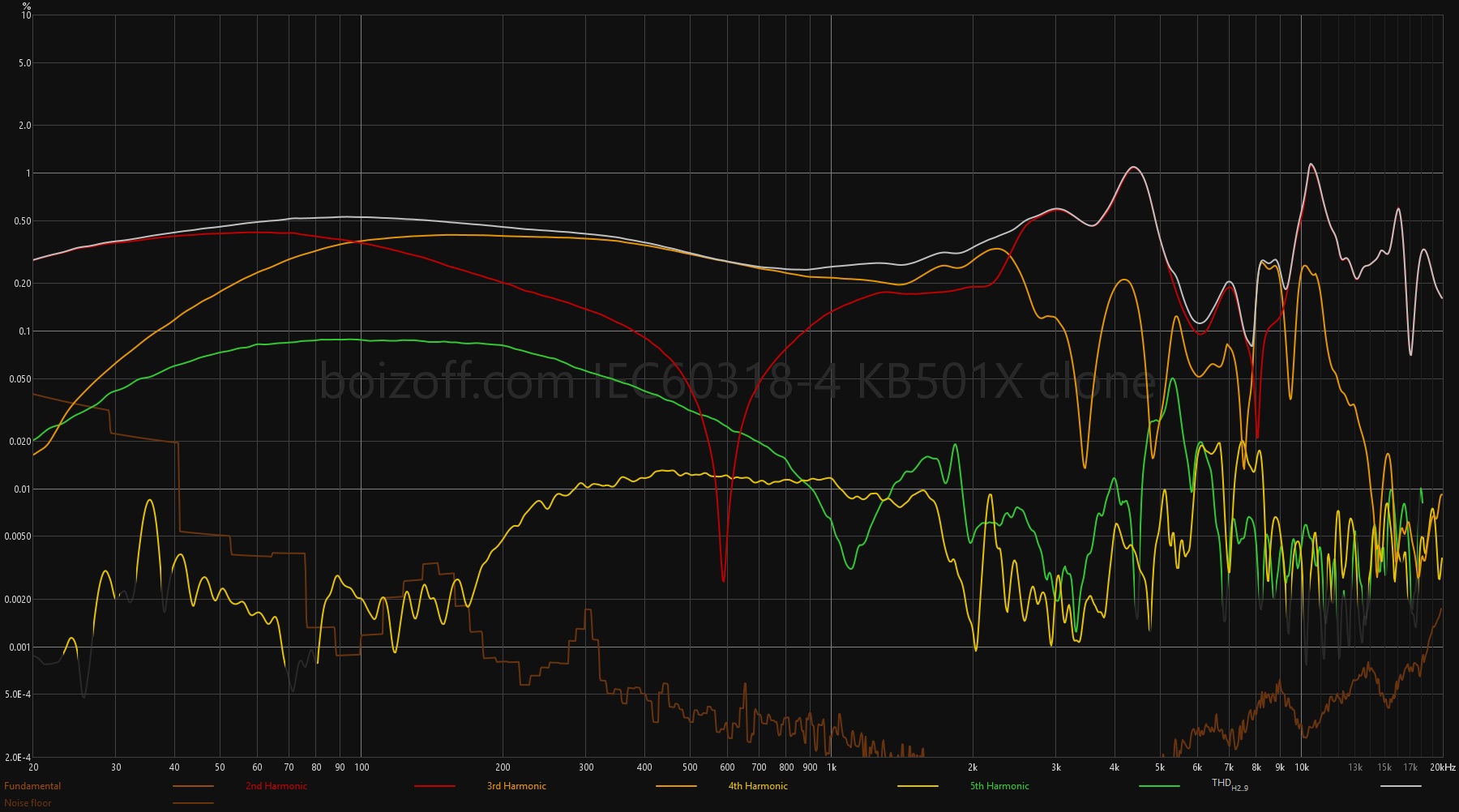
Nonlinear distortion at 104 dB with the ‘Use harmonic frequency as ref’ option turned off and on, with the switch in the ON position:

To sum it up:
- The distortion levels are identical in both positions of the switch.
- At a volume of 94 dB, the distortion level reaches 0.4/0.2% (depending on the ‘Use harmonic frequency as ref’ option) at a frequency of 1000 Hz. I can’t get 0.04% stated by the manufacturer, but there’s no trouble with 0.4% either. Anyway, the distortion doesn’t rise above 0.5% within the audible frequency range.
- At a volume of 104 dB at 1000 Hz, the distortion doesn’t exceed 0.55/0.26%, and the maximum is 1.3% over the entire audible range. And this is quite consistent with the performance of competitors, for example, Myer Audio SLIIVO SL224, and even more expensive models such as Hisenior Mega7.
Minimum phase response, group delay, and spectrogram in the ‘Burst decay’ mode:
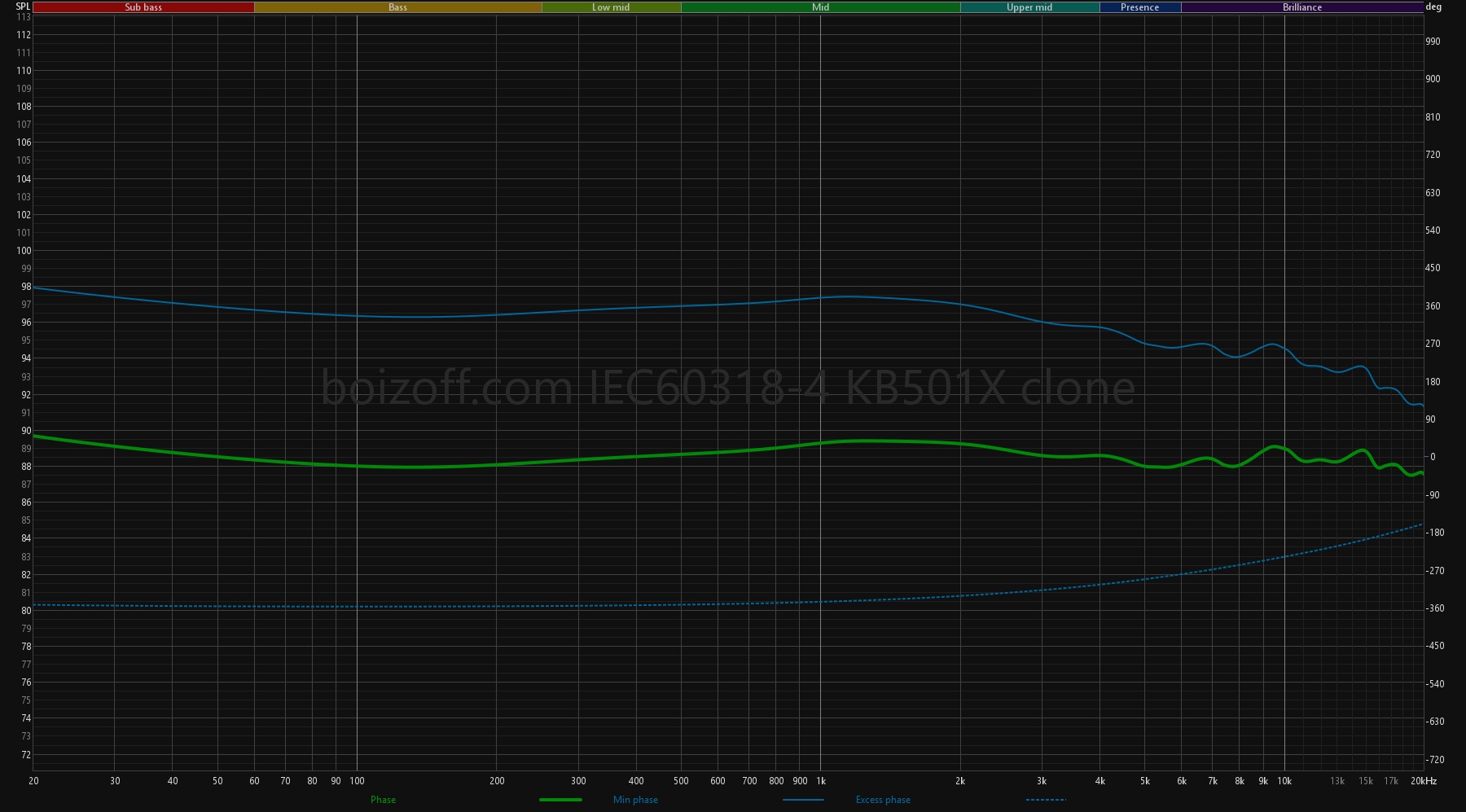
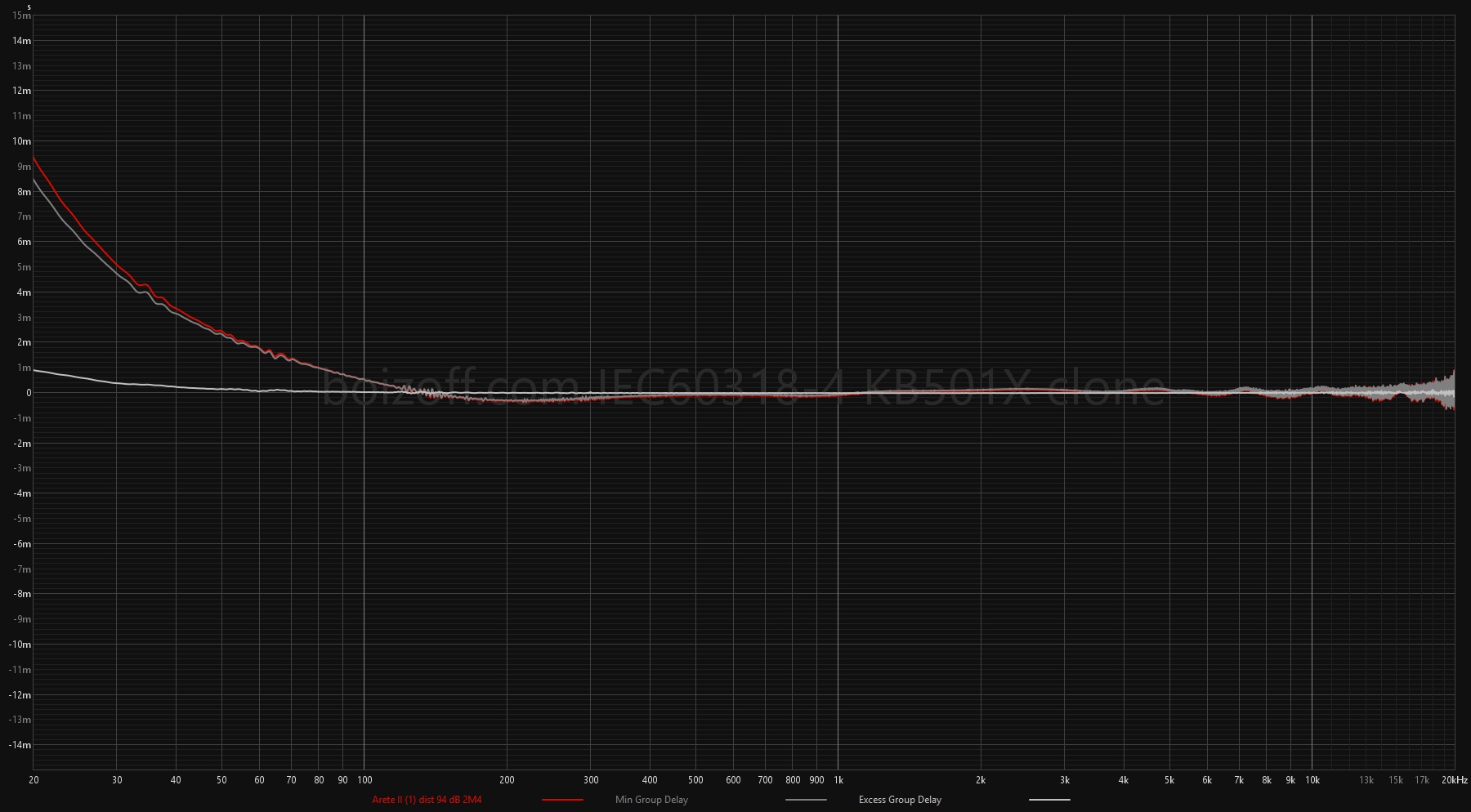

There are no surprises here.
As for my subjective impressions, I liked these in-ears. And this is the case when the graph describes the sound with 99% accuracy. Arete II have a pleasant ‘warm’ sound signature. The subbass is clearly separated from the bass and doesn’t mumble, the midrange is natural and ‘smooth’, without dips and peaks. High frequencies are reduced in the ‘dangerous’ area around 6 kHz, while the ultra-high ones, after 10 kHz, are emphasized, on the contrary. I don’t hear the peak at 15 kilohertz displayed on the graph — instead, I can hear a very smooth, technically implemented ‘expansion’ up to 15.5 kHz. Due to this, the earphones sound voluminous and wide in well-mixed tracks, but there are rasps, clicks and other ‘trash’ sounds appearing in poorly recorded music. By and large, I have only one complaint about the sound delivery in general: due to the lack of volume in the 5-8 kHz segment, ultra-high frequencies sound somewhat separated from the rest of the sound flow, so this range attracts too much attention in some tracks. But there are not many such tracks, and the earphones present the vast majority of the musical content very effectively, aggressively, but, at the same time, more or less naturally.
As a result, the sound of Arete II turned out to be ‘warm’, but also natural, ‘detailed’ and conducive to prolonged listening, but not in the manner in which Aether make you just stop paying attention to music, no way. With Arete II, you listen to music in a meaningful way. They’re just not about analytics, but about drive and a rich low-frequency range. And I’ll also note that this tuning and the low level of distortion make it possible to significantly increase the volume without getting an unpleasant harsh sound. And you’ll want to raise the volume because the first resonance, 3 kHz, does not reach the Harman standard, let alone the diffuse field.
As for the switch, it’s purely a matter of taste. My personal choice is position 1. But if you want, you can add another 1.5 dB from the bottom and remove 1.5 dB in the middle and top by switching to the ON position.
Comparisons
In terms of comparison, I usually use the world’s best rating of in-ears, but this time I’ll move away from this tradition a little. I will review the best earphones that are similar price-wise, but that are the most unlike Arete II in sound, as well as will include Kiwi Ears KE4 in the comparison. I’ll tell you later why.
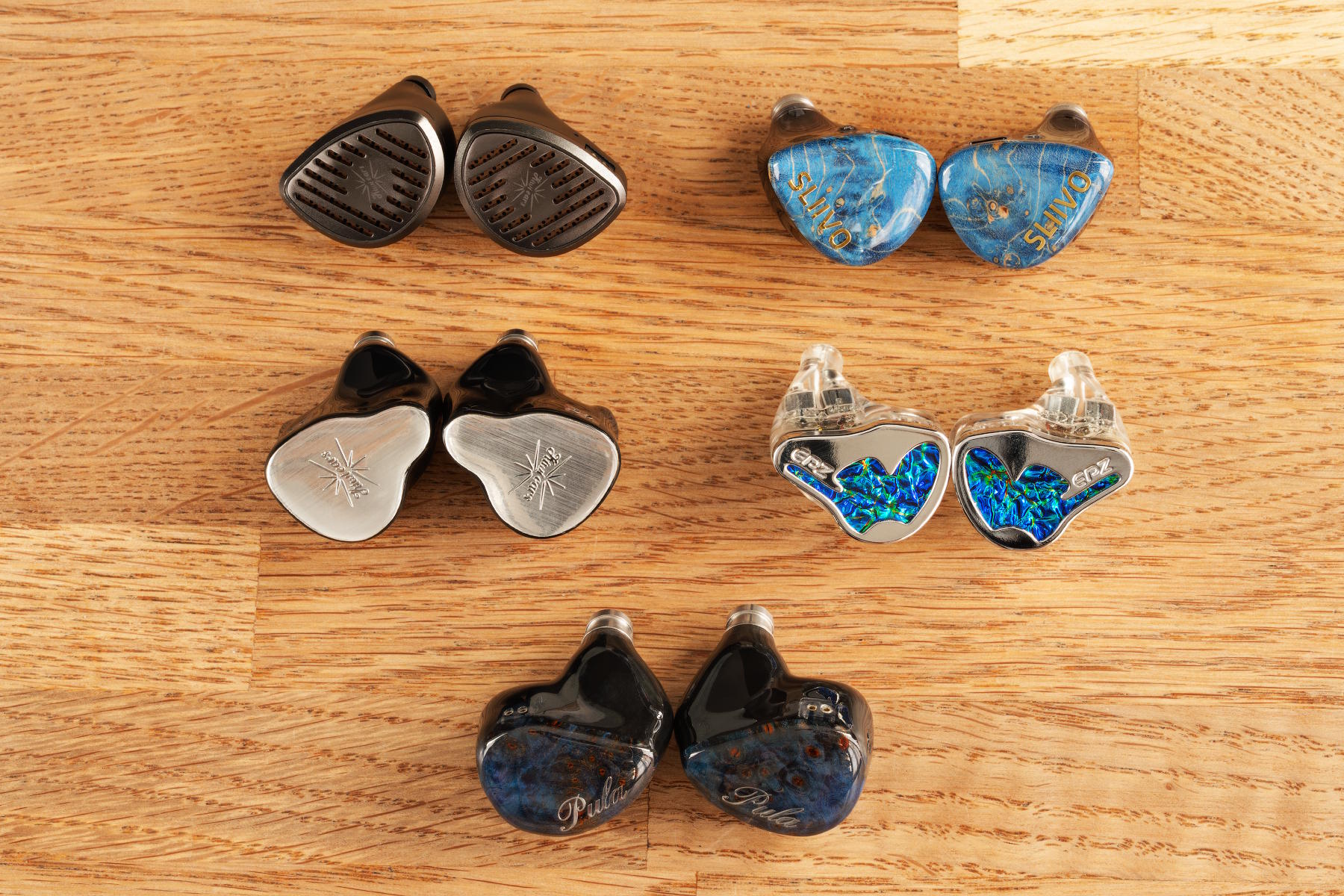
Frequency response of Arete II compared to Kiwi Ears Septet:

Open-back Septet are bright, with a biting and ‘fast’, but less weighty punch, they are sharper and ‘lighter’. In contrast to them, the sound of Arete II is perceived not just ‘warm’, but even ‘dark’ and much more comfortable, although less ‘detailed’. In terms of the fit versatility, Arete II win with a lopsided score.
Frequency response of Arete II compared to PULA ANVIL114:

In their typcial manner, ANVIL114 hammer music into your head, relying on the bass and bright upper midrange. They sound brighter, often exceeding the limit of comfort, and the reason for this is a boost at 8 kHz. The sound of Arete II is not so spectacular; compared to ANVIL114, it seems almost neutral and balanced. A point, even two points for the comfort of fit, definitely go to ZiiGaat.
Frequency response of Arete II compared to EPZ K9:

I wrote a big review about EPZ K9 where you can find a detailed description of the sound of these in-ears. The key difference between them and Arete II is their proximity to a neutral sound delivery. In this sense, K9 are much closer to the ideal, but these are ideologically different earphones, they are neither worse nor better. In terms of convenience, they are roughly the same.
Frequency response of Arete II compared to Myer Audio SLIIVO SL41 MK2:
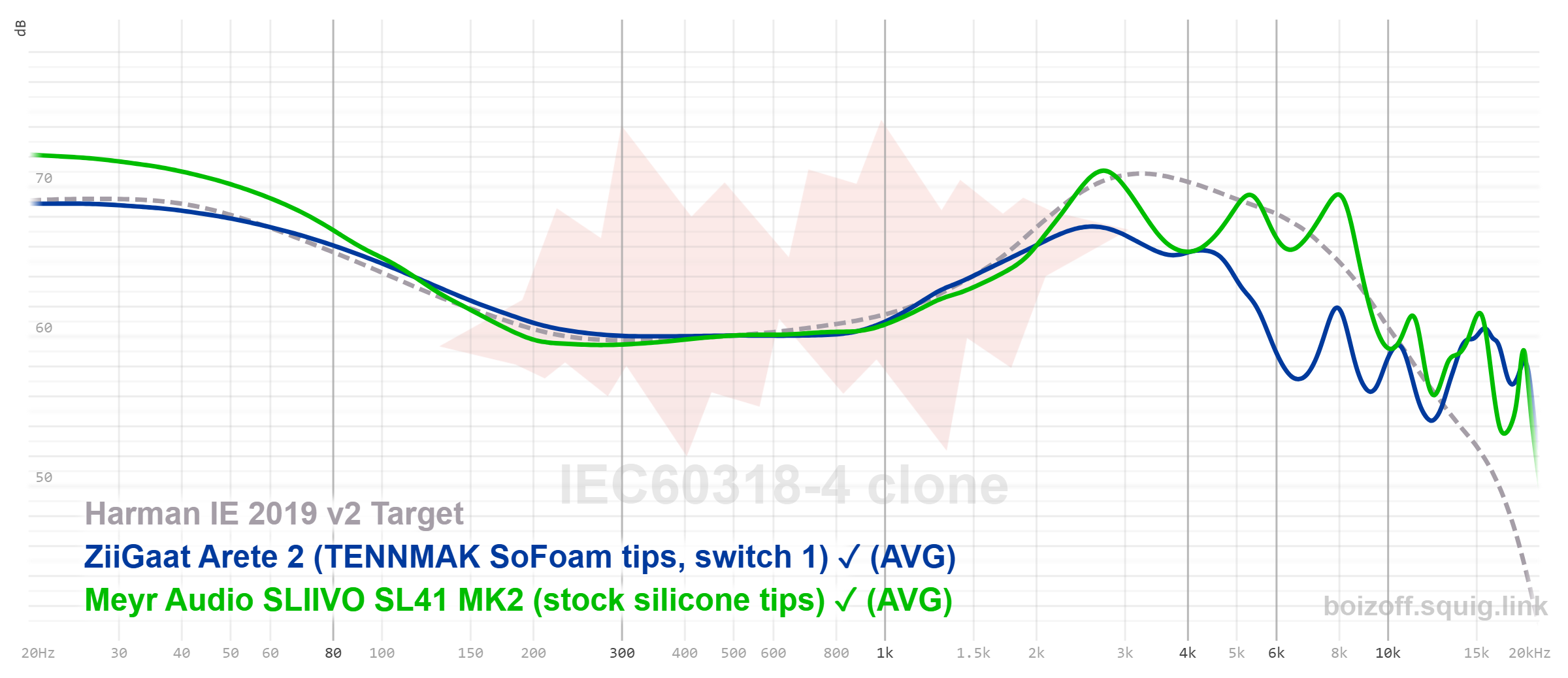
With their subbass of frightening depth and speed, as well as a very expressive midrange, SL41 MK2 surpass Arete II in overall fervor, but they are also more selective about music tracks: what sounds bad with SL41 MK2 will still be pretty much OK with Arete II.
Frequency response of Arete II compared to Kiwi Ears KE4:

How do KE4, the earphones that are much cheaper than Arete II, come into the picture? I think that the Ziigaat earphones are the right answer to the question “What do I go to after KE4?” or “Does it make sense to spend $50 more if I aim at KE4?” The sound of Arete II seems to be conceptually the same, but it has no disadvantages of the cheaper model: it has a normal articulated middle, dips and peaks are smaller, the frequency response to the right of 1000 Hz is smoother, and the ultra-high frequencies are more extended. If the KE4 sound delivery resonates with you, but you are not satisfied with the sharpness at the second resonance or the loss of details in the midrange, then I would consider Arete II as the first alternative candidate.
Summary
Earphones with the well-implemented ‘warm’ sound are a rather rare story. That is why I included only 3 such models in my rating. Only 3 out of 46, I note. And, as it seems to me, ZiiGaat has managed to make good earphones. They’re specific, not everyone’s cup of tea, but good.
In the case of ZiiGaat, I’ll make a proviso that it’s about my very sample. I’ll be happy to add Arete II to the list of the best when I manage to try on at least one more sample and see that there is practically no difference between their frequency responses.
If we look not only at the sound, then Arete II please with a very high quality of workmanship, a remarkably comfortable fit, and a cable with decently made replaceable connectors. Only the set of eartips somewhat failed, from my point of view.
To buy or not to buy: if you want in-ears with a ‘warm’ sound, go right ahead.


