


EPZ P40 Earphones Review
I ordered EPZ P40 on the marketplace back in February of this year. The delivery had been futzing around for some six weeks, and then the seller canceled my order and gave me a refund. At about the same moment, EPZ suddenly wrote me with an offer to send me something for a review, since they liked my articles about K9 and P50. I immediately offered to settle on these very P40 that I was going to buy anyway.
Therefore, today we’ll talk about EPZ P40, 4-driver in-ears. They cost $138 on the manufacturer’s website and some $118 on Russian marketplaces.
All but the sound
The earphones come in a signature EPZ package. The main inner box has a pronounced fibrous texture, just like one for P50.
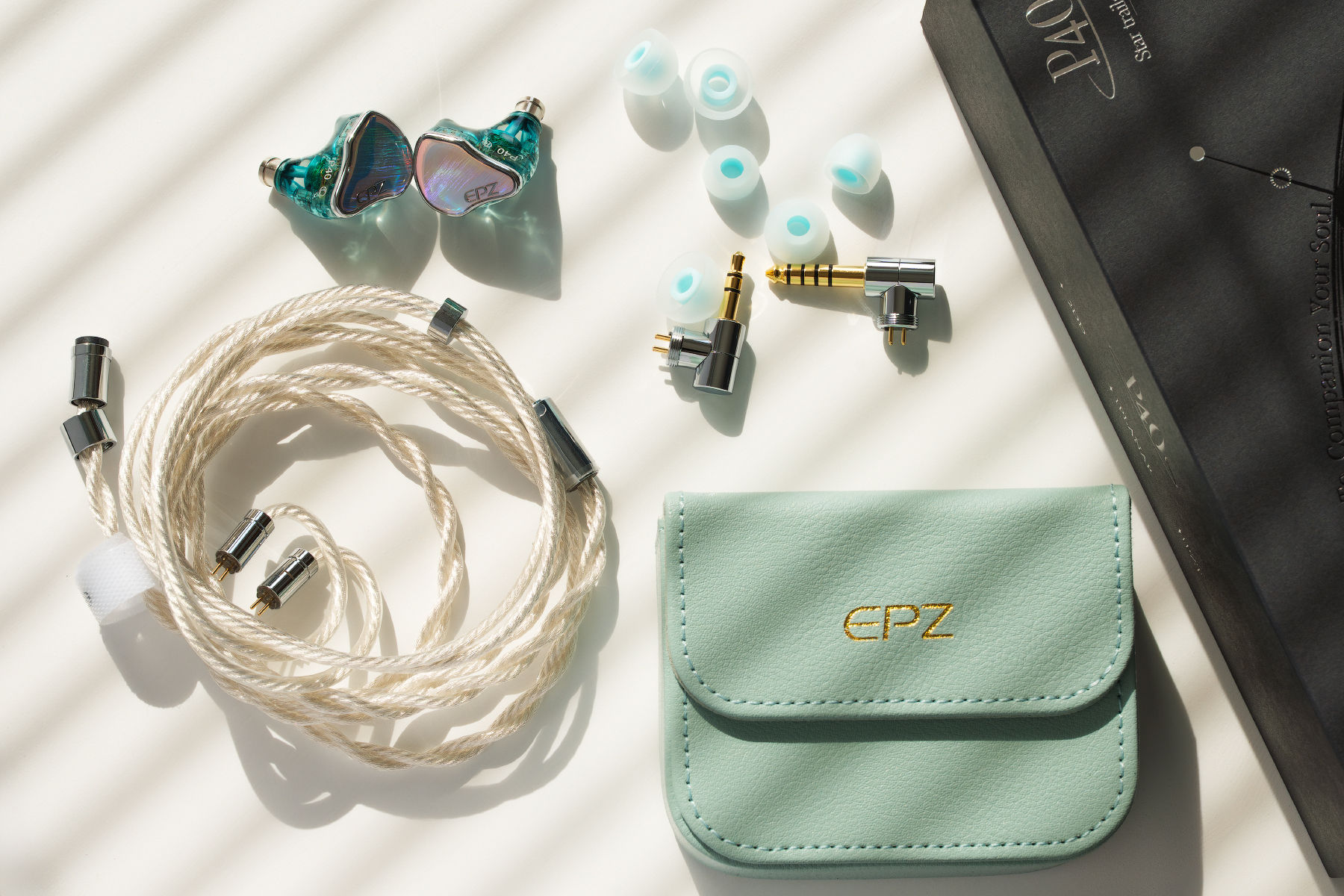
The design is pretty good, but the printing is frankly bad.

Here’s what’s inside:
- the earphones;
- a cable with replaceable connectors, regular and balanced ones;
- a set of 3 pairs of eartips;
- a case.
The very case is made of dyed leatherette, in a neat manner, with a magnetic latch. There are no additional internal compartments, no other features, but it looks nice.

As for the eartips, they are ‘standard’, made of silicone, and will be more or less suitable for most users for initial familiarization with the earphones. The sizes are S, M, and L. I had two identical sets of the eartips in my box, although the manufacturer’s website says only about one, so there could have been a mistake during the assembly.

The cable is exactly the same as P50 have. There are L-shaped replaceable connectors, with the connection fixed with a threaded washer. The quality is excellent, but I will continue to complain that the surface of the washer is completely smooth, so it’s not always convenient to twist it.

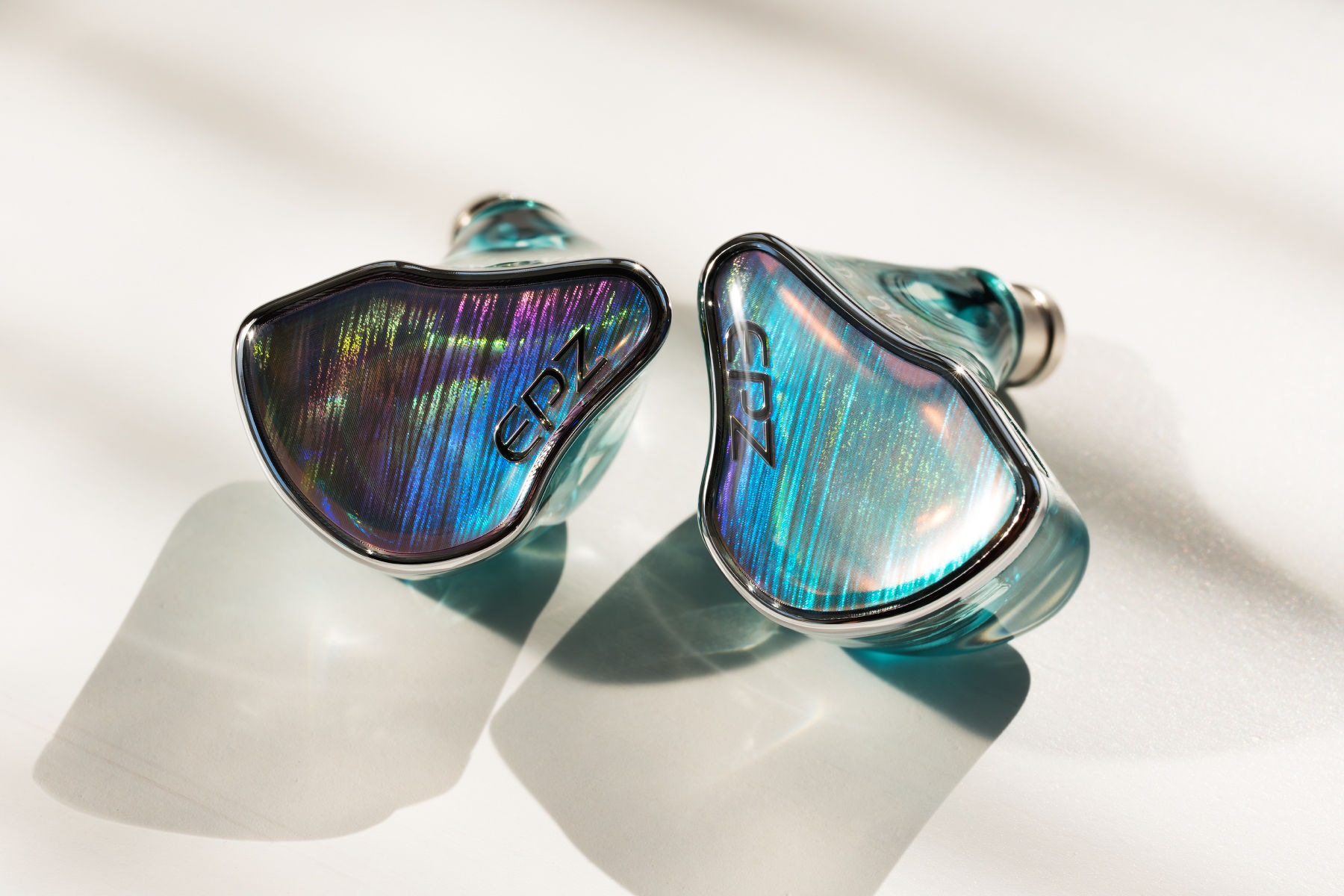
The earphones themselves are elegantly decorated: the inner surfaces of the transparent inserts have a tiled structure that re-reflect light from different angles and color the backplates in different colors, depending on the angle at which the light falls.

It looks bright, but, to be honest, several models of ‘iridescent’ headphones come out every month, so this move is obviously losing its novelty. The backplate frames are metal, and the shells are solid-cast, not hollow, which is nice.
The cable connectors are placed on dedicated flat areas.
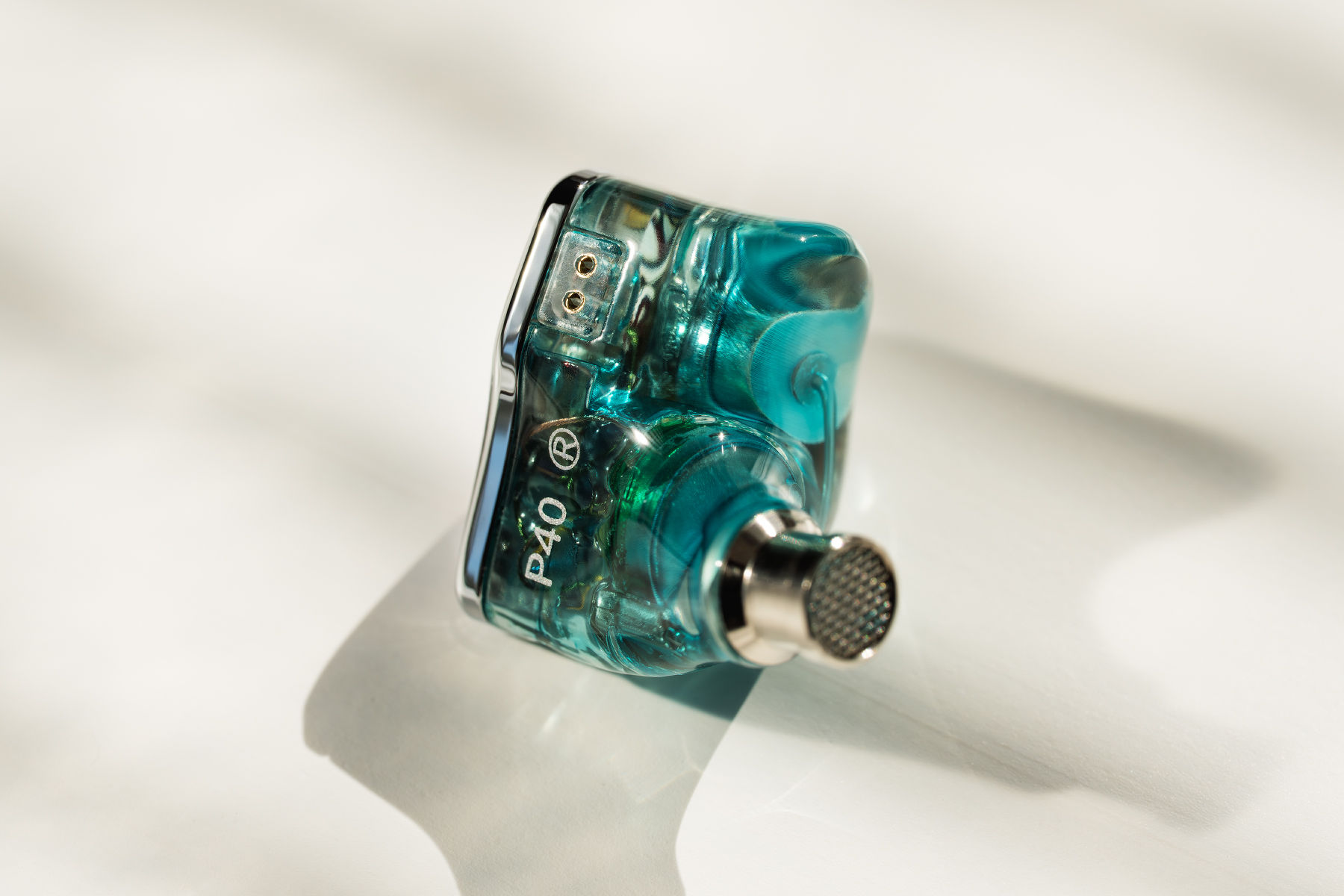
There are two compensation holes, and they are located in rather unusual places. One is on the inner surface of the shell.

The other one is on the bulge, which, with the earphone placed in the auricle, fits into the intertragic notch.

The 5.5 mm long and 6 mm wide (at their thickest point) sound ducts are made of metal and covered with double meshes, 5 mm in diameter.

Overall, the earphones are well-made, and the faceplates look unusual enough to immediately recognize this model in someone’s ears.
There is a small caveat regarding ergonomics: personally, it was comfortable for me to use smaller eartips than usual to ensure a deep fit. EPZ M11, Zhulinniao Zhu Rythme, and Whizzer ET100AB worked well for me with P40. But the best of all were final FUSION-G and Harmonic Empire Sonic Earths. I used all the eartips in size S, although I usually use M.
There’s nothing more to say about ergonomics but praise it.
I’ll note that the earphones are positioned as closed-back, but they provide low sound insulation and also play quite loudly outside. I wouldn’t recommend using them for portable use in a noisy city.
The situation with the impedance is interesting: the manufacturer provides a value of 14 Ω (at an unknown frequency) at 100 dB (± 3 dB) sensitivity. Here’s what I got with and without a standard cable (yellow and blue curves respectively):
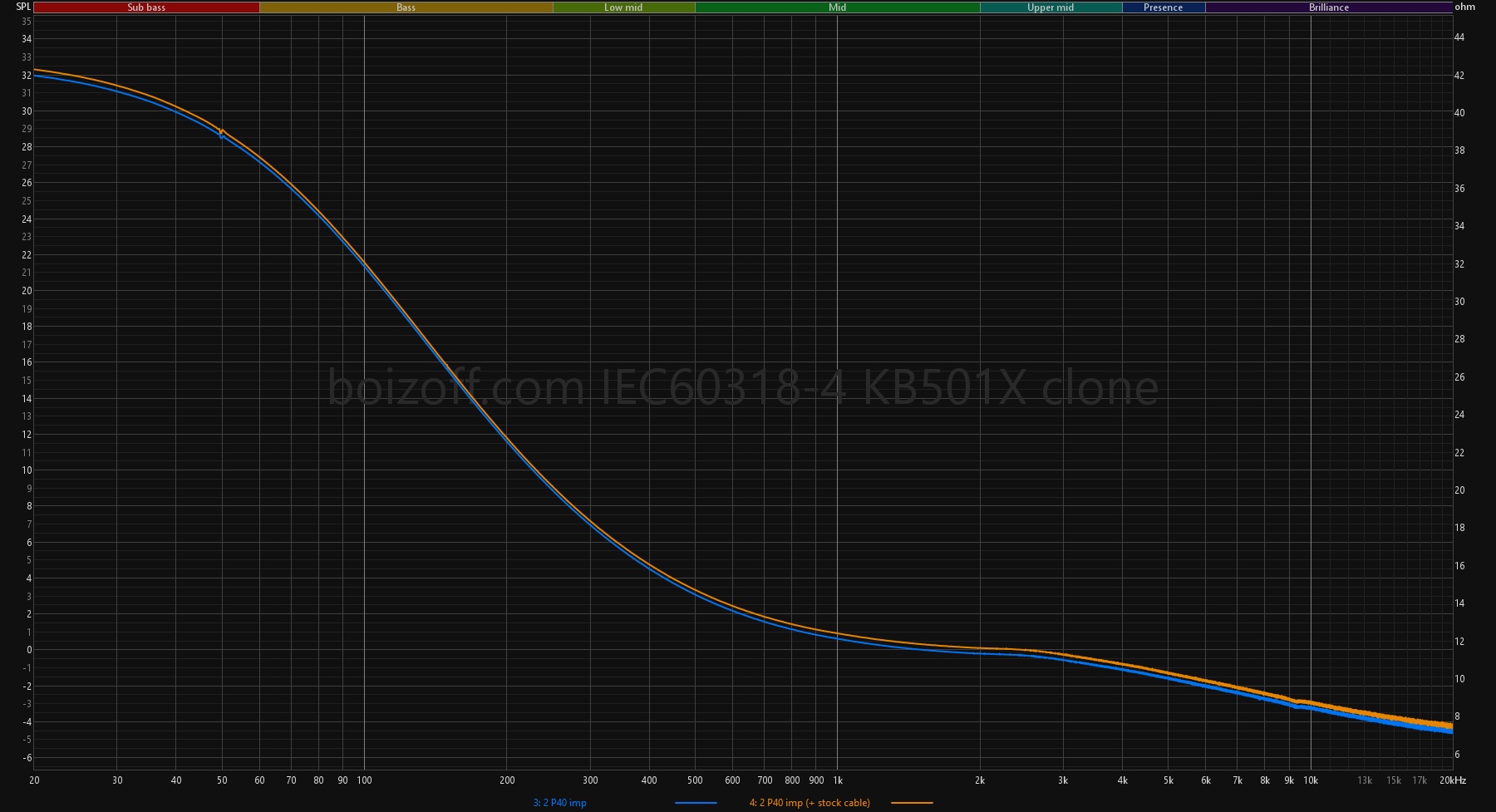
The earphones themselves have an impedance of 12 Ω at 1,000 Hz. But, generally speaking, it varies from 42 to 7 Ω in the range of audible frequencies, and the cable adds another 0.3 Ω.
The sound
Standard links:
- the description of my rig is here;
- the audiogram of my hearing is here;
- articles on measurement theory and the whole shebang are here.
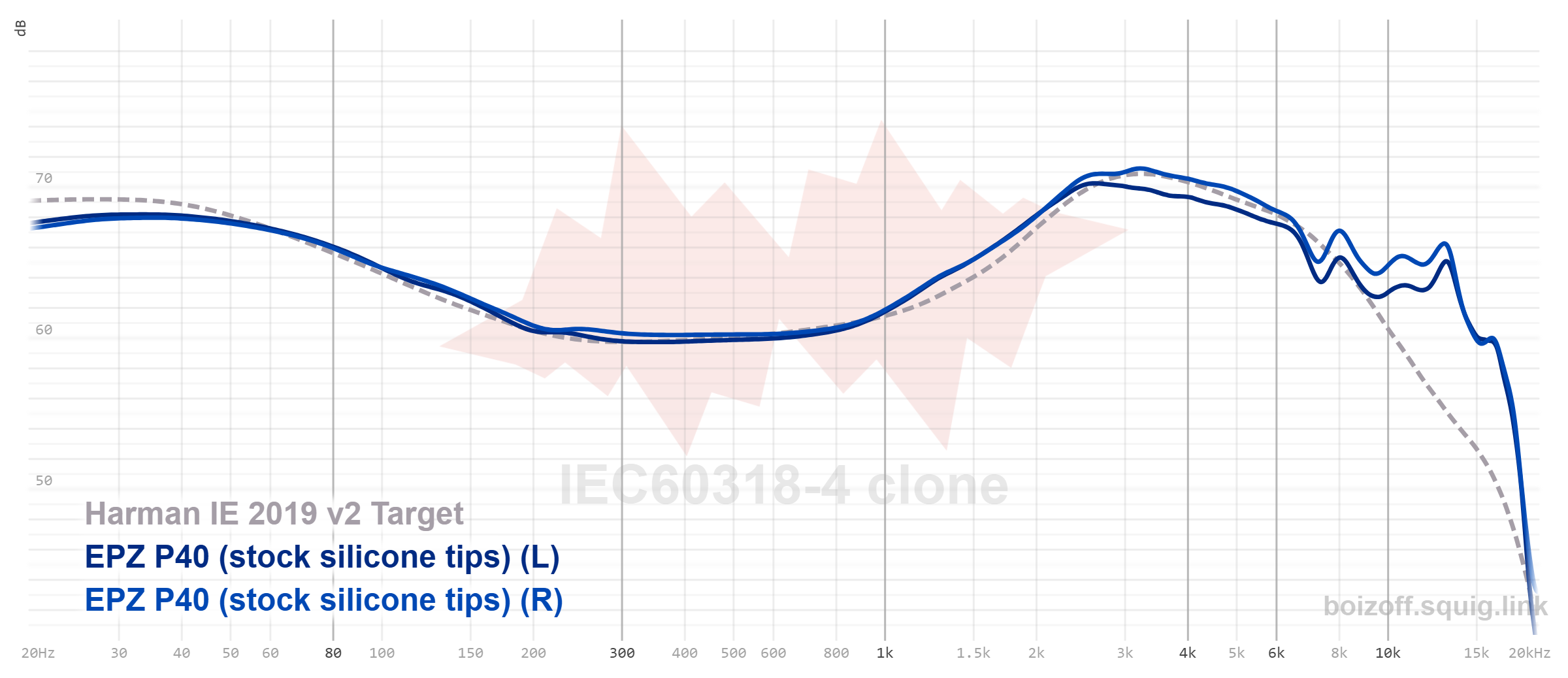
Frequency response of EPZ P40 with standard silicone eartips:
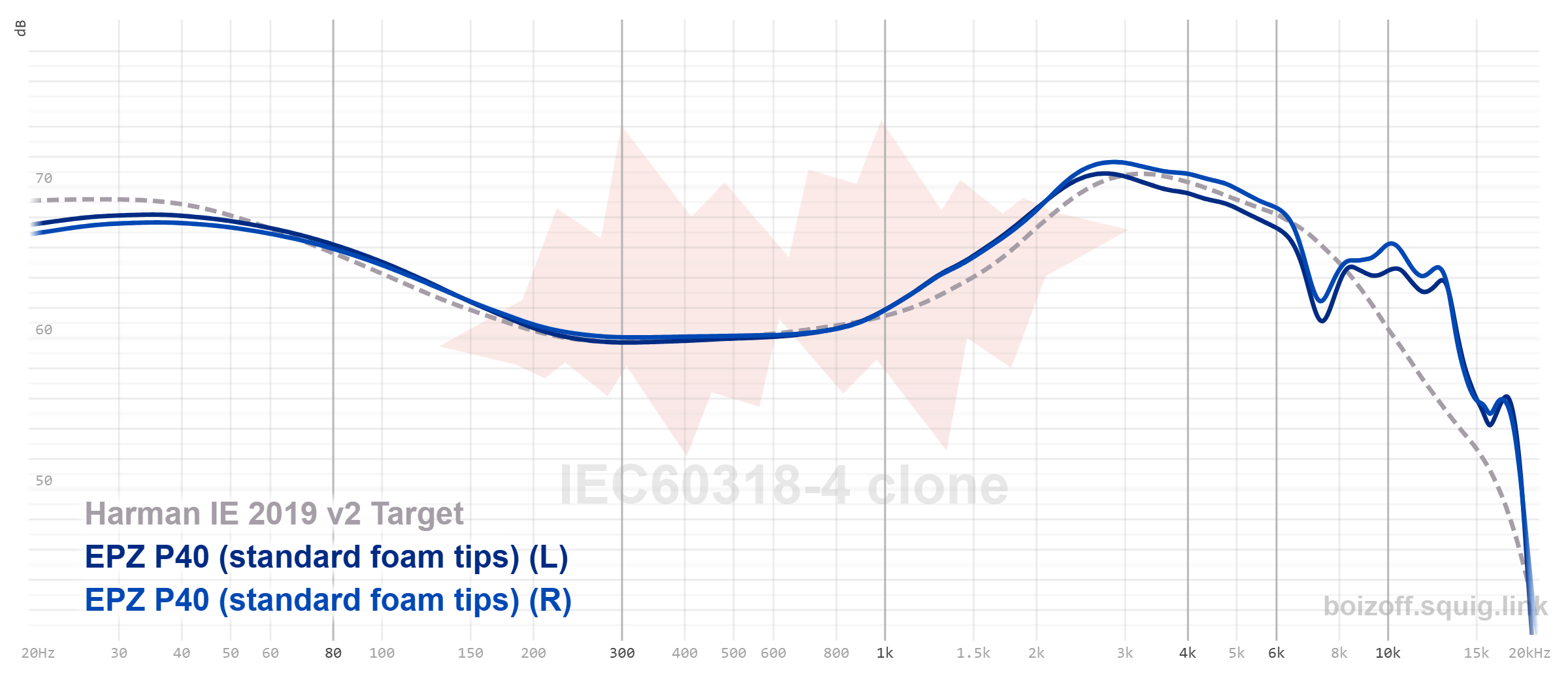
Frequency response of EPZ P40 with ordinary foam eartips:
Frequency response of EPZ P40, which is more or less consistent with what I personally can hear:

That’s what we can see in the measurements:
- there is a general Harman manner of the sound delivery;
- the volume of the subbass is slightly lowered, and one of the bass is slightly raised;
- there’s a small and very ‘wide’ (in the sense of the frequencies involved) emphasis in the area of 1.5 kHz;
- the 3-8 kHz segment coincides with/lies slightly lower in volume relative to the Harman curve;
- starting from 9-10 kHz and ending at 15.5 kHz, the frequency response graph is close to the horizontal line.
I’m not going to comment on such tuning in any way yet. I’ll note that the earphones are made on the basis of two dynamic drivers, one planar one, and one piezoelectric ceramic one.
Nonlinear distortion at 94 dB with the ‘Use harmonic frequency as ref’ option turned off and on:

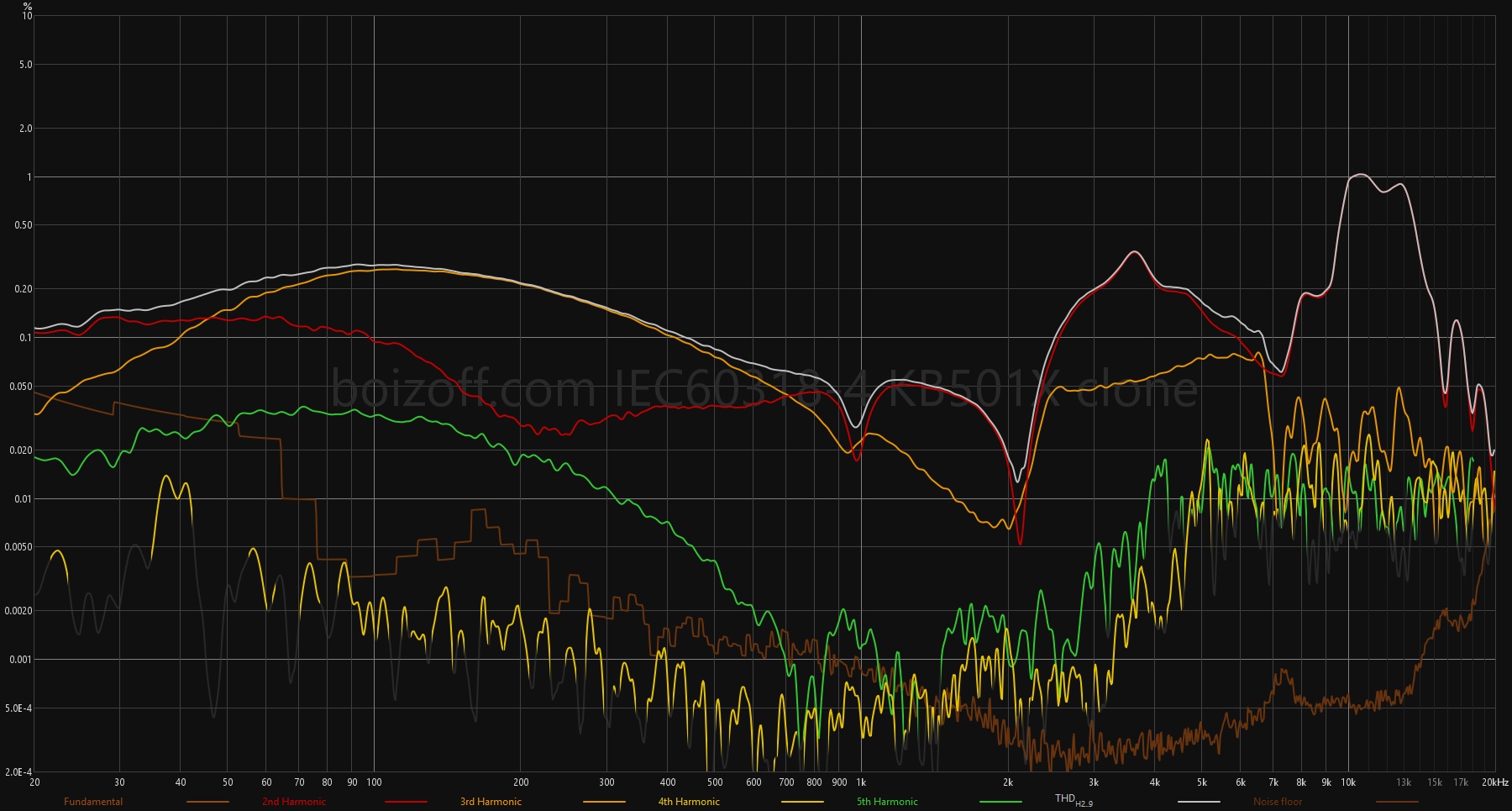
Nonlinear distortion at 1000 Hz doesn’t exceed 0.1% at 94 dB of volume and 1% over the entire audible range.
Nonlinear distortion at 104 dB with the ‘Use harmonic frequency as ref’ option turned off and on:
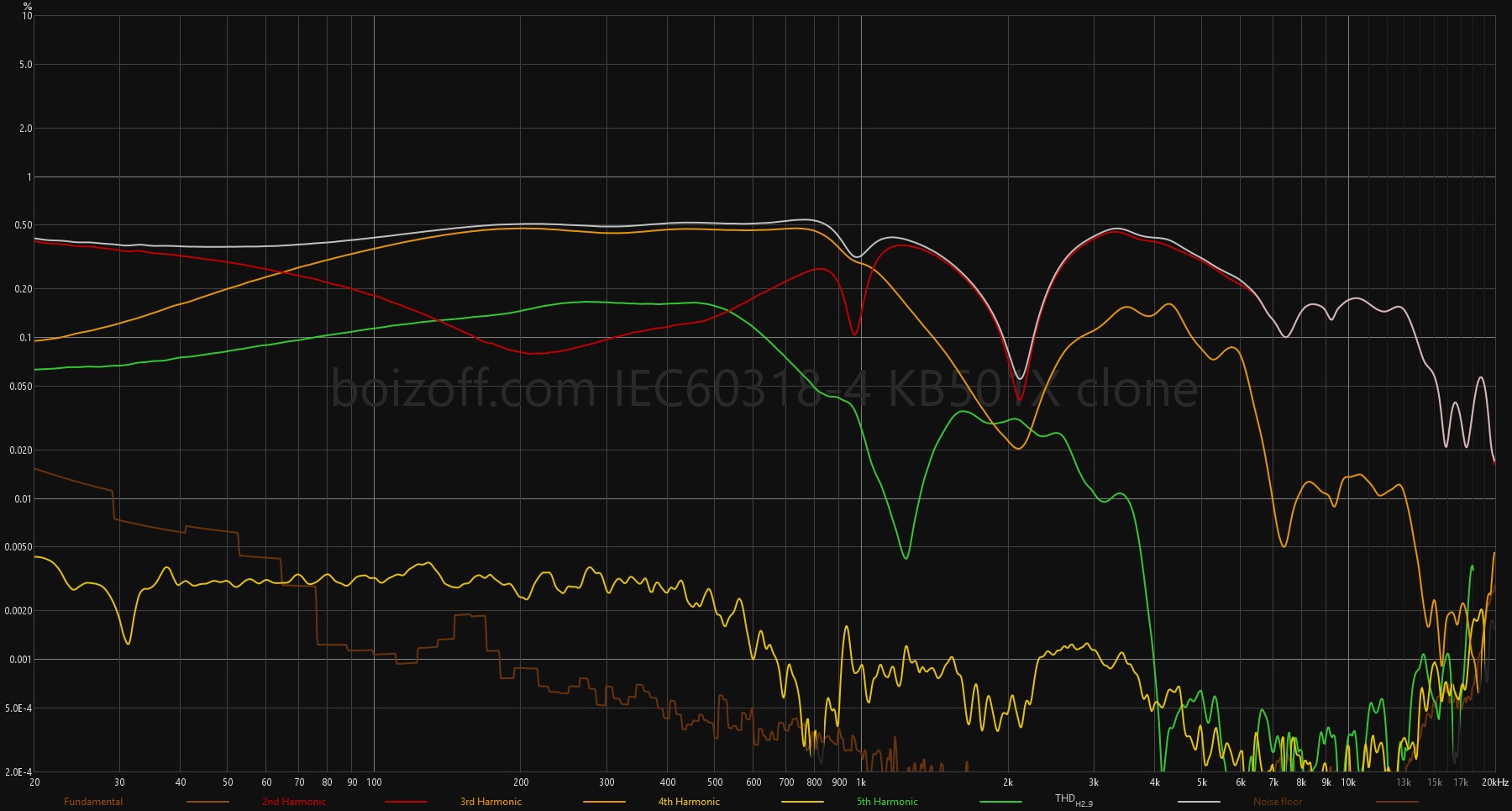
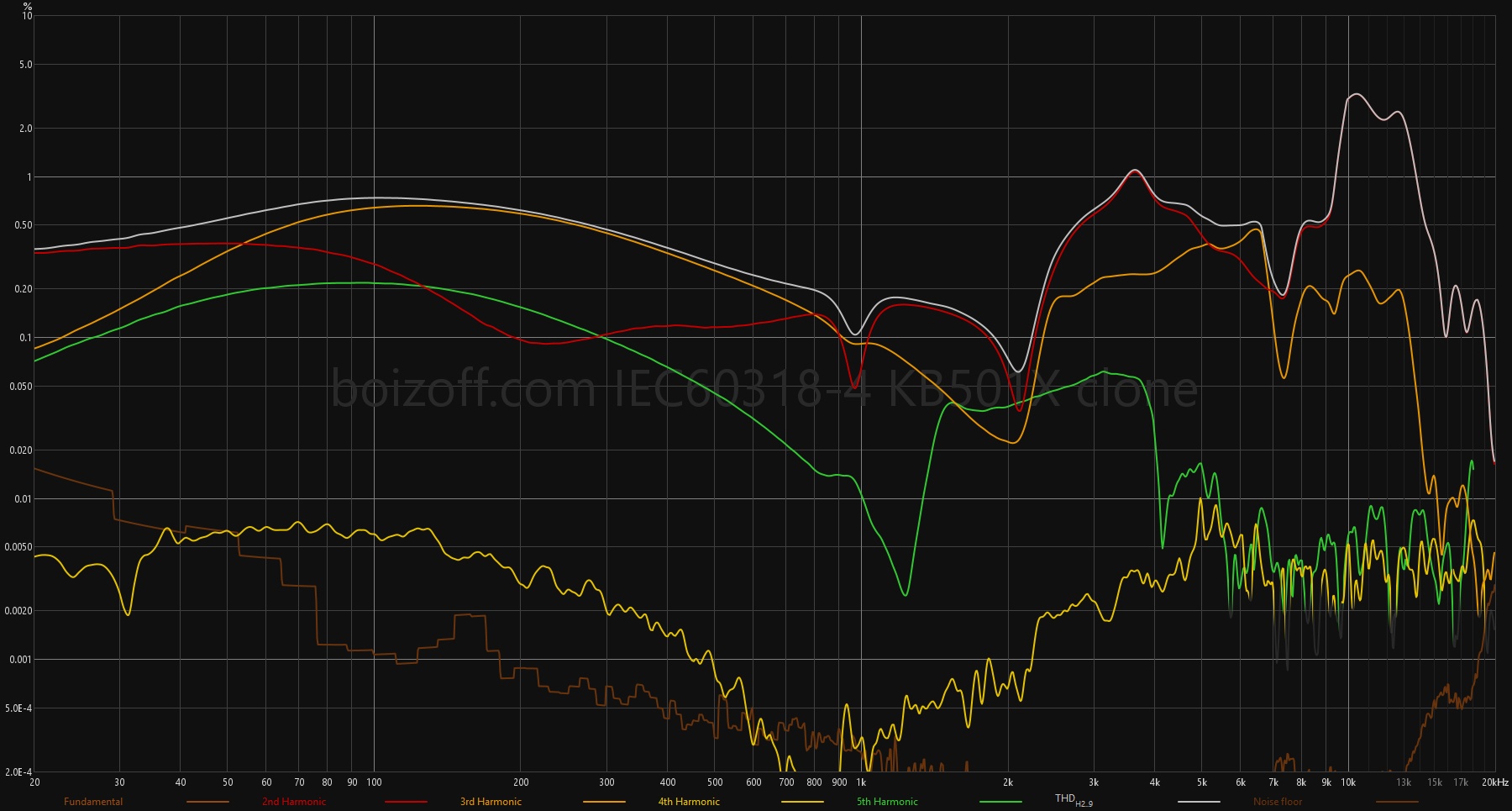
At 104 dB of volume, nonlinear distortion reaches a maximum of 3.3% (when displayed in the ‘Use harmonic frequency as ref’ mode) at a frequency of 10 kHz, and this is a frankly unremarkable result. However, its level remains more than acceptable at 1 kHz, up to 0.3%.
Minimum phase response, group delay, and spectrogram in the ‘Burst decay’ mode:
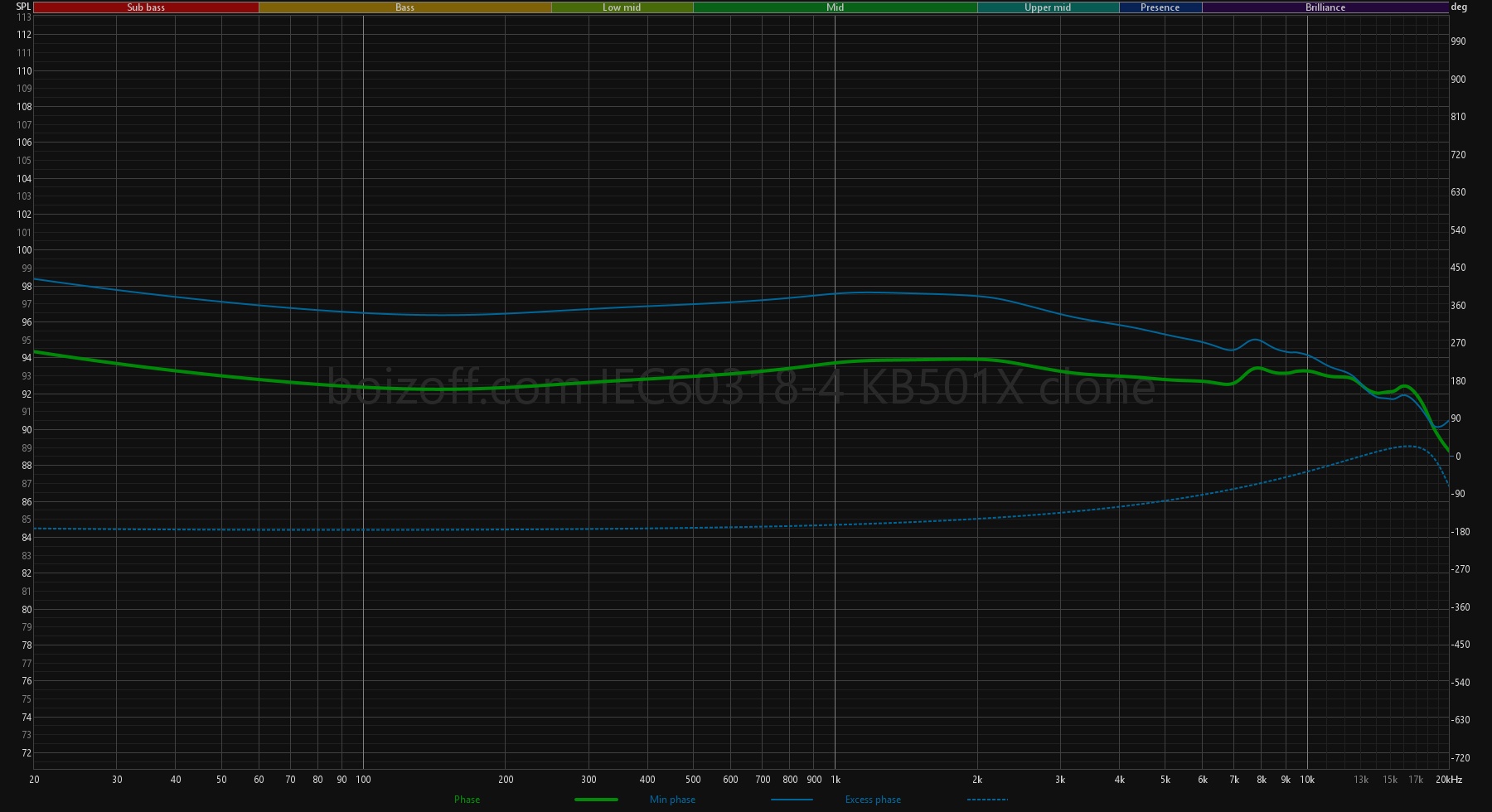
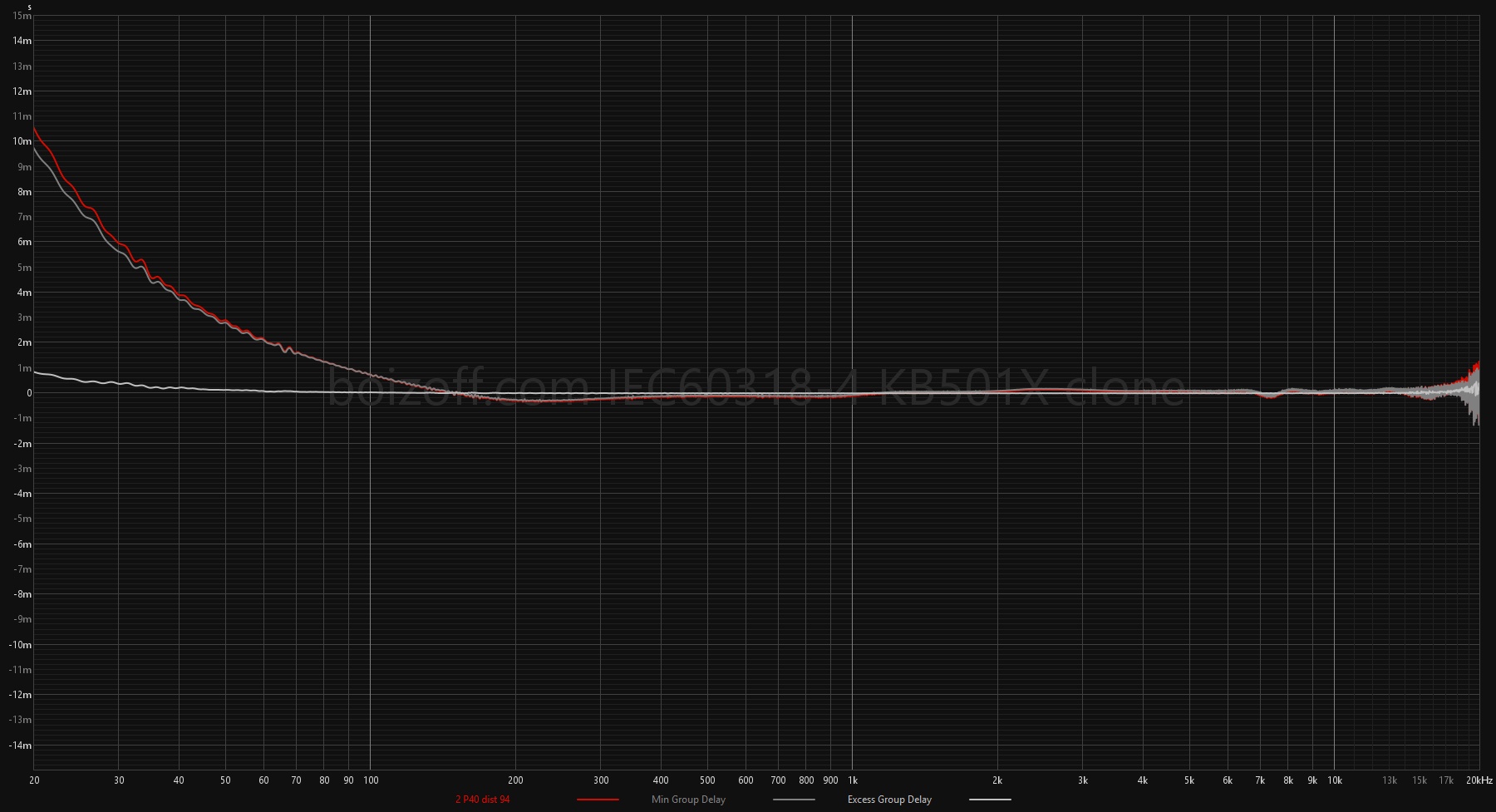
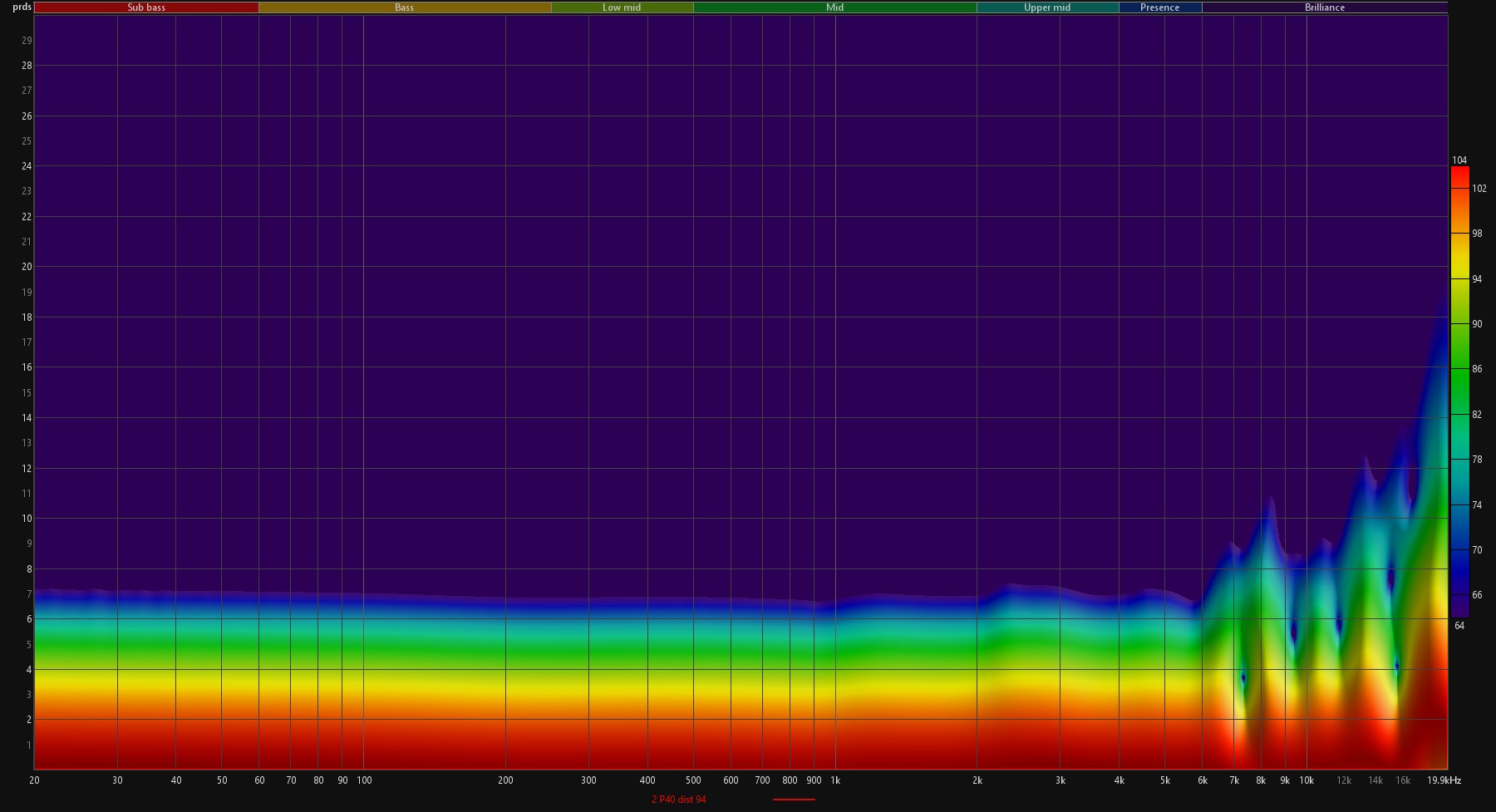
As for my take on the sound, P40 sound interesting and are tuned very consciously. The Harman curve is taken as a basis, on which a more neutral and audiophile tuning is made, so to speak. I’ll try to reconstruct the manufacturer’s idea:
- Some volume was carefully added at 1.5 kHz, so the sound became a little closer to the listener. It’s perceived as full of subtle details, but also a little harsh.
- To compensate for this sharpness, the bass volume has been raised by the same number of decibels and with a similar Q factor. The same trick has been done, for example, when tuning KBEAR Cepheus, which I will discuss below.
- The top of the midrange lies just below the Harman curve, and this area is very, very flat. Moreover, there is a dip at the second resonance, at about 8 kHz, which this resonance should smooth out. Indeed, when listening to a pure sinusoidal signal, I cannot locate this peak. When using these earphones, it literally doesn’t exist for me. Before P40, I had tested only one model endowed with this feature. It was Letshuoer × Gizaudio Galileo (excellent earphones, by the way; it’s a pity that you can’t buy them any more).
- After 10 kHz, some audiophile ‘air’ is added, that is, the volume doesn’t go down, but, on the contrary, evenly increases to the very threshold of audibility, which naturally ‘pulls out’ more information about ultra-high frequencies from any track.
My ears perceive the resulting sound delivery as neutral and funky, having an increased number of details in the middle and flavored with very clearly articulated ultra-high frequencies. The subbass is very ‘fast’ and deep due to the pronounced kick, and the sound is generally ‘cold’, intimate and analytical.
I’d like to emphasize that two conditions must be fulfilled for getting such a sound, namely, the following eartips should be used:
- Ensuring the maximum fit to the walls of the ear canal, which means the maximum possible level of subbass;
- Ensuring the maximum possible depth of the fit.
In what cases does this sound delivery ‘work’? When you have well-mixed music and a desire to enjoy it in a ‘technical’, neutral and airy manner, and there’s no need to turn up the volume because ultra-high frequencies will almost definitely be jarring. Is this sound delivery universal? No, since most tracks contain such things in the ultra-high frequency range that should never be heard. As for well-recorded music with live instruments and voices, electronics, academic pieces, all of this, when performed by P40, sounds wide, impressive, exciting, but also analytical and more or less realistic at the same time. I tell you, sometimes P40 sound as good as some other earphones for $1,000 do not sound. However, the rest of the genres are not everyone’s cup of tea: the sound is either harsh or frankly ‘dirty’, depending on the record quality.
Roughly speaking, these earphones are suitable for BADBADNOTGOOD, Eluveite, Michael Arthur Holloway, The The or The Kilimanjaro Darkjazz Ensemble, but no way for AC-DC, Apodemus, Korn and their ilk. In some music genres, you can get a sense of revelation with P40 as the music will sound so clear, so pure and expressive, but on other tracks there will be a feeling of tonal imbalance towards high frequencies.
Where P40 are peremptorily good is competitive games when you focus on the sounds of footsteps and gunshots. Here, the P40 tuning provides an almost magical advantage in terms of an incredibly clear sense of the direction and range of the sound source. Before P40, I considered the already mentioned Cepheus to be the best gaming headphones, but now I doubt it.
Comparisons
According to the best rating in the world, I will compare P40 with three models:
- KBEAR Cepheus;
- Simgot EM6L;
- Truthear HEXA.

Frequency response of P40 compared to KBEAR Cepheus:

Cepheus use a similar trick with midrange tuning, but shift the focus of the first resonance from 3 kHz to the left, to 1.5 kHz. Cepheus sound bassier, their sound is even ‘closer’, but their ultra-high frequency range is quieter. The P40 sound seems to be more detailed, but less fundamental in terms of the amount of low frequencies. And also, for me personally, Cepheus are more convenient in terms of the fit.
Frequency response of P40 compared to Simgot EM6L:

The measurement graphs reflect the differences literally: EM6L have more low frequencies, less midrange (the sound is perceived as coming from afar if compared to P40), more upper middle and high frequencies, but the expansion is not so obvious. From my point of view, the EM6L sound is sort of an audiophile V-shaped sound delivery, shifted towards neutrality, while the P40 sound concentrates on details and ‘air’.
Frequency response of P40 compared to Truthear HEXA:
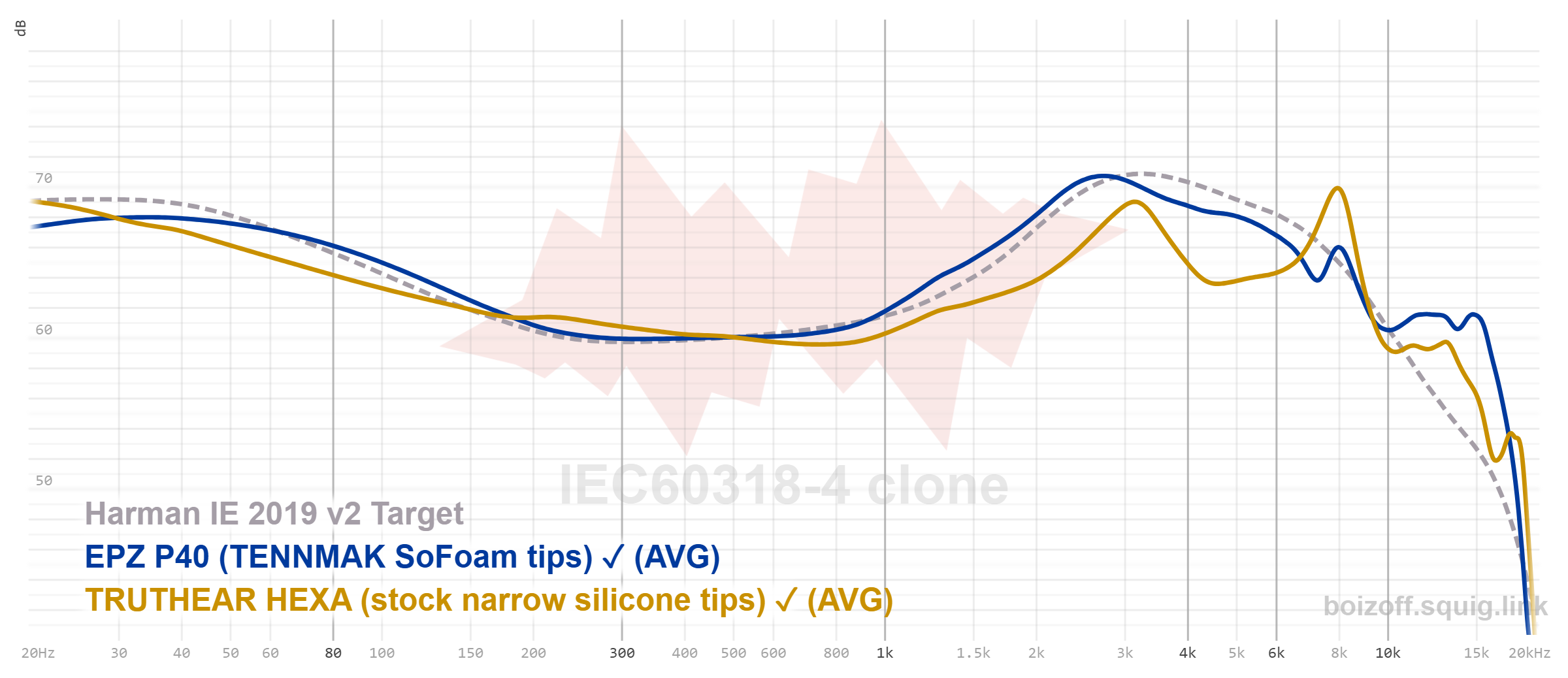
Compared to P40, the HEXA sound delivery is calm and neutral, although not as detailed. P40 sound more aggressive, more analytical, but more tedious and pungent at the highest frequencies.
Summary
I’ve said it more than once, and I’ll repeat it: it seems to me that EPZ people are taking pains. They don’t always succeed (see EPZ G30, for example), but this time, with P40, it worked by and large.
As a normal reviewer who clearly separates the objective and the subjective, I can make the difference between ‘the headphones are good/bad’ and ‘I liked/disliked the headphones’. P40 are very good headphones that left me cold. Despite the obviously intended tuning, the manufacturer failed (to my taste, for my ears and ‘my’ music) to correctly adjust the ultra-high frequency range: it’s somewhat intrusive (for my hearing), and at high volume it’s simply tedious. Therefore, I would call P40 genre-specific earphones with a ‘subjective’ sound delivery. P40s are configured prudently in a good way, but specifically and not universally.
If we’re not talking about the sound, then I can’t say anything bad about P40 in terms of ergonomics, aesthetics, cable quality, etc. Everything is just great.
To buy or not to buy: to buy, but it’s better to try them on first.


