


Zaylli LYRÖ On-Ear Headphones Review
Zaylli LYRÖ burst into my echo chamber suddenly and rowdily. In mid-2025, some first news appeared as thematic forums were filled with ads and discussions, and in early 2026, the Hong Kong startup started a fundraiser to create an on-ear model with an uncompromising sound. In 38 days, as much as 2,600% of the plan were collected. What seduced me personally was that the guys started right from the frequency response charts. The measurements looked impressive, and for the company’s first product, they were just excellent.
Today, we’ll try to figure out what Zaylli really managed to make.
Welcome Zaylli LYRÖ, on-ear wired headphones for $224 (on the manufacturer’s website) – or, rather, that’s how much the version that has come into my grasp costs – with a metal headband, ‘regular’ earcups, and an analog cable. I’ll tell you about extra accessories in the respective section below.
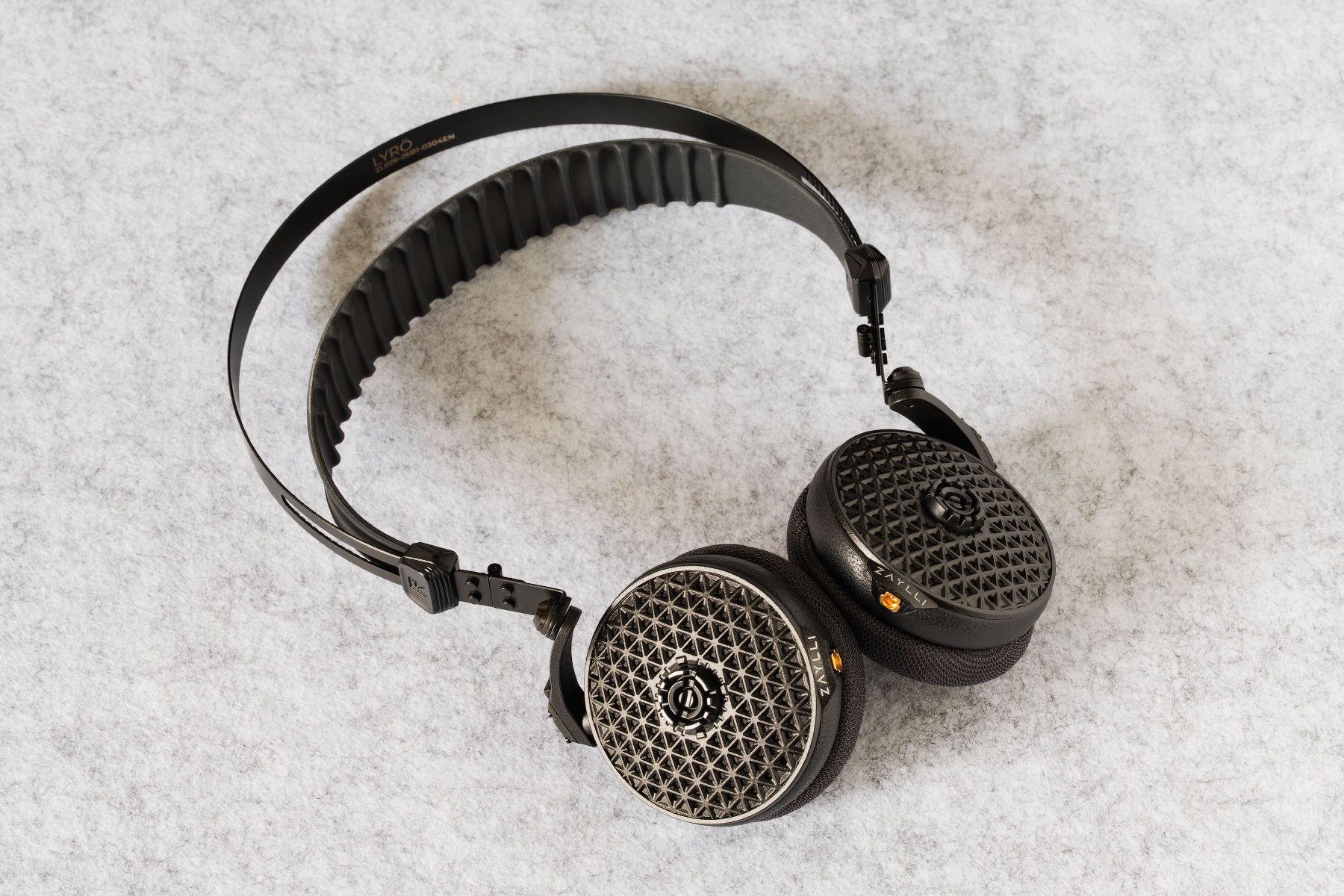
LYRO are not officially sold or even supplied in Russia, so one will have to use the services of buyers to purchase them there.
Many thanks to Dmitry who sent me these headphones and without whom this review would not have been possible at all. Big up!
All but the sound
The headphones come in a small, hard case that lets you put both the headphones themselves and the cable inside. And there’ll be even some room left for a small portable DAC.
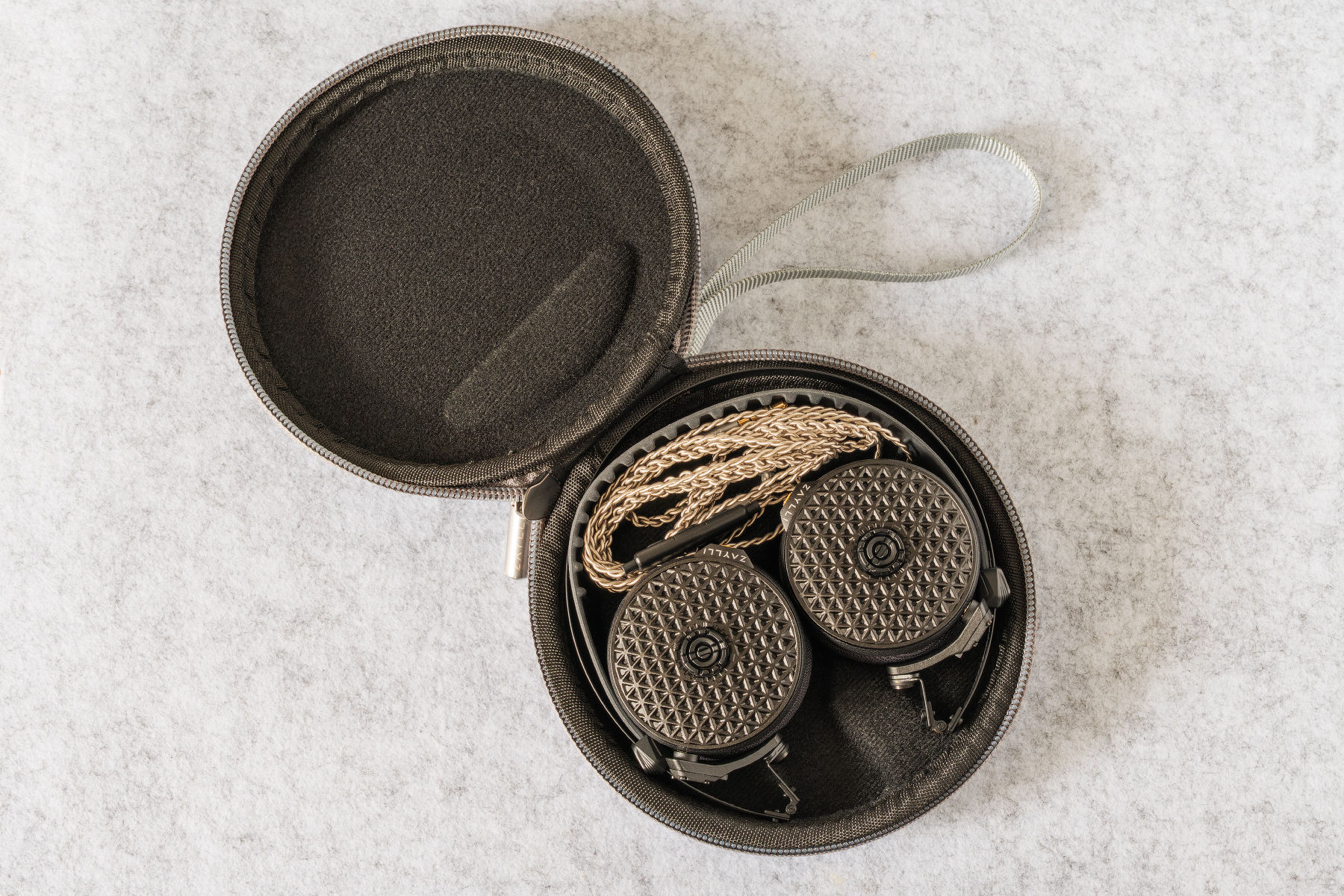
The case is so compact that it’s hard to believe in the very possibility of somehow stuffing the headphones into it. Its diameter is only 14 cm, and it’s 3.8 cm thick. This is how it looks next to a regular eartip box:

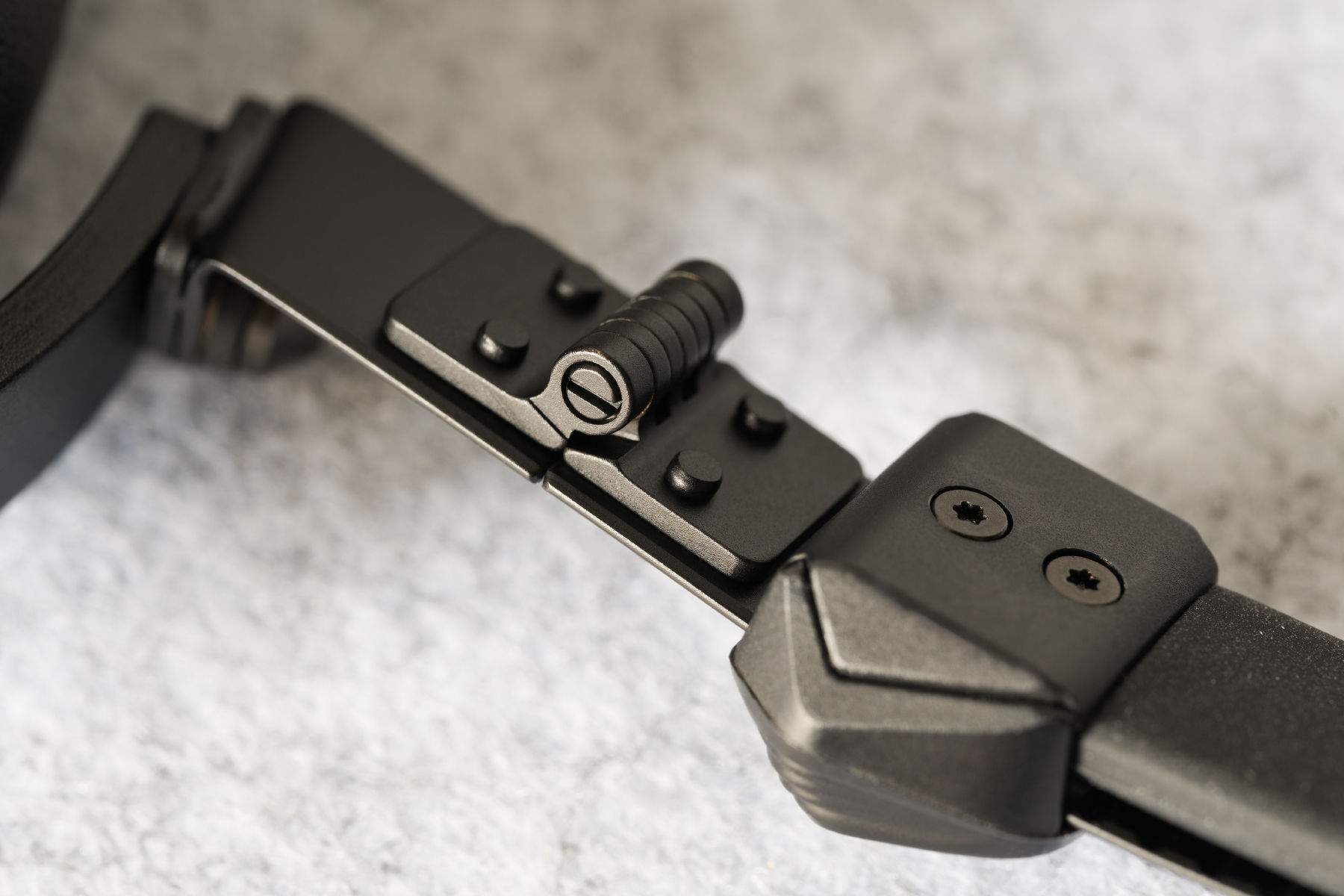
The trick is simple – the headphones can fold. The steel headband has one bend point and two swiveling joints with stoppers: the bend makes it possible to fold the earcups inside the headband, and the swiveling joints are used to adjust the earcup positions with high precision.
From the first seconds of use, it becomes clear that LYRÖ are made very, very well. Almost all the elements are fixed and connected with screws.
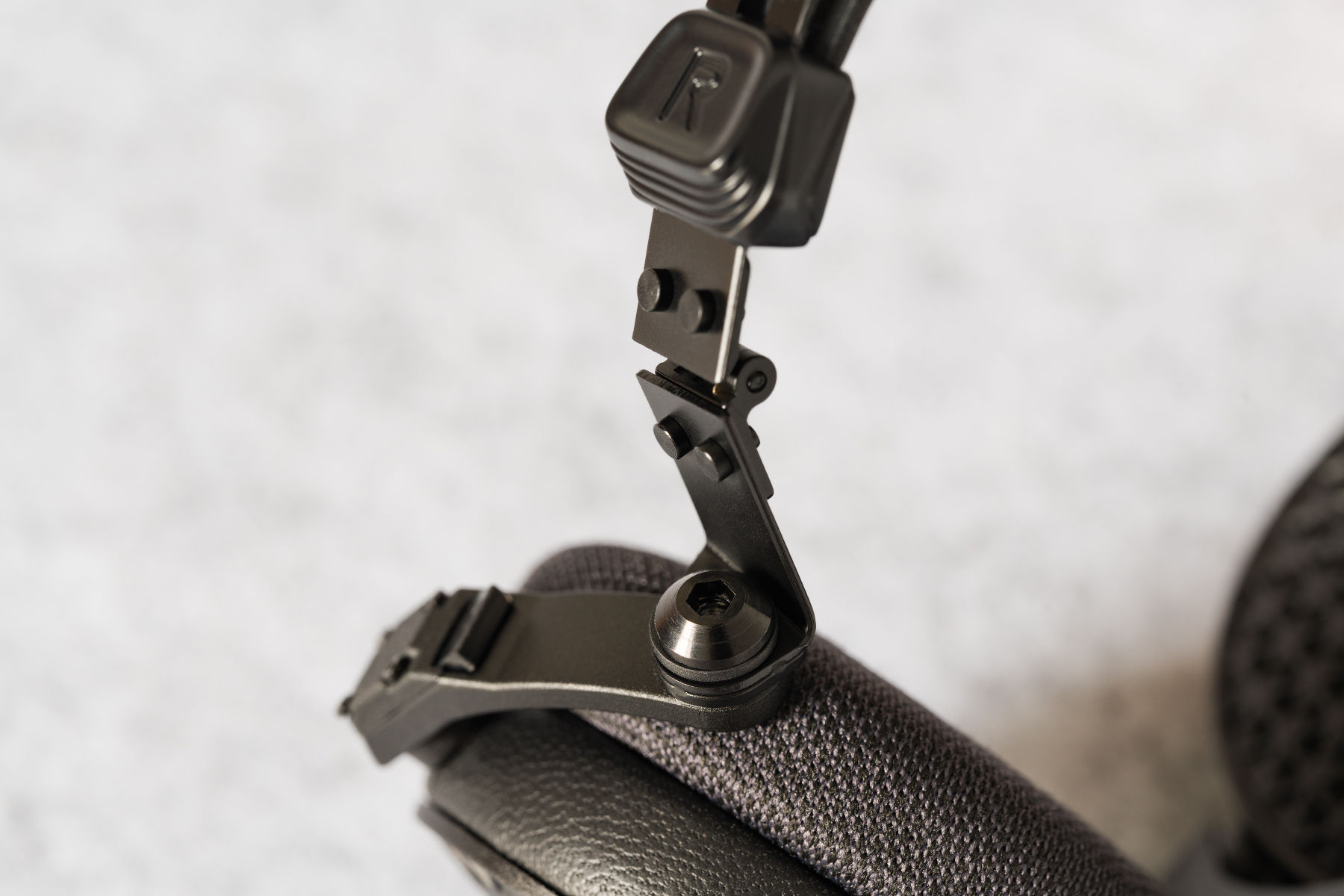
The earcup mounts seem to be the only exception I found, which are fixed with rivets. (I assume that’s due to the increased load on this node that rivets with wide caps had to be used). But even in this case, a screw is used inside the loop hinge instead of a normal smooth pin. The earcups are aluminum, by the way.
There are small slider buttons on the mounts over the earcups.
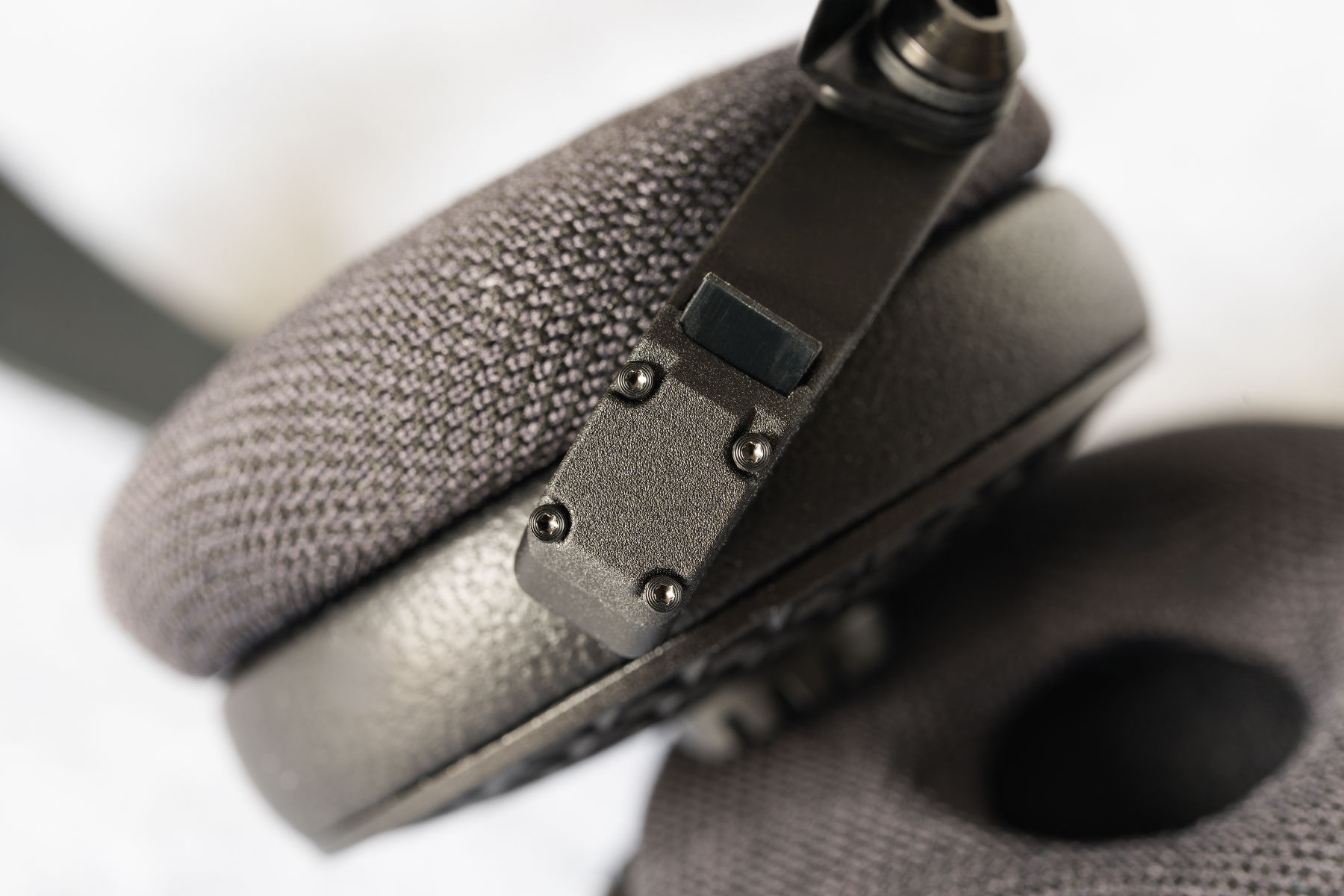
They detach by pressing.
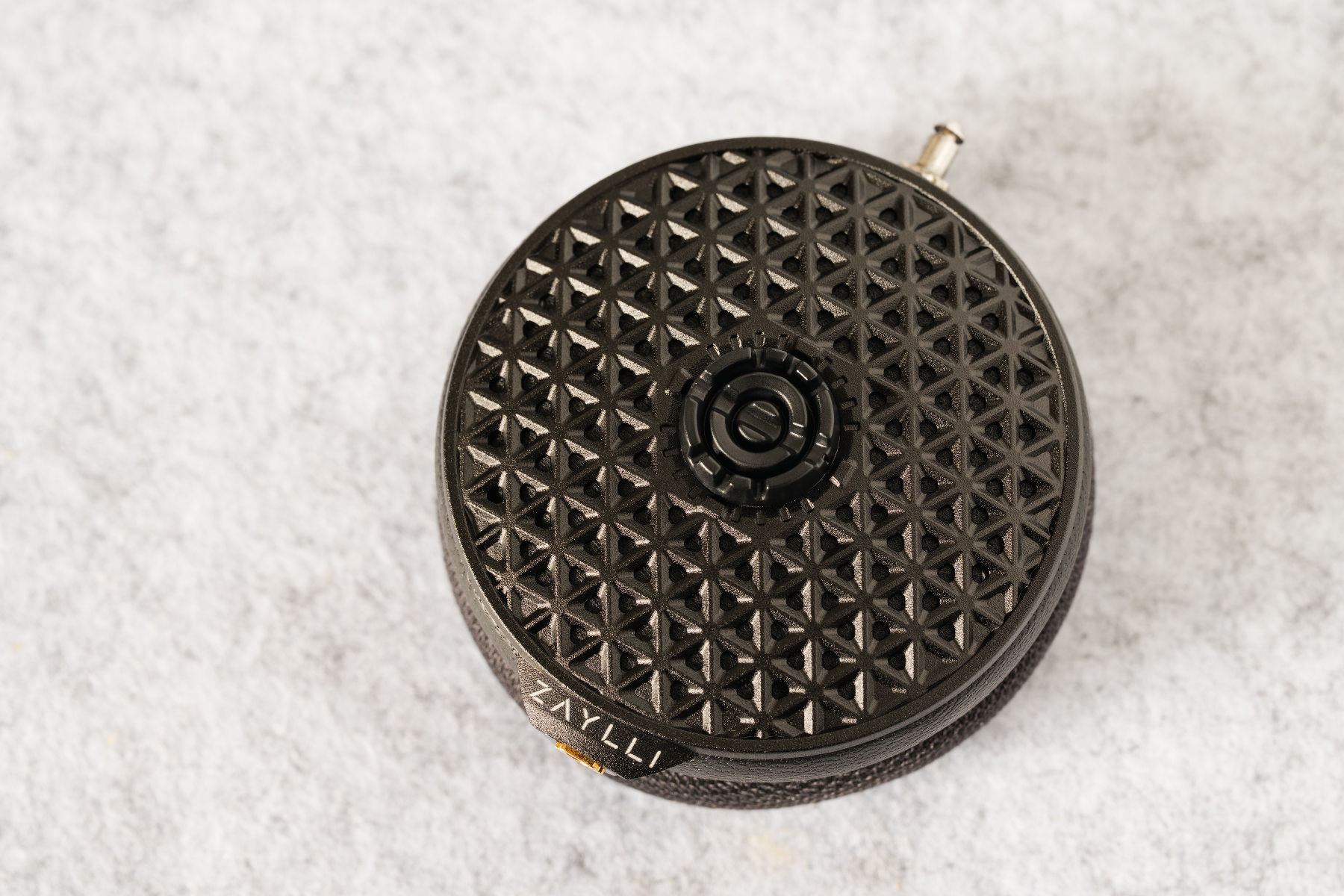
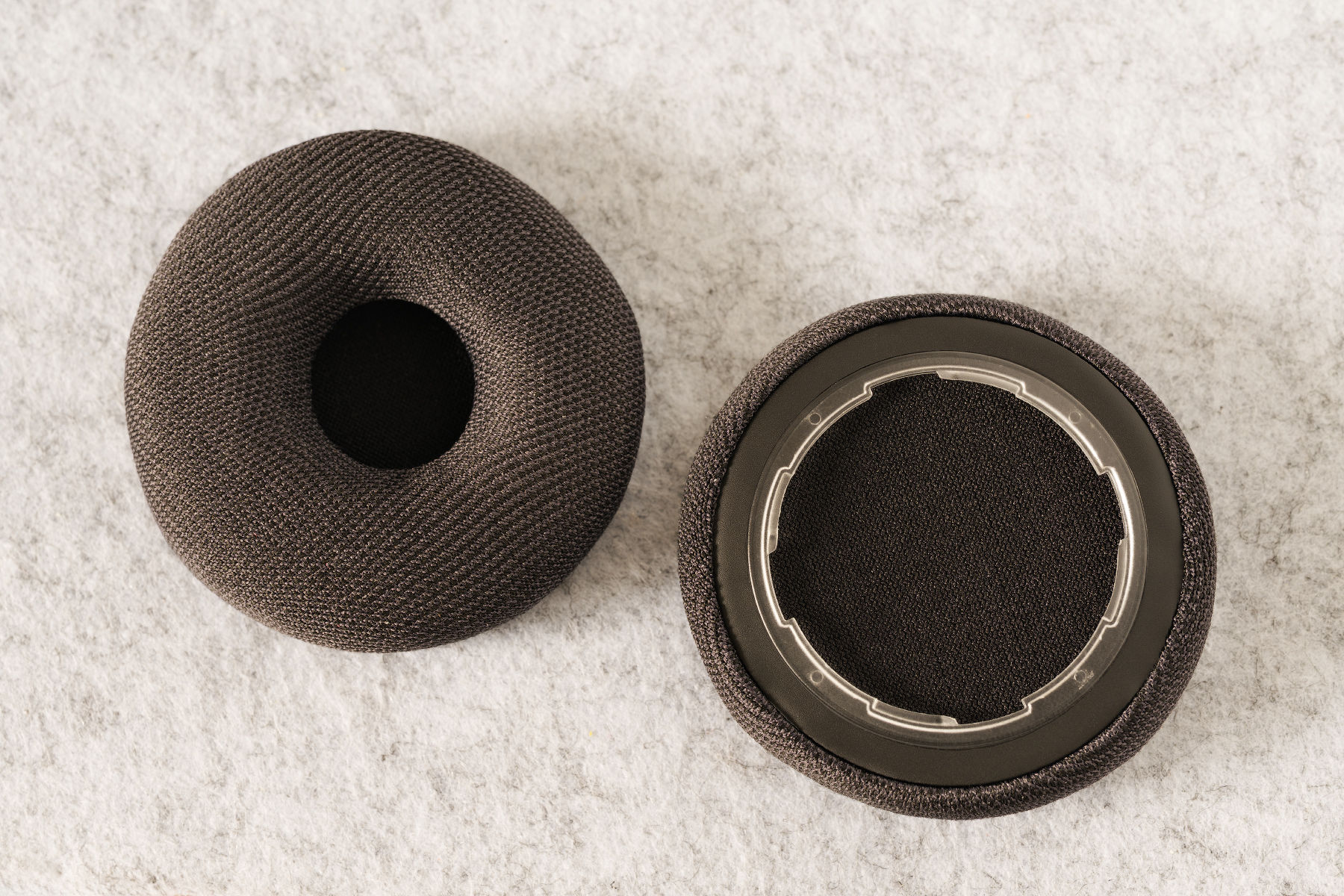
Then you can remove the earpads by turning them. They are attached on plastic latches.
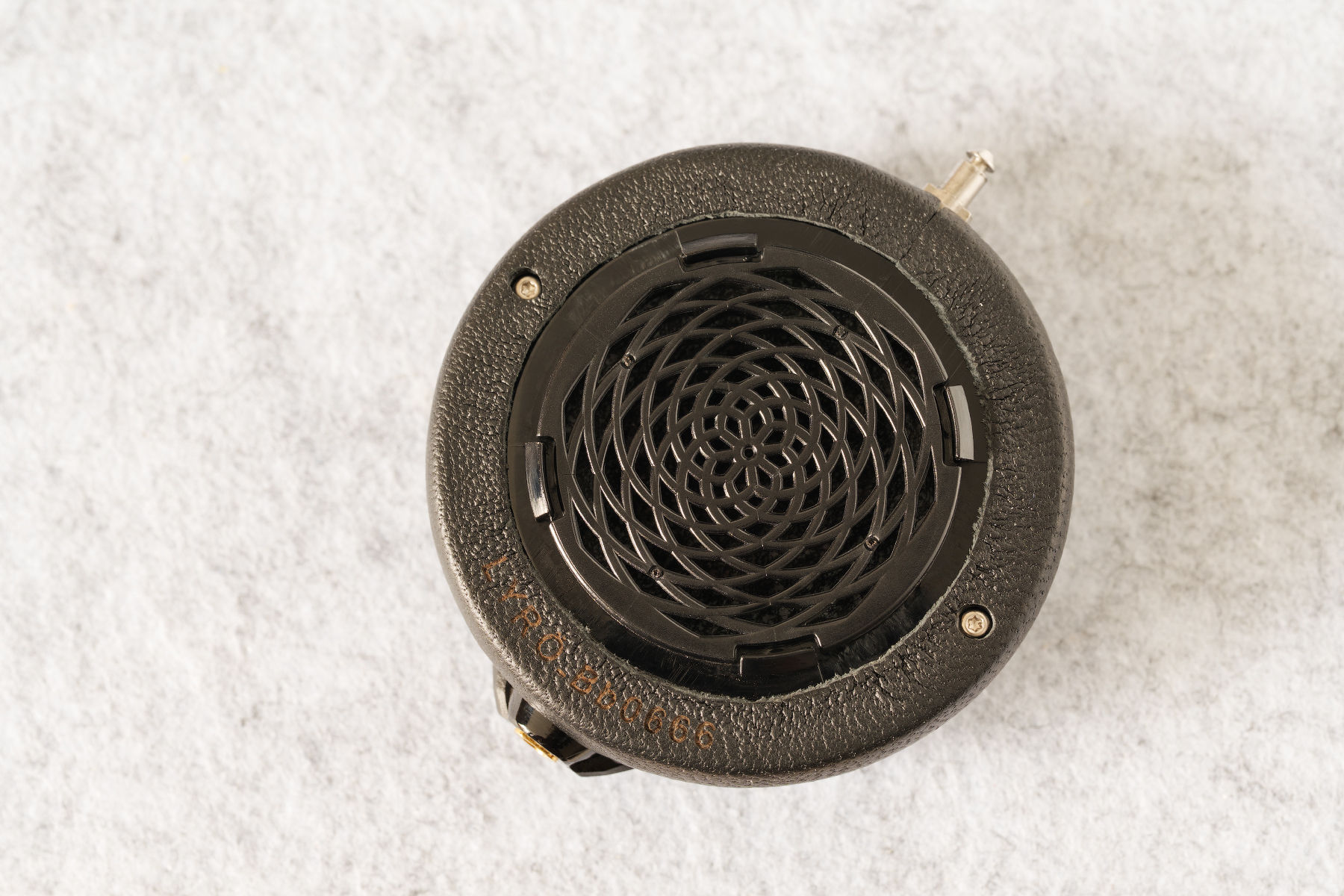
There is a tuning wheel on the outside that lets you change the sound delivery of the headphones.
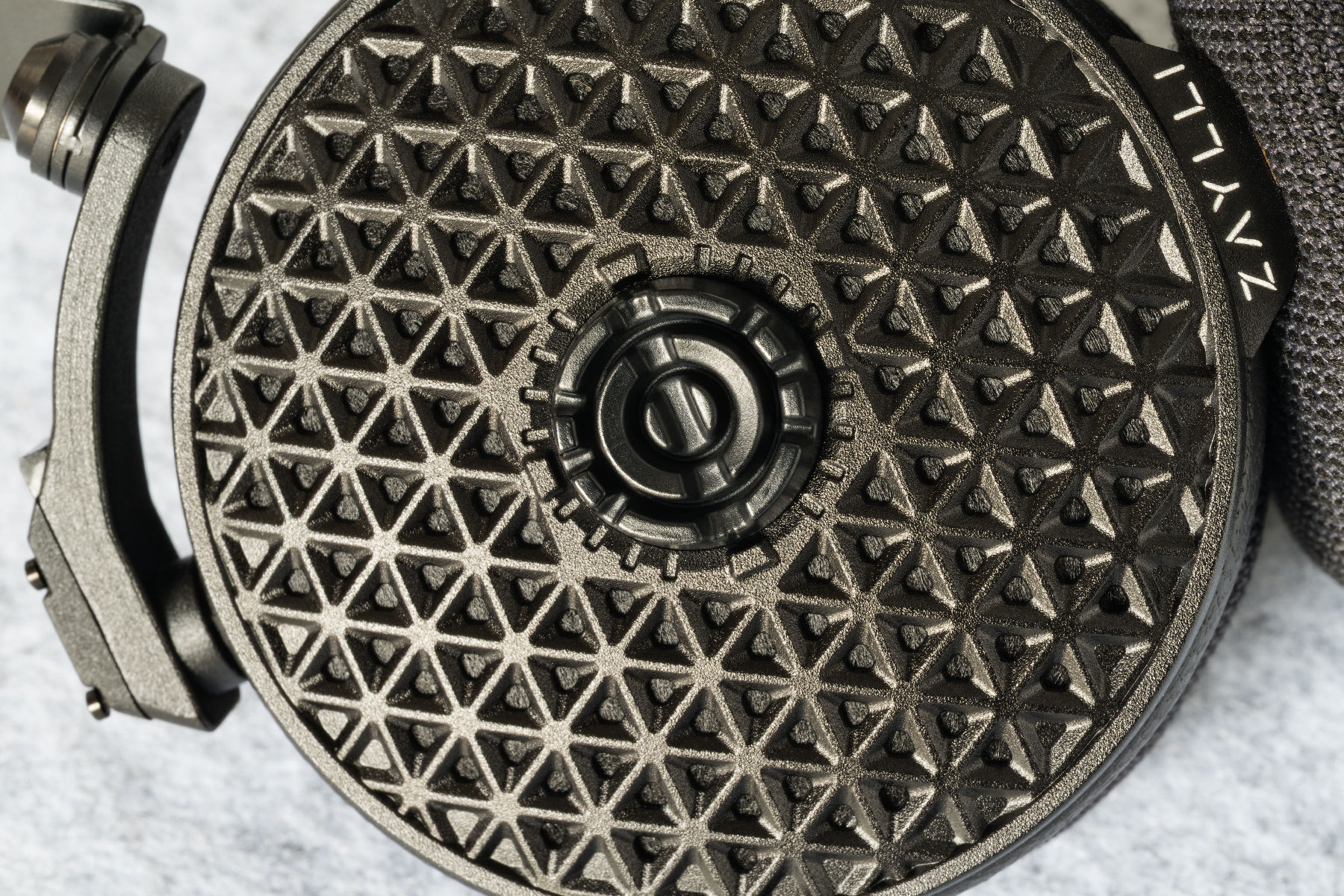
Of course, we’ll talk about how it works and how it affects the sound further down.
On the bottom of the earcups, there are MMCX connectors for the cable.
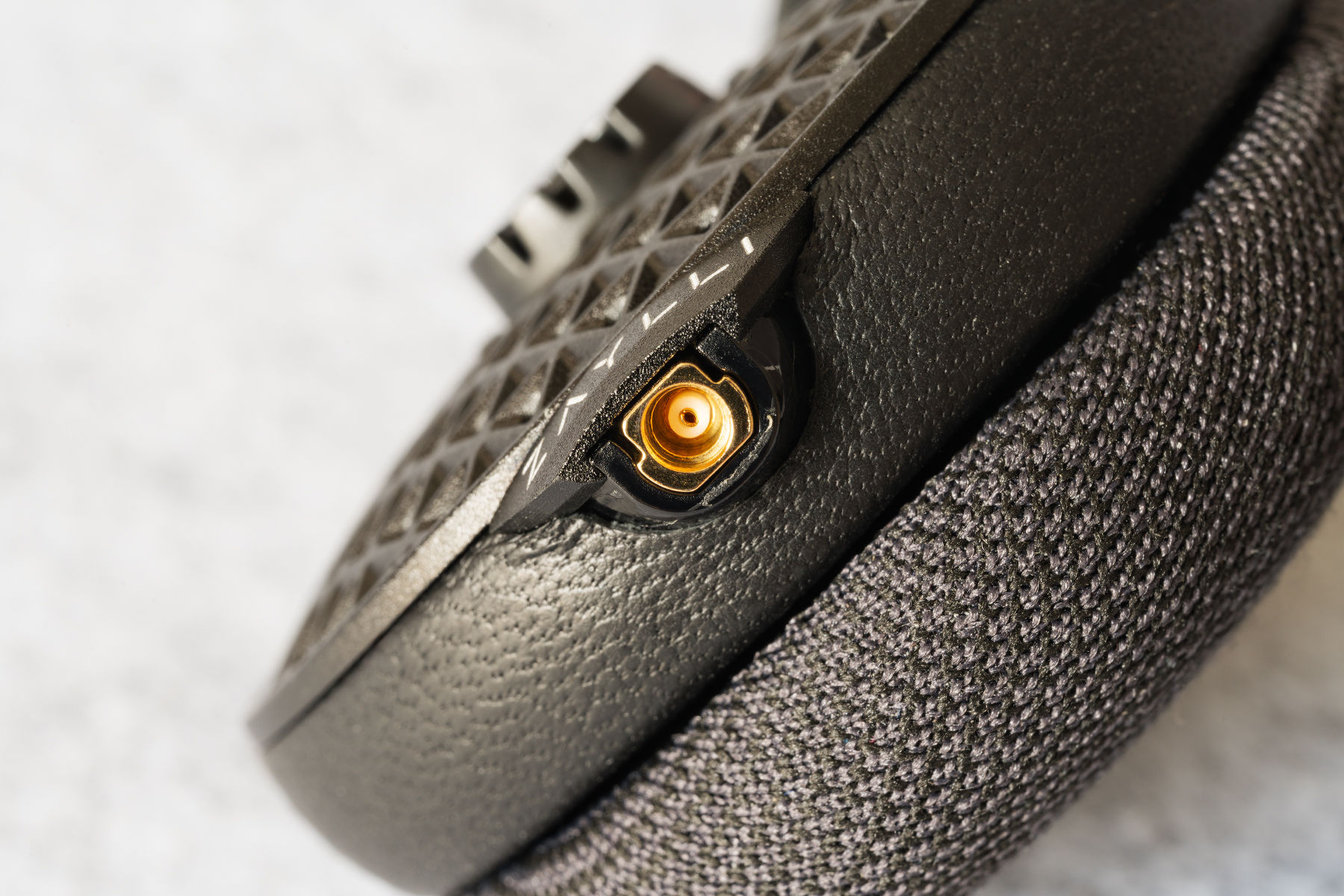
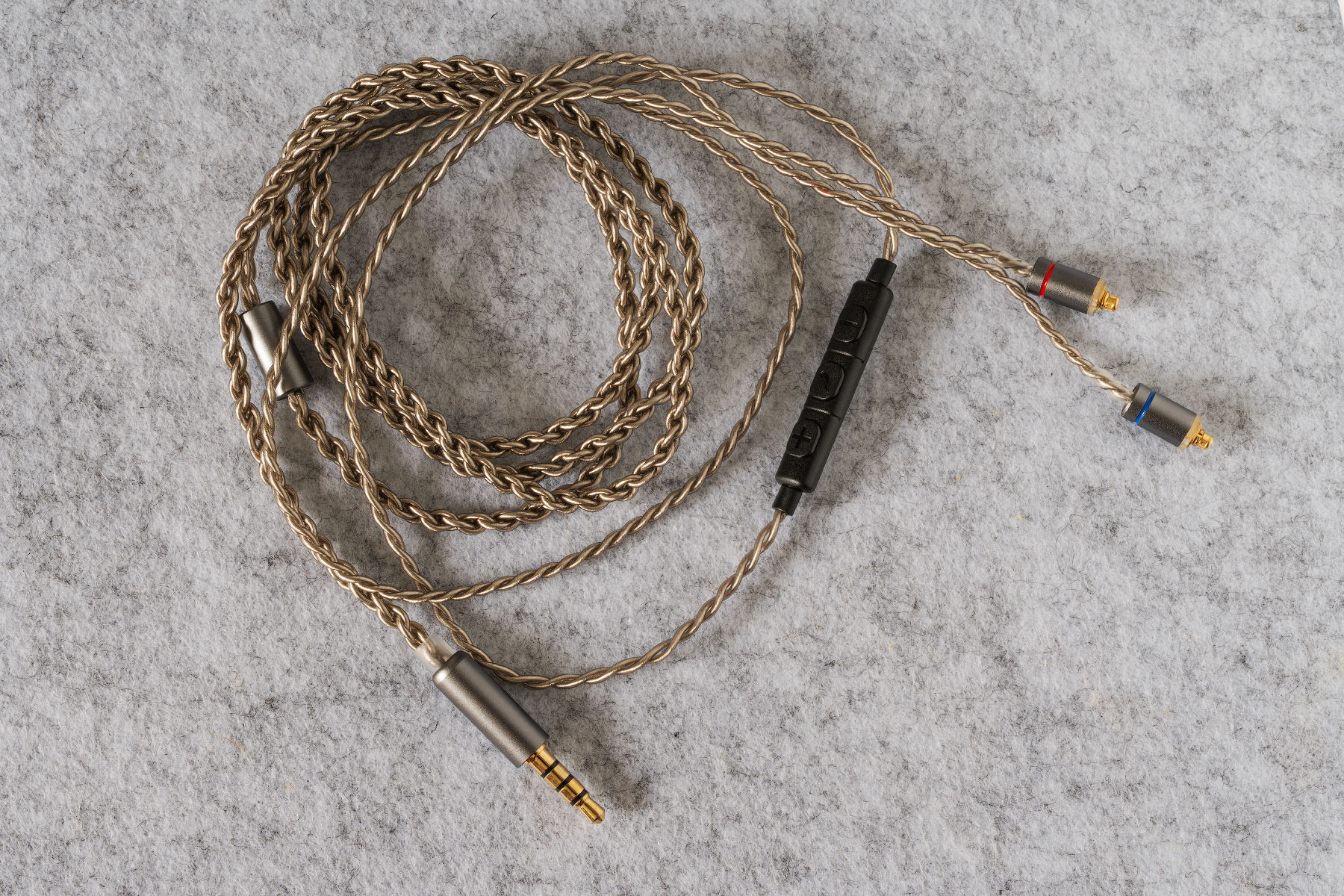
The cable is just over 120 cm long. There is a simple analog remote control with three buttons and a microphone dangling on the right channel. The connector is, respectively, TRRS.
The last element of the LYRÖ design is a silicone pad on the headband.
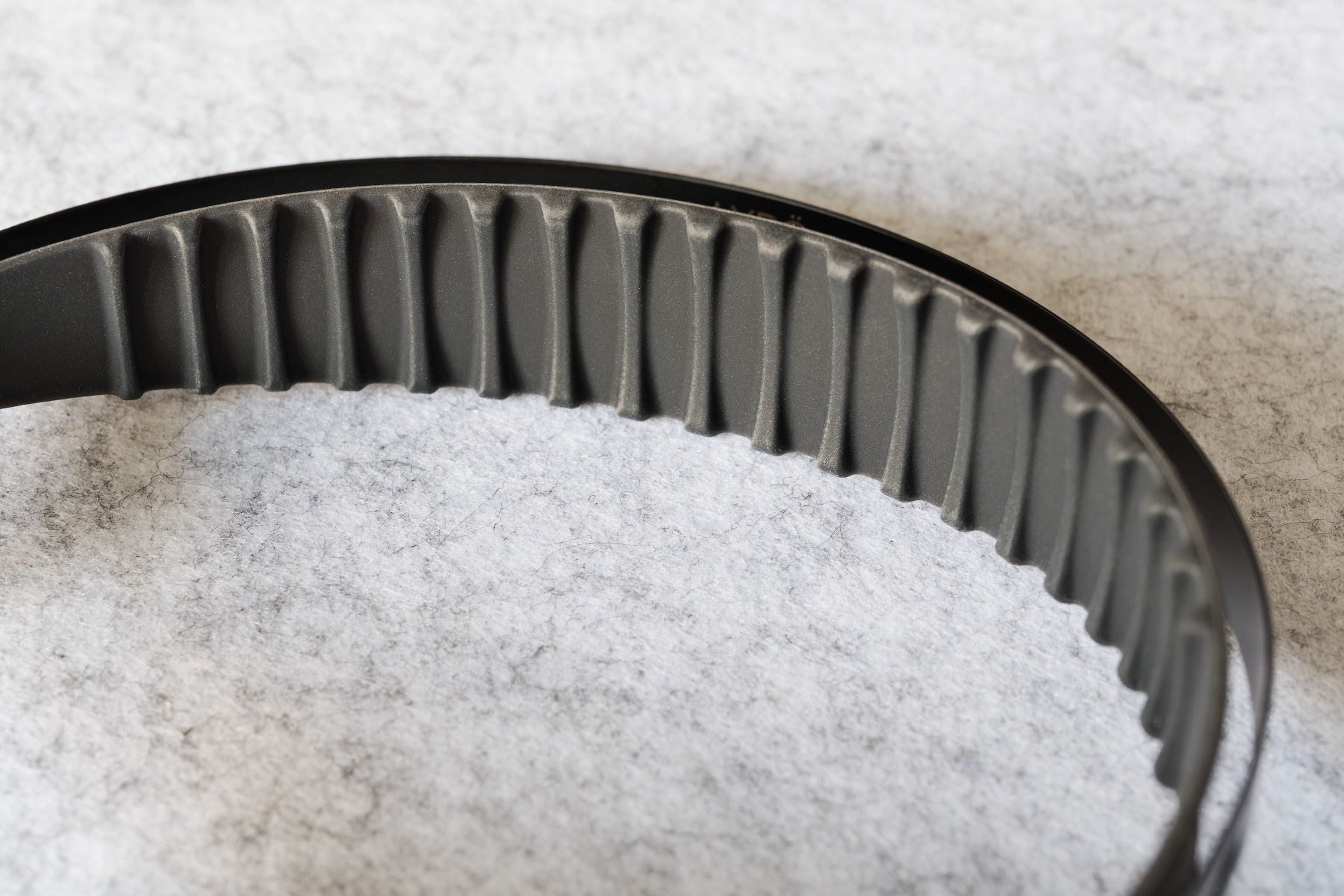
Its position is adjusted by discrete divisions on the left and right of the headband. There are 19 divisions on each side, so the height of the fit can be adjusted precisely.
In terms of workmanship, LYRÖ are an example of how to design and produce headphones that are functional and high-quality at the same time. Aesthetically reminiscent of expensive, brutal glasses or multitools, LYRÖ seem to be able to withstand carrying in a backpack without a cover, putting it on your head with one hand, and other stresses that arise from careless handling.
From an ergonomic point of view, I have a lot of questions, but not about LYRÖ, but about headphones of this form factor altogether. As for this very model, taking into account its weight of 111 g (without cable), gentle pressure, and soft earpads, LYRÖ are quite capable of feeling comfortable on your head for at least 6 hours (I personally checked it). What I didn’t like:
- The sound tuning wheel turns smoothly so you can’t switch it blindly – you need to see the marks on the earcups in order to turn the wheel at the same angle on both earcups. Otherwise, you may get different sound in the left and right channels.
- The swiveling joints of my review sample had different friction and required different forces: the right one held the earcup rigidly, while the left one shifted its position quite freely just under the weight of the earcup. It’s not clear which option was intended by the manufacturer and which one can be considered a defect.
- The fit is not secure enough to fix headphones on your head when walking vigorously. It might be a feature of my physiology, but with intense movement, the headphones noticeably wobble on my ears, and this, in its turn, affects the change in frequency response (see below) and makes you periodically adjust the headphones on your head.
A couple of words about the electrical specs: the manufacturer only specifies the sensitivity, which is 112dB SPL/V (500 Hz). However, the situation with impedance is interesting, as it’s variable. And yes, that’s how the headphone sound tuning works. The wheel regulates the impedance using a variable resistor, which mainly affects the sound delivery of the low-frequency component. The picture below shows the impedance when the wheel is positioned horizontally, turned to the first and third marks, as well as positioned vertically, respectively:

Thus, at 1 kHz, the impedance of LYRÖ (+cable) is 36 Ω, but at 45 Hz, it varies from about 38 Ω to 48 Ω.
Let me note that you can turn the wheel in any direction, that is, at a positive and negative angle – the change in impedance will be the same.
Accessories
A few words are in order about accessories.
Actually, scratch that: Zaylli isn’t just selling headphones and accessories. They are selling a system of components designed to let users tailor the headphones to their exact needs..
- Headbands: there are two types available. The first is like the one I have, and the second is a neckband style that wraps around the back of the head instead of going over the top. With the latter option the weight of the headphones drops to just 85 grams.
- Cables: a cable with an integrated DAC is available (complete with an app featuring a parametric equalizer – they really nailed it with this one), as well as a detachable boom mic. Cables with 4.4 mm connectors, cables without a microphone, and proprietary DACs are all available too.
- Interchangeable earcups: technically, they are earpads, but they essentially expand the surface area of the cups to improve wearing comfort. Put simply, they turn these on-ear headphones into ultra-open-back ones, sort of like the RAAL SR1a. Judging by third-party measurements, they change the sound as well.
Unfortunately, there’s one component missing from this list that I thought of immediately: a wireless module. Hopefully, the manufacturer has plans to produce one.
Naturally, all these bells and whistles cost money. Let’s crunch the numbers to see how much it would cost to build a LYRÖ-based stationary listening kit:
- LYRÖ themselves with the ‘regular’ steel headband – $249.
- Type-C cable with a boom mic (and we want the equalizer from its built-in DAC) – $69.
- LYRÖ MX interchangeable earcups – $99.
That makes $417 in total. Let’s keep that figure in mind.
The sound
Standard links:
- the description of my rig is here;
- the audiogram of my hearing is here;
- articles on measurement theory and the whole shebang are here;
- some fine points of over-ear headphone measurements are here.
Frequency response of the LYRÖ headphones with the standard (horizontal) position of the tuning wheel:
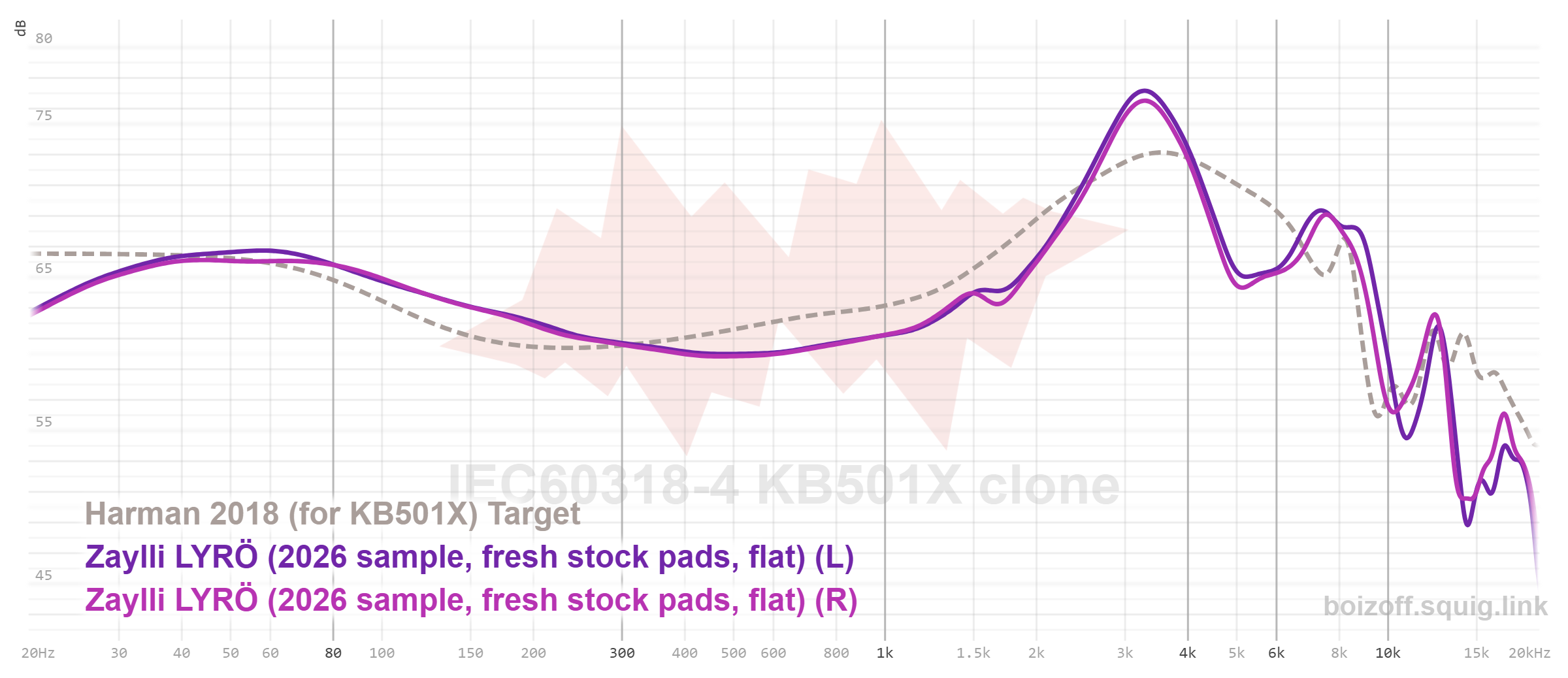
The headphones are on-ear, the fit is unstable, so the slightest shift of the earcup on the ear/measuring rig leads to a significant change in the frequency response. The curve shown above is obtained by averaging out twenty measurements:
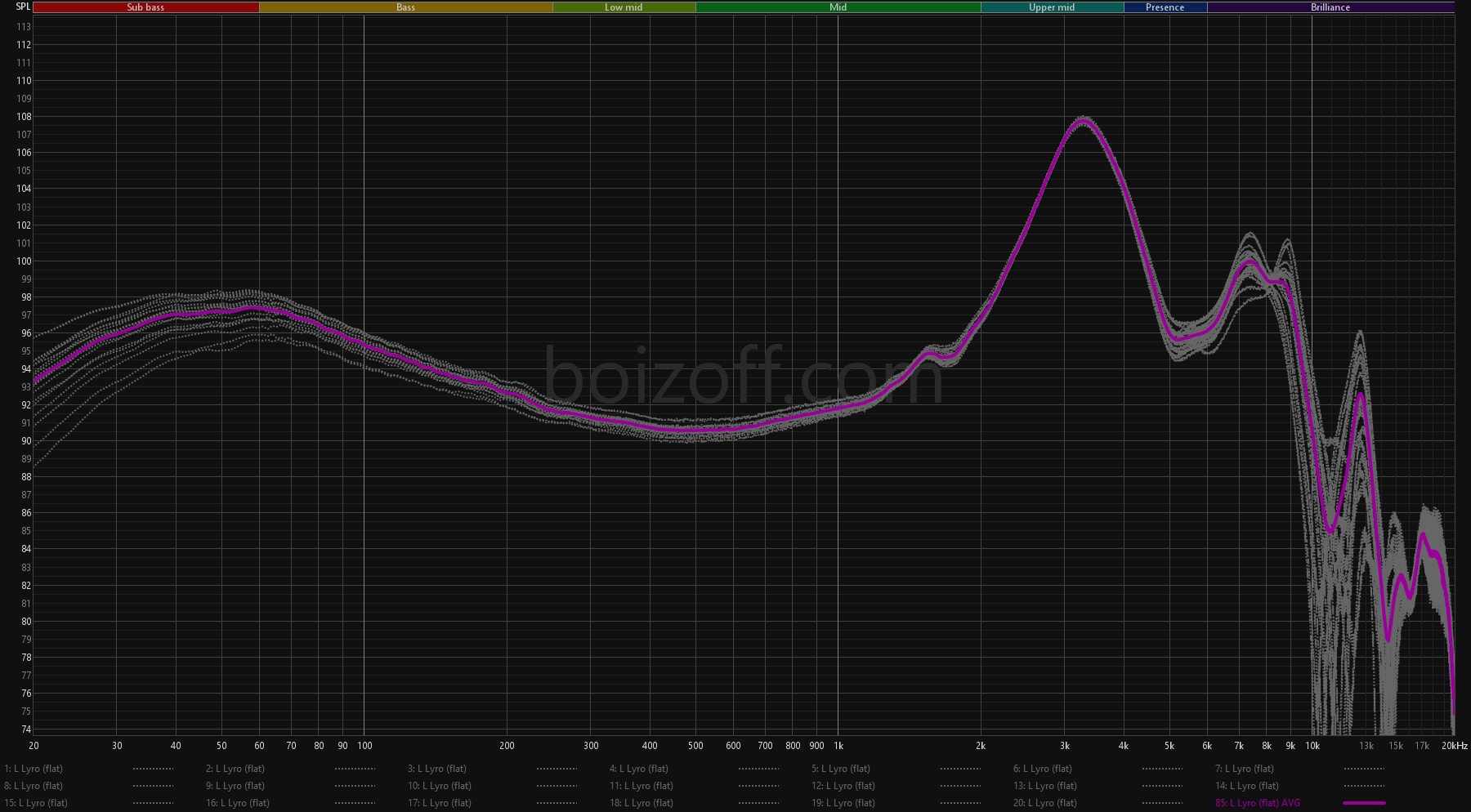
This sound delivery is more or less preserved for the range of 300-500 Hz – in this area, the volume range fits into a relatively narrow bracket of ± 2 dB. On the subbass, we have ± 4 dB; after 5 kHz, even more. And the point is that the user will not hear the average frequency response, but some specific variant of them all.
Frequency response of the LYRÖ headphones when turning the tuning wheel by 2 and 4 divisions:
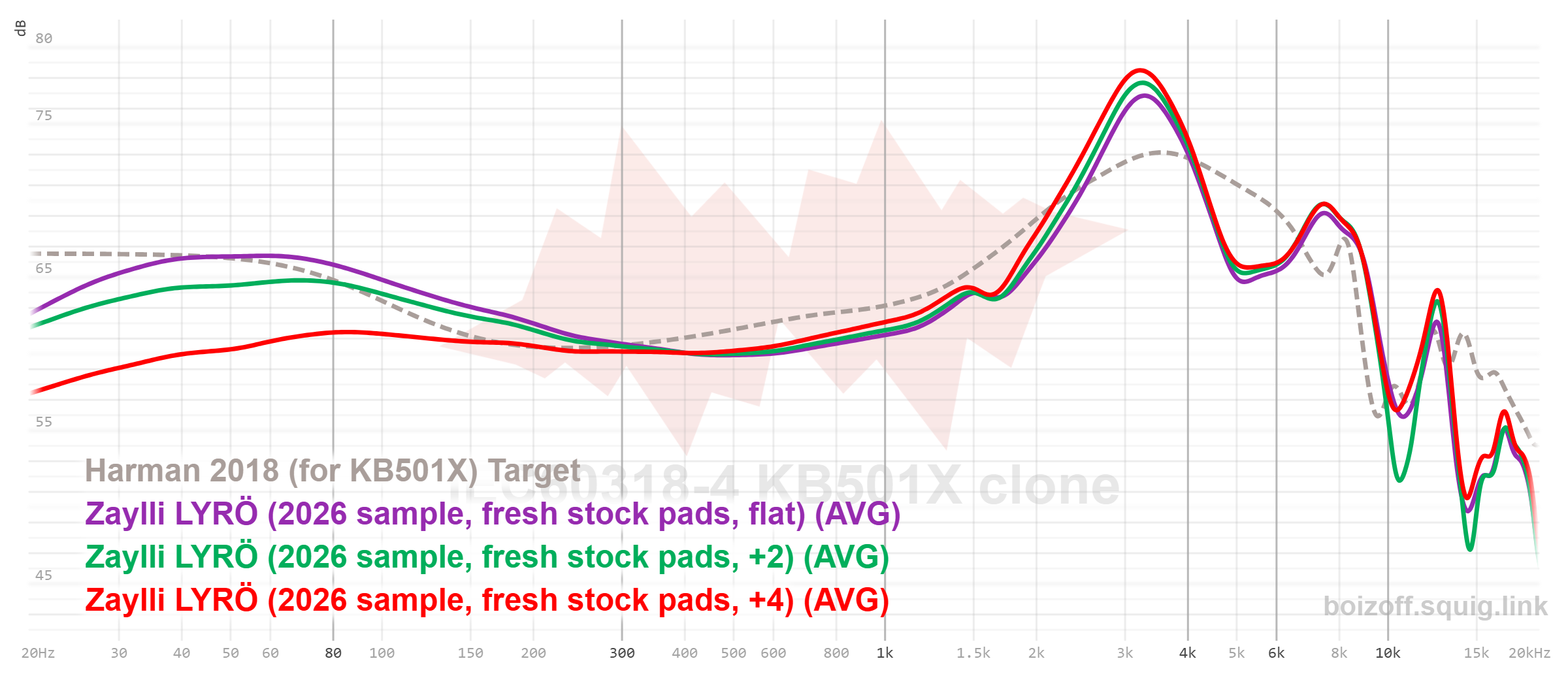
Here we can see that the closer the rotation angle of the wheel is to 90°, the closer the LYRÖ frequency response is to a pure diffuse field. By and large, the wheel works as a bass regulator.
The sound of the headphones is excellent. LYRÖ have a very comfortable, warm, slightly tonally simplified sound delivery that will immediately appeal to a large number of listeners. The ‘fullness’ of the sound is a delight of its own: LYRÖ have a clear powerful bass and even some subbass. Yes, you’ll have to spend some time finding the correct position of the headphones on your ears, but still the result is incredibly good, especially for an on-ear model.
With the standard tuning, the headphones’ sound relies on dominant bass and a clear midrange that doesn’t have narrow dips or rises. There is a lot of bass; I even screwed it down to the first division for listening in a quiet room. For outdoor use, the default bass tuning is good. It masks a bit of the city noise. The focus on the frequencies around 3 kHz looks significant, but in reality it’s balanced by the delivery low frequencies (unlike others). An accent at about 8 kHz is audible. It’s small, it doesn’t irritate the ear, but it gives the sound some lightness and volume.
There are some drawbacks, too. I called the sound delivery simplified for two reasons:
- The rise on the bass starts early, the bass crawls onto the midrange, which predictably leads to some mumbling on some tracks. And it’s not about the amount of bass, but about the frequency at which the low-frequency ‘cutoff’ begins. It should be shifted to the left.
- There’s a lack of uppermost frequencies after 10 kHz. Some subtle sound nuances are not audible.
Besides, the musical content of aggressive genres can sound a bit loud and intrusive – the added 4-6 dB in the area of the first resonance, at 3 kHz, are audible even with a good overall frequency balance.
Let me note that even with the chosen form factor, LYRÖ manage to provide a large-scale, unexpectedly wide and… ‘3D’ sound, so to speak. It’s worse than the one some similarly priced open-back models can provide, but it’s excellent for its format.
I’d like to emphasize once again: all of the above is true for the fit option that I personally have, and it takes about 2-3 minutes to find it ‘by ear’ every time.
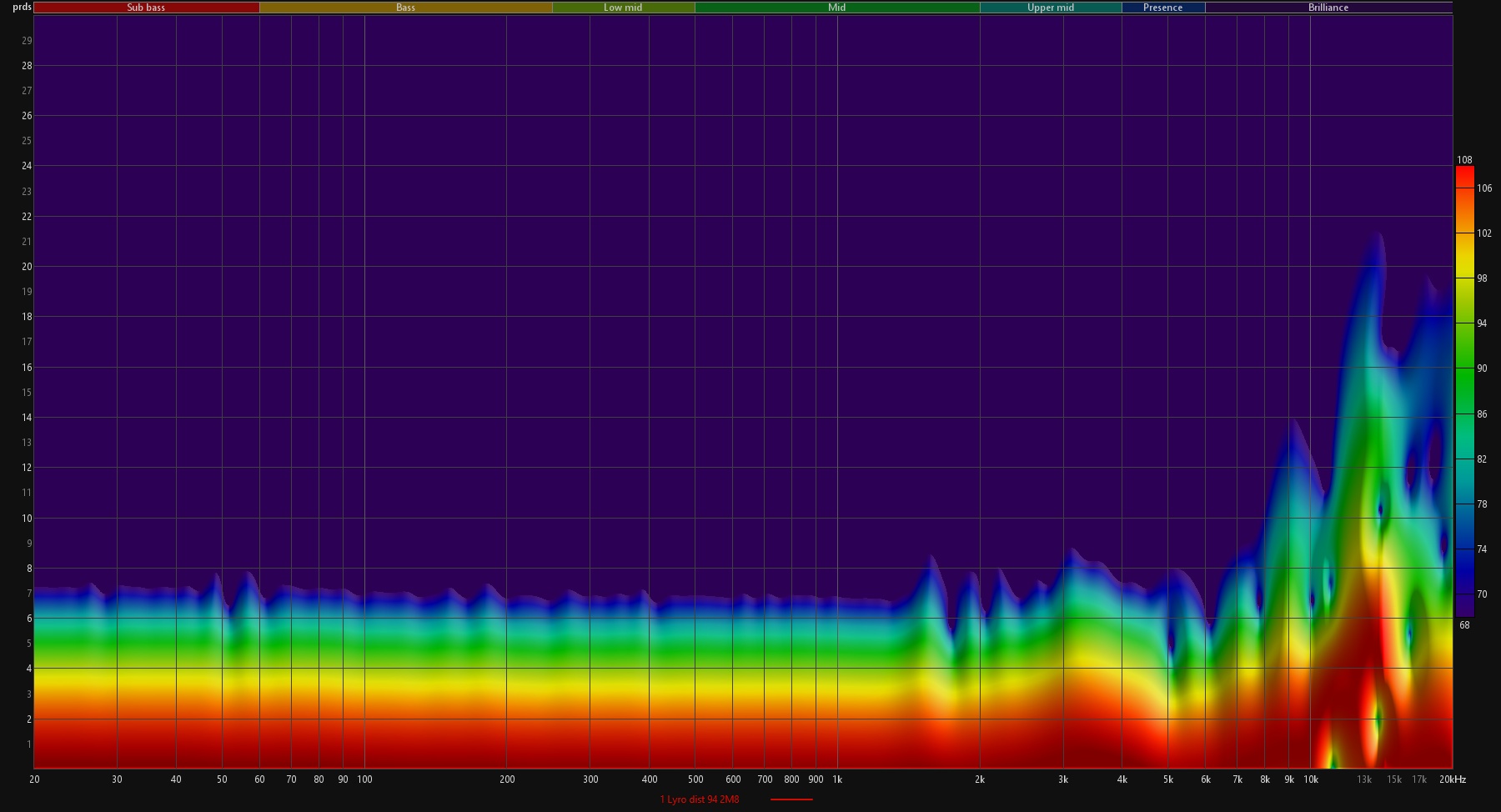
Nonlinear distortion at 94 dB with the ‘Use harmonic frequency as ref’ option turned off and on:


For a small 40mm dynamic driver and an open-back design, I’d call this result amazing. The distortion does not go beyond 1% between 60 and 20,000 Hz, and the lowest frequencies stay below 2%. Yes, there’s almost no room to blow, to increase the volume for the subbass. But then you can easily arrange the frequency response between 300 and 2000 Hz, as well as adjust the ultrahigh frequencies.
Nonlinear distortion at 104 dB with the ‘Use harmonic frequency as ref’ option turned off and on:


The distortion level rises to 5% on the subbass and jumps to 3% at the top of the midrange.
Phase response, group delay, and spectrogram in the ‘Burst decay’ mode:

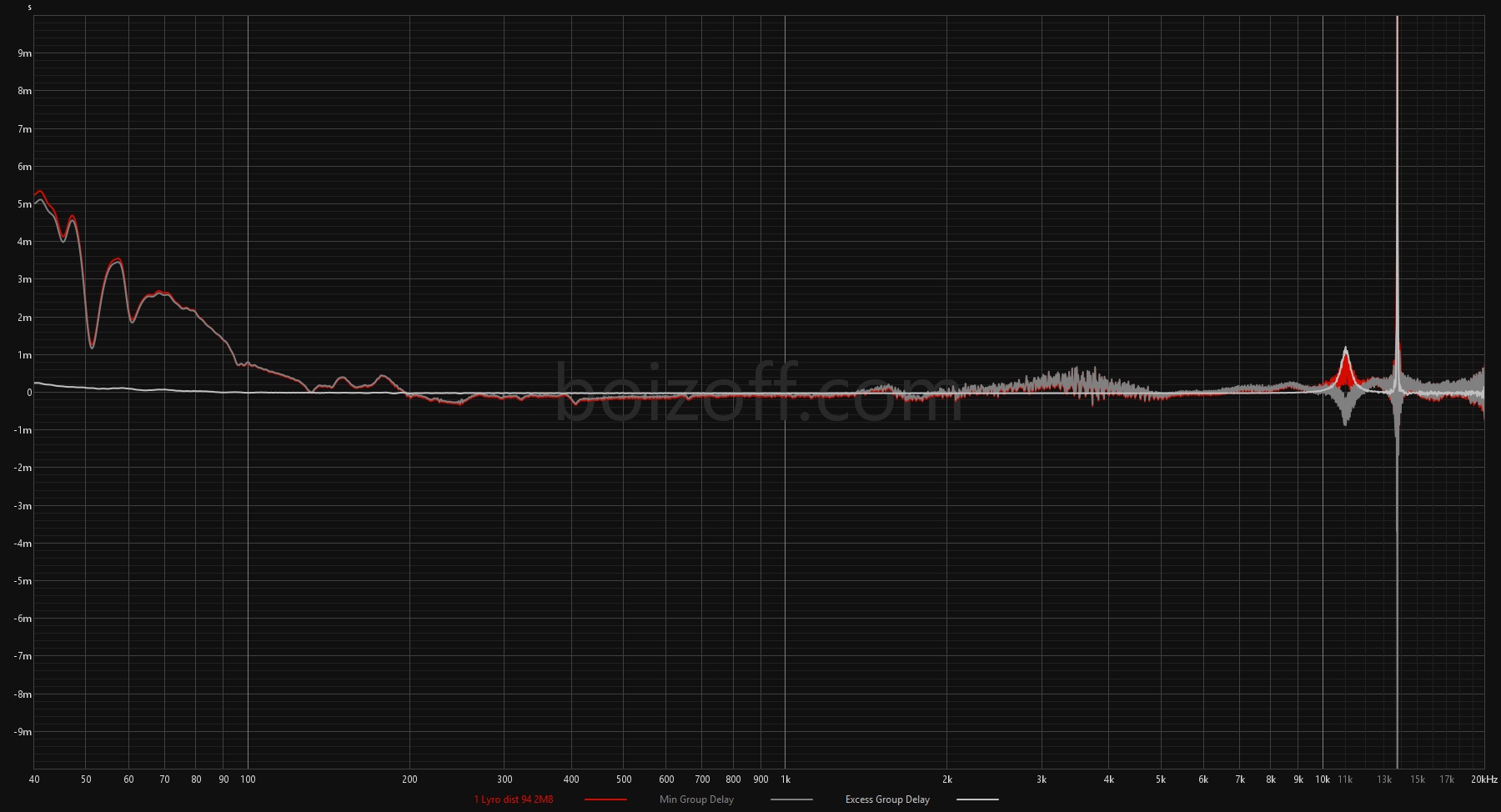
There’s not much to comment on here.
Next, I’d like to critically look at what is most important in case of this model, and this is the concept of the form factor of on-ear headphones as such.
The concept of on-ear headphones
Basic statements:
- On-ear headphones are great as a portable way to listen to music. At least, that was the case at the time of their introduction in 1968 (it seemed to be Sennheiser 414).
- Therefore, the key features of on-ear headphones as a portable device are versatility of ergonomics, leniency towards the power source, and reliability.
- And the inherent disadvantages are almost non-existent sound insulation (what’s important, in both directions, from the listener to the outside and vice versa), fit instability, and the resulting instability of the sound signature.
In 2025, the Zaylli company has appeared, claiming to create headphones where they “fuse studio-grade sound with hearing-safe design and all-day comfort”, that is, a model with increased comfort and really high near-studio sound quality, but in the form of on-ear headphones.
And, damn it, I’m inclined to see a glaring contradiction between the form factor and the commercial message inside this headphone model:
there is no point in really good-sounding on-ear headphones, as this idea is irrational.
Let me explain why.
With portable use, almost zero sound insulation and fit instability of on-ear headphones negate all arguments about the sound and its quality – you either don’t hear it or do hear it, but not quite it because you will be disturbed by the hum of the city, and the headphones will be constantly slightly changing the position on your ears, and with this, the sound will be changing, too.
And I won’t even mention that portable solutions in 2026 involve wireless connection, active noise reduction, and moisture protection.
And in home use, when there are no problems with external noise, the fit is stable, and you can talk about ‘sound quality’, LYRÖ are simply not the best option. With a price of $225 + $63 (headphones + the simplest branded 2.5-meter cable), you can buy a lot of good things for this $288, for example, AR5000 or even PC38X (they have that wheel that controls the bass volume, too), with HD650 on the top of that. And if you collect a full set of accessories and turn LYRÖ into almost full-fledged open-back headphones for $417, then the competition becomes even tougher – let’s remember, at least, about HD490 Pro.
That is why the leading manufacturers of modern on-ear models (KOSS, Moondrop, Fiio and others) are moving along the only reasonable vector within the scope of the form factor – they just make normal, tolerable sounding for record little money.
You may object that the reality is literally different, as the very fact that Kickstarter raised as much as 1,364,409 out of the target 50,000 Hong Kong dollars on LYRÖ is direct evidence of a high need of people for such a model! Okay, but let’s separate chaff from grain and be careful with logic: the fact that Zaylli managed to sell the idea of this model to a lot of people has nothing to do with how rational this idea is. I’ll say even more: this idea is particularly attractive because of its irrationality, its difference from everything else. But, and this is the key point, it doesn’t make LYRÖ a really smart choice in terms of spending money, and it also doesn’t make LYRÖ good headphones.
Summary
LYRÖ are irrational, as well as splendid in their basic approach. And they are, of course, not only headphones, but also an elegant, nice accessory gadget. LYRÖ manage to combine high technical sound quality, pleasant and versatile sound delivery with an outstanding level of design and manufacture, as well as user-friendliness.
Literally, there is practically nothing to find fault with these headphones if you don’t stick to a rational approach and if you don’t think in advance about how you’re supposed to use them and whether it is a reasonable outlay. On the street? No way. The sound insulation is at zero, the sound is unstable, they’re not proof against water, and they disturb others in transport. At home? Again, there are better models in terms of sound and convenience. During sports? By no means. They will fall off your head, and the wires won’t let you move freely. In the office? Your colleagues sitting next to you will be at you in 5 minutes.
I can think of some peculiar, vacuous options: in-ears and earbuds are physiologically not suitable for you, your ears sweat in wireless over-ear headphones, and you don’t really walk or move outside, but just sit on a bench. In a park where it’s always quiet. And you look funny in big open-back over-ear headphones.
If applicable to you, then there are no more questions.
Did Zaylli provide the best sound among on-ear headphones? Yes, they did.
Did Zaylli manage to make an interesting commercial product? Definitely.
Did Zaylli make good headphones with an adequate price? No.
I think that Zaylli managed to create a device that you absolutely want to buy and try out. The main thing is not to ask yourself in advance, “Why do I really need these headphones?”
To buy or not to buy: to buy if you have a clear understanding of the use cases.
P.S. You never know who from Zaylli can read this. I have a request: please be kind as to make ordinary open-back headphones with this approach of yours to design, sound and production. I’ll be the first person on Earth to shout, “Shut up and take my money!”.


